Exploring the visual art scene of Norway's southwest coast ➜ Since 2015
Precedents and Contagions: Oceanic Genders Against Personhood
Digging in to nooks and corners of queer discourse, and analyzing the problematic notion of trans as contagious, former CAS resident writer Amelia Groom has contributed an extensive, profound essay to Tender Endings: A new book contextualizing Stavanger-based artist Anette Gellein's work, in connection with their current solo show at Kunsthall Stavanger. Read on for a provocative and arresting take on historical and current gendering – and what it might mean to be "born this way".
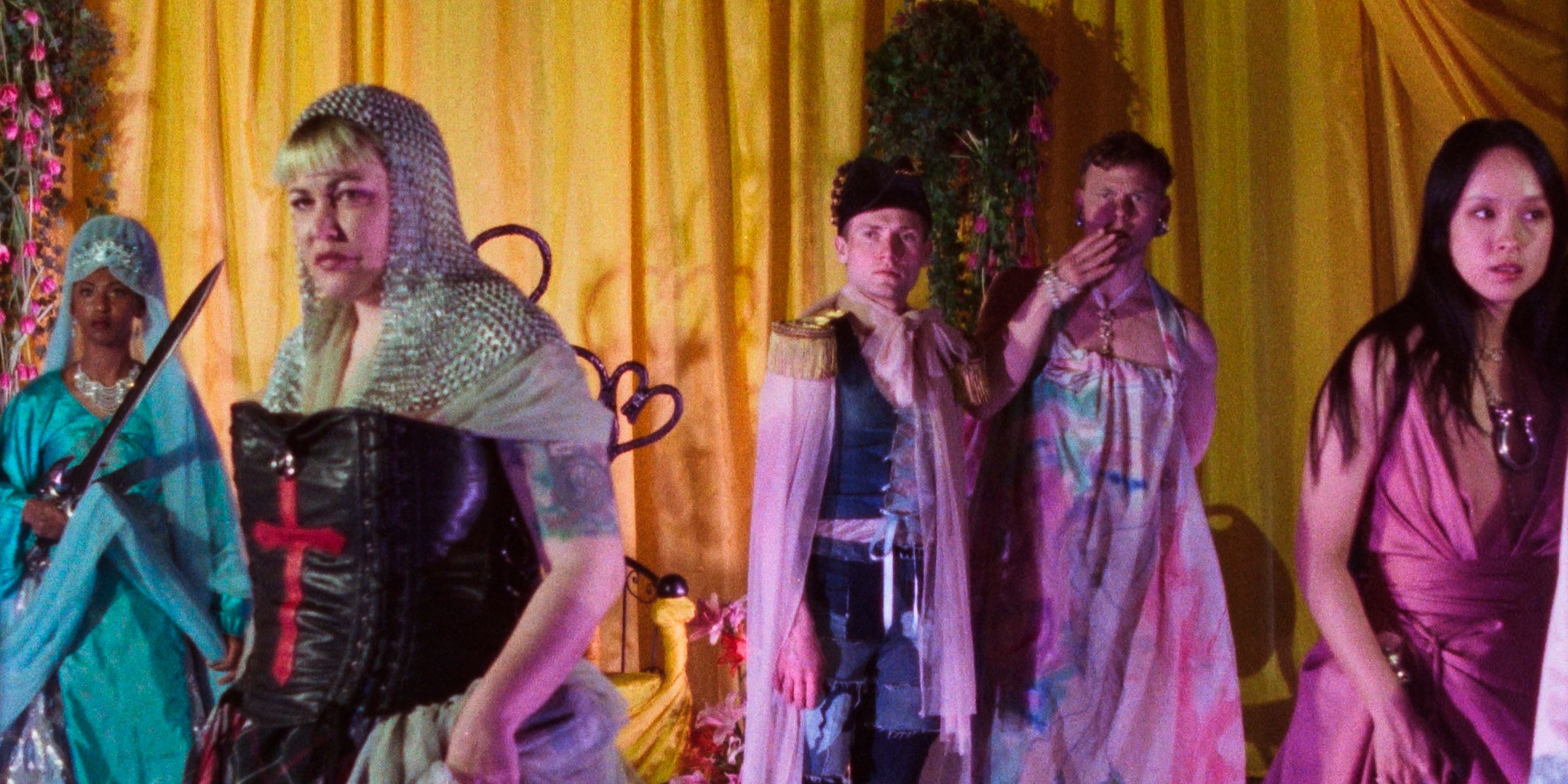
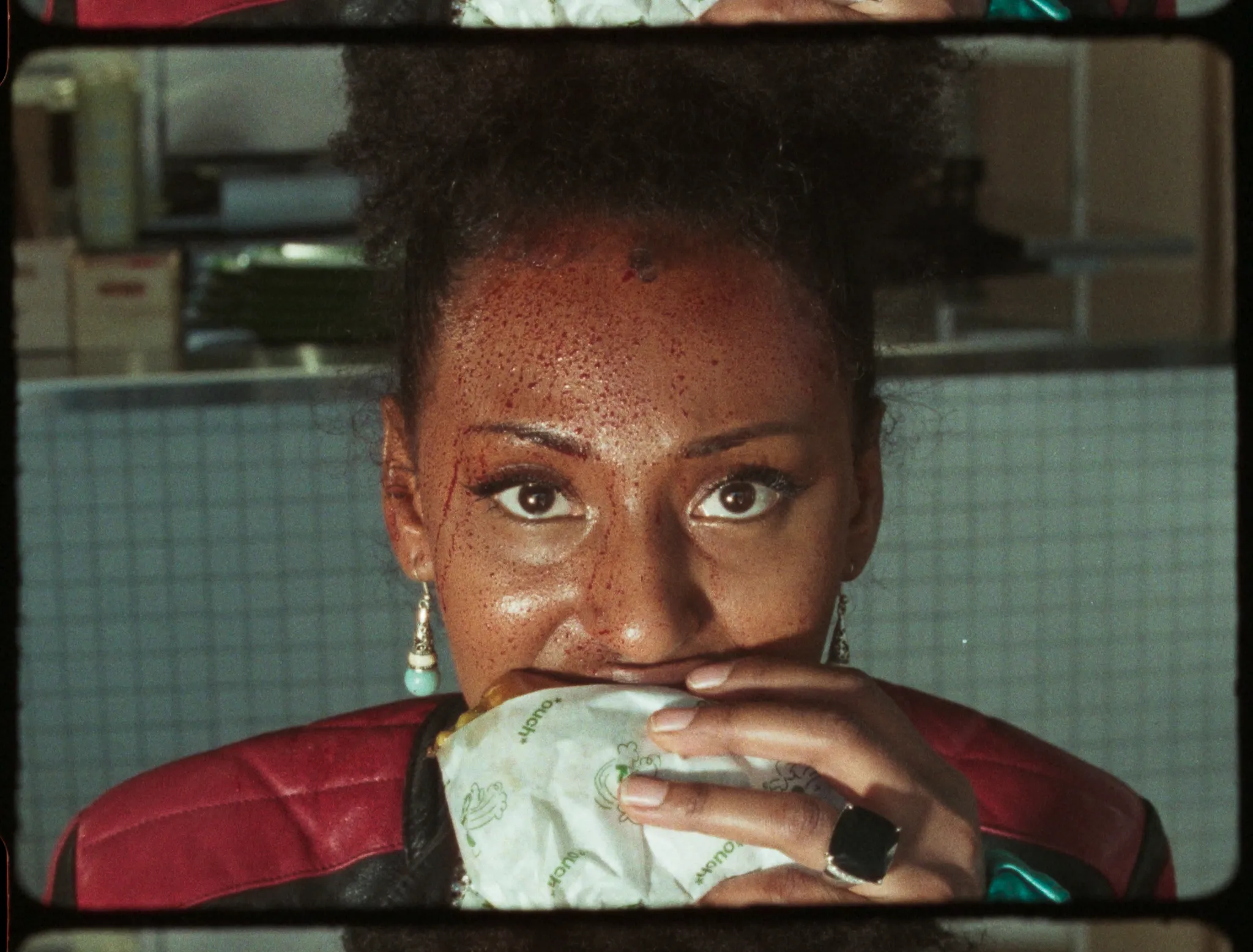
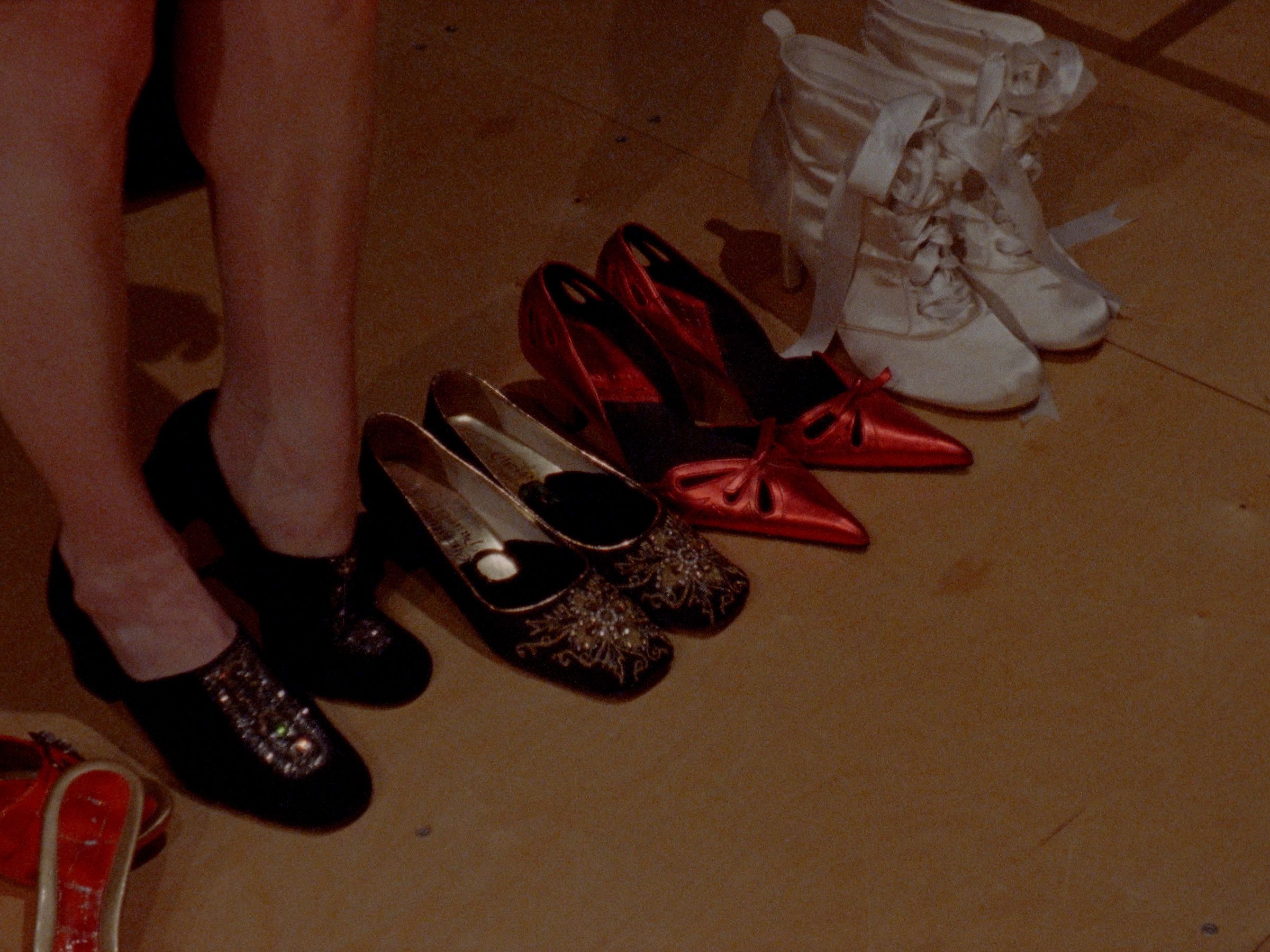
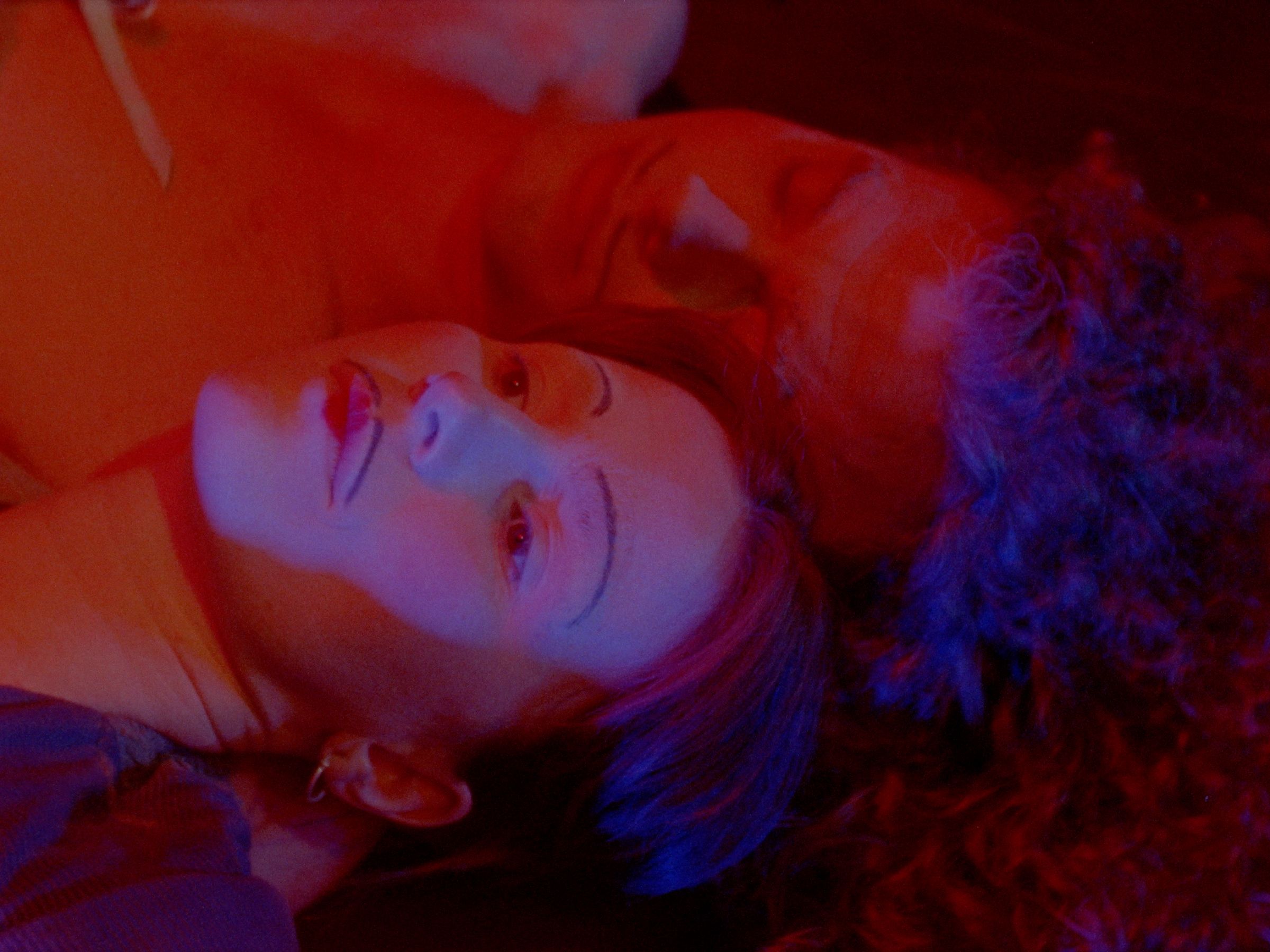
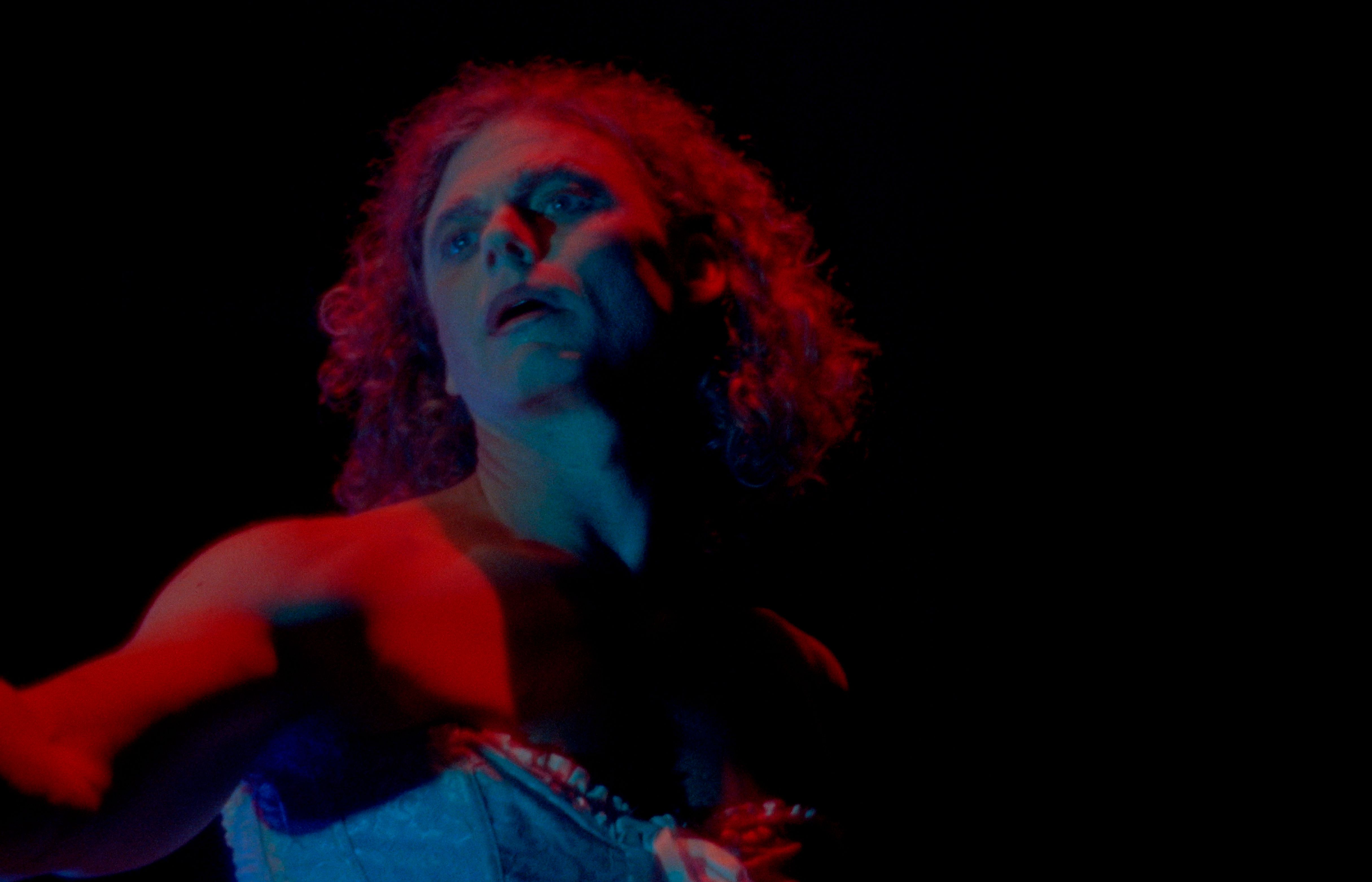
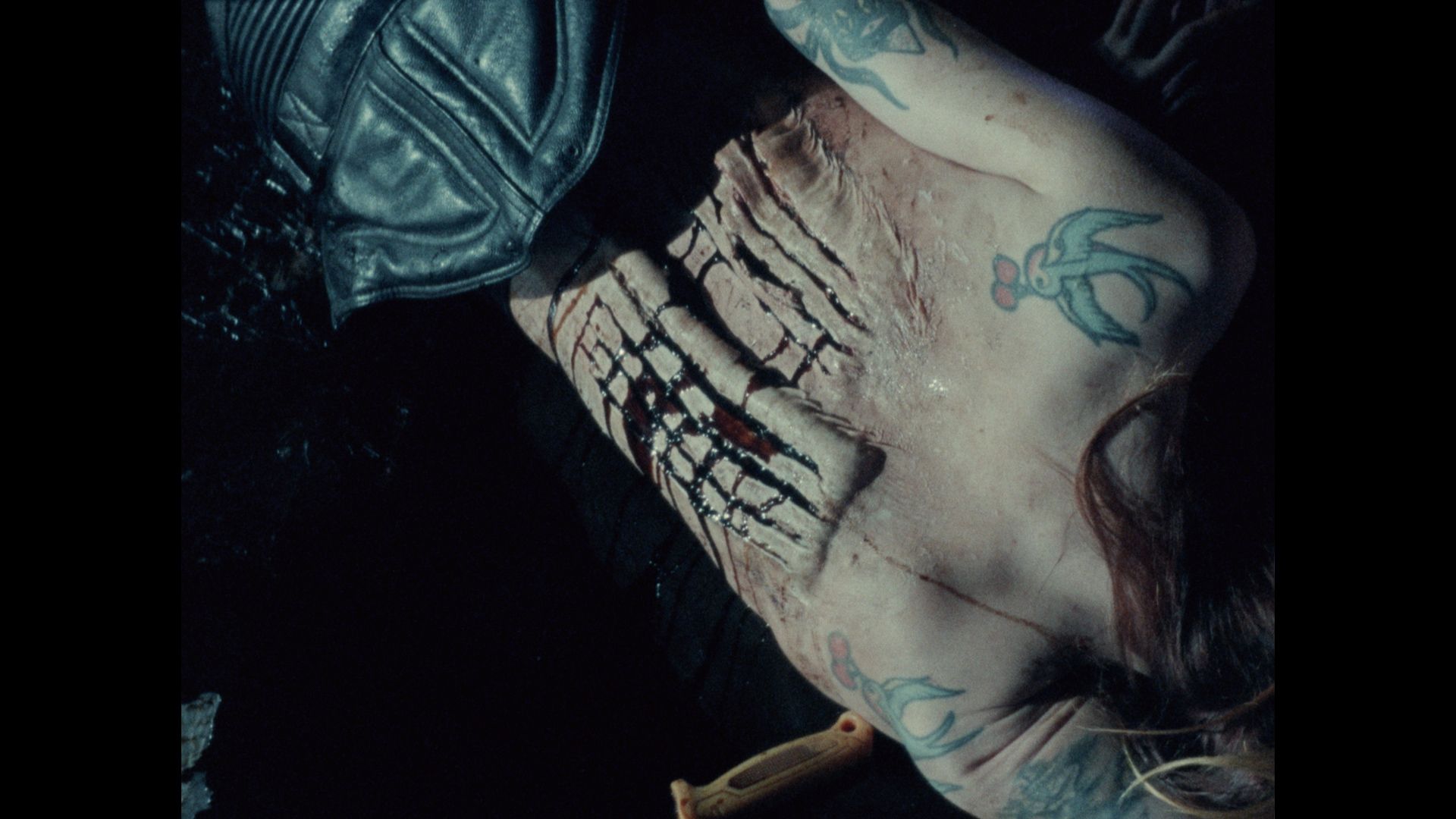
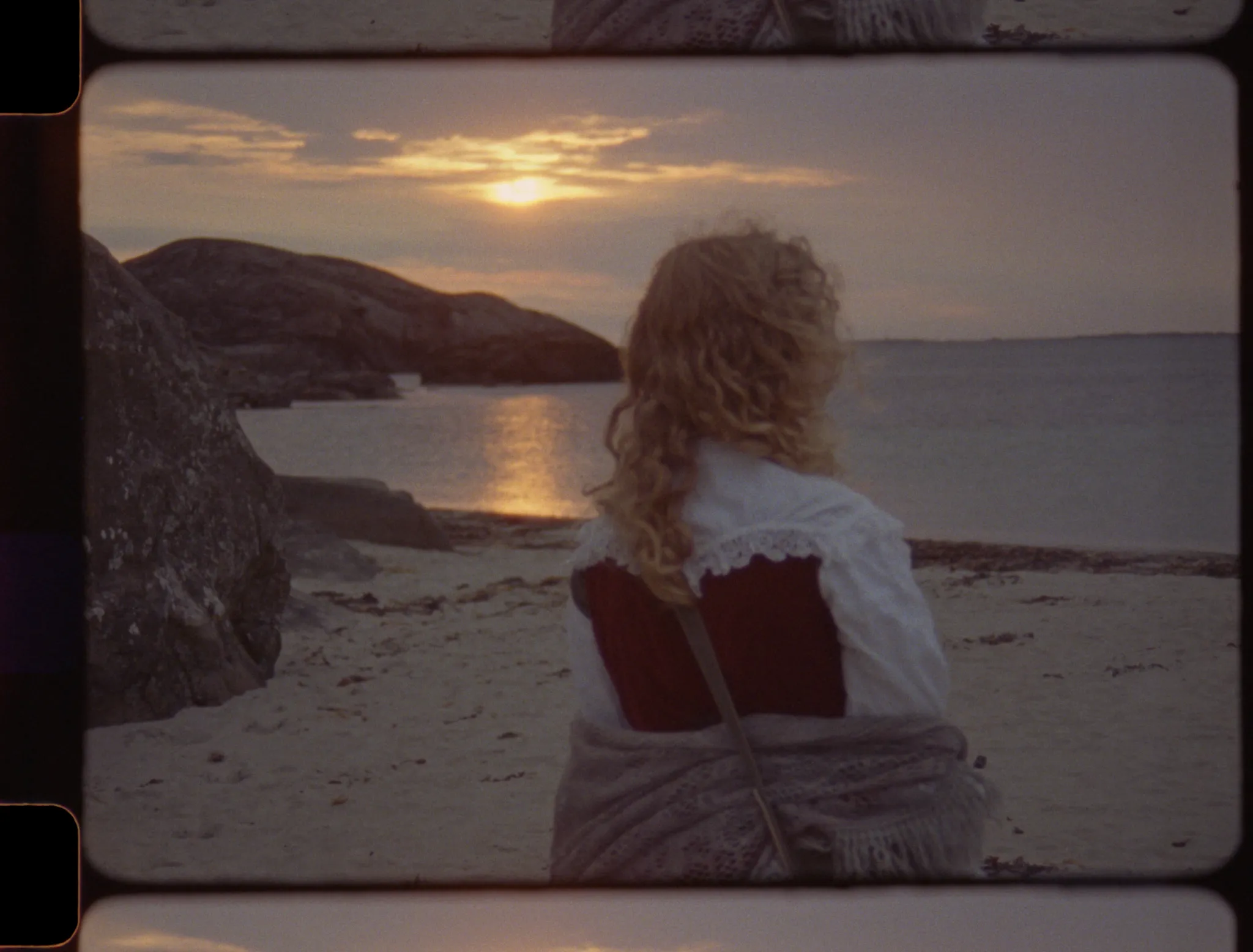
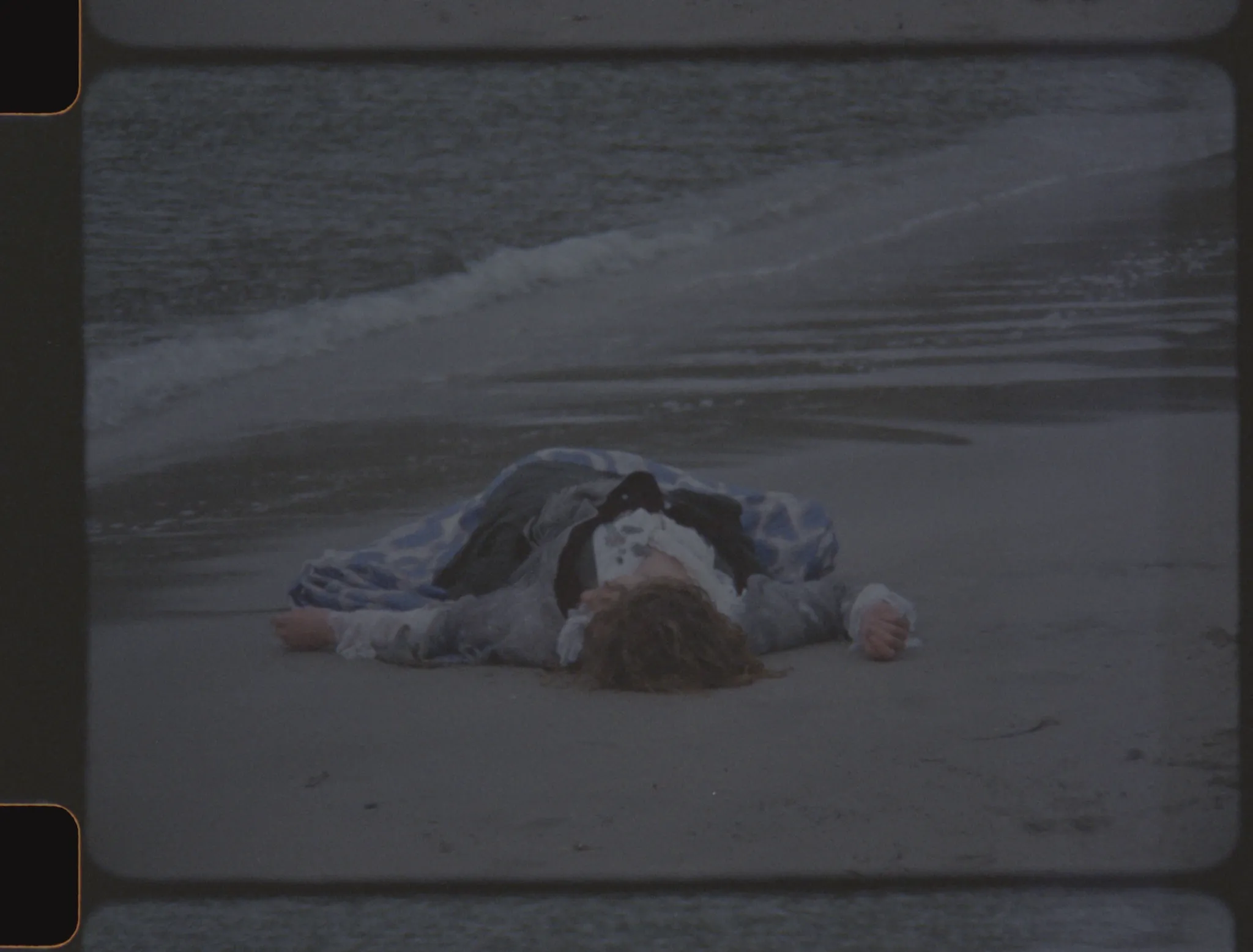
Anette Gellein, Annus Horribilis (2026), film still
Anette Gellein cites the French artist, writer, surrealist, antifascist activist, and (posthumously discovered) queer and trans icon Claude Cahun (1894-1956) as a guiding source of inspiration – one of the historical figures that “I … carry … with me … that I can rely on, use, and be inspired by.”From Gellein and Heather Jones in conversation. Tender Endings.
Cahun was, among many other things, a devoted lover of the sea. In a section of their kaleidoscopic, genre-indeterminate, proto-auto-theoretical, anti-memoir artist book Cancelled Confessions (1930), they write about being a young boy getting turned on and knocked around by the waves at the seashore.
The section is titled Precedents. It opens in the first person, but it doesn't stay there:
“I was walking towards the sea and suddenly stumbled. My knees in the foam, a child (it’s actually me) falters and laughs with fright. He contemplates the great mass of waves so much bigger than him, their strength beyond comparison with his own.”This and all subsequent Cahun citations: Claude Cahun, Cancelled Confessions, translated by Susan de Muth (London: Thin Man Press, 2024) 73-74.
Notice how the “I” is switched out for a “he,” and distinctions between “then” and “now” are all messed up, as the (assigned female at birth) adult remembers (and experiences) themselves as a boy in the past.
Straddling past and present tenses, Cahun figures the sea as an immersively destabilizing, erotically animated force that messes with the constructs of linear chronology, bounded individualism, and universal cisness.
Cahun goes on to describe the waves, which “outdo each other, cheat, stand on tiptoes, taking advantage of the unevenness of the shore, competing for height and speed with no sense of fairness.” These waves “reveal their firm teeth and seize the child by the back of his knees.” Then the waves “suddenly appear to be calm, the supreme ruse, and slyly start scooping the sand from beneath his feet.”
While getting knocked over by this forceful and frothy spacetime of obligatory surrender, the child in Cahun’s narration suddenly ages a whole year. Straight time is all messed up in the churn, and then, through the boy’s newly adolescent eyes, the spectacle of the sea becomes “indecent.” The erotics of the oceanic swell are suddenly brought to the surface, and the young boy (Claude Cahun) now sees the waves “mount each other like animals,” as the previously “chaste” seascape “displays an image of rutting that his adolescent body suddenly craves.”
“It’s too late to conceal the spectacle from him—and in any case what good would it do?” Cahun writes. “For him, from this moment, any emptiness would be peopled by orgies.”
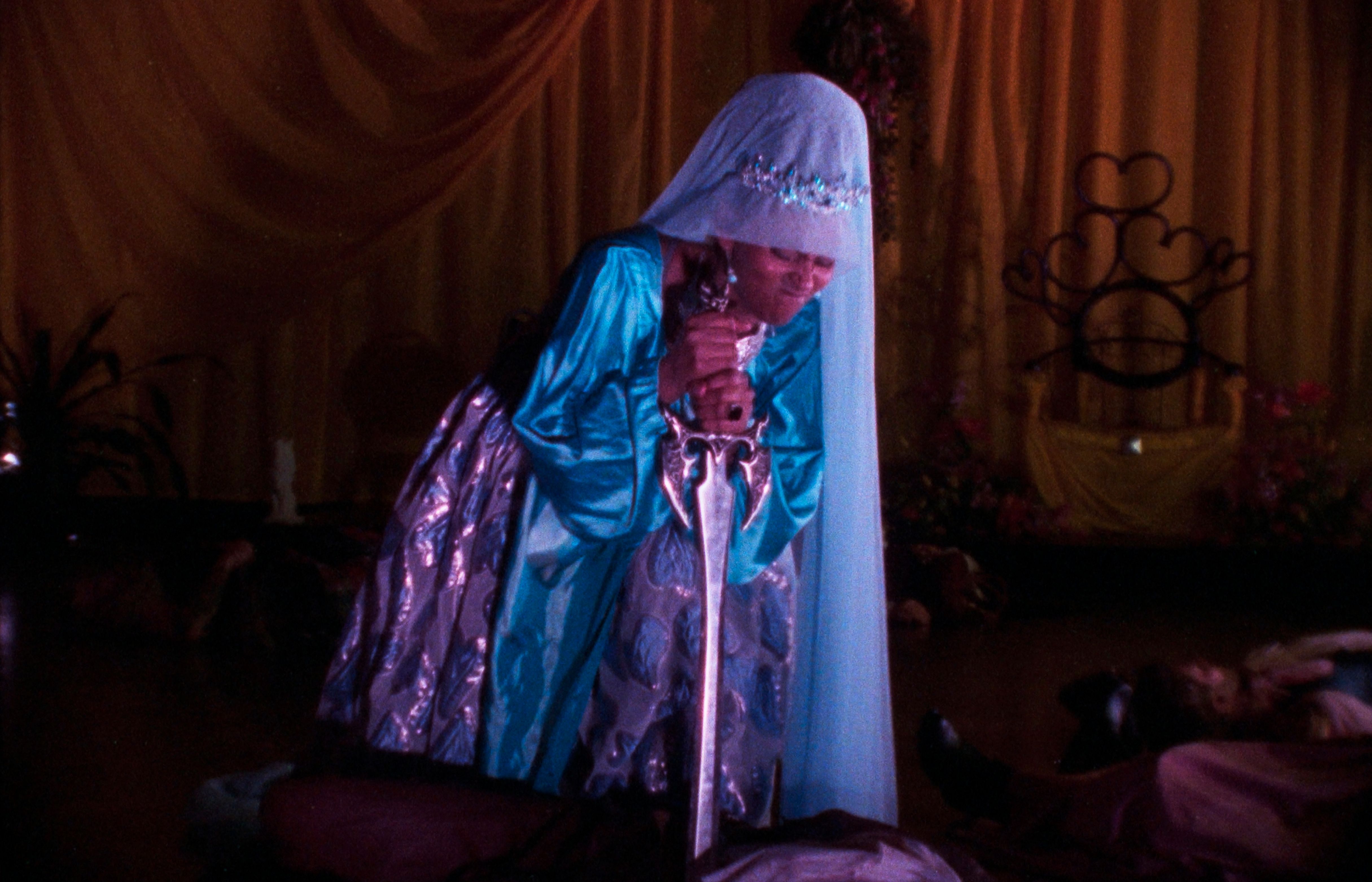
Anette Gellein, Annus Horribilis (2026), film still
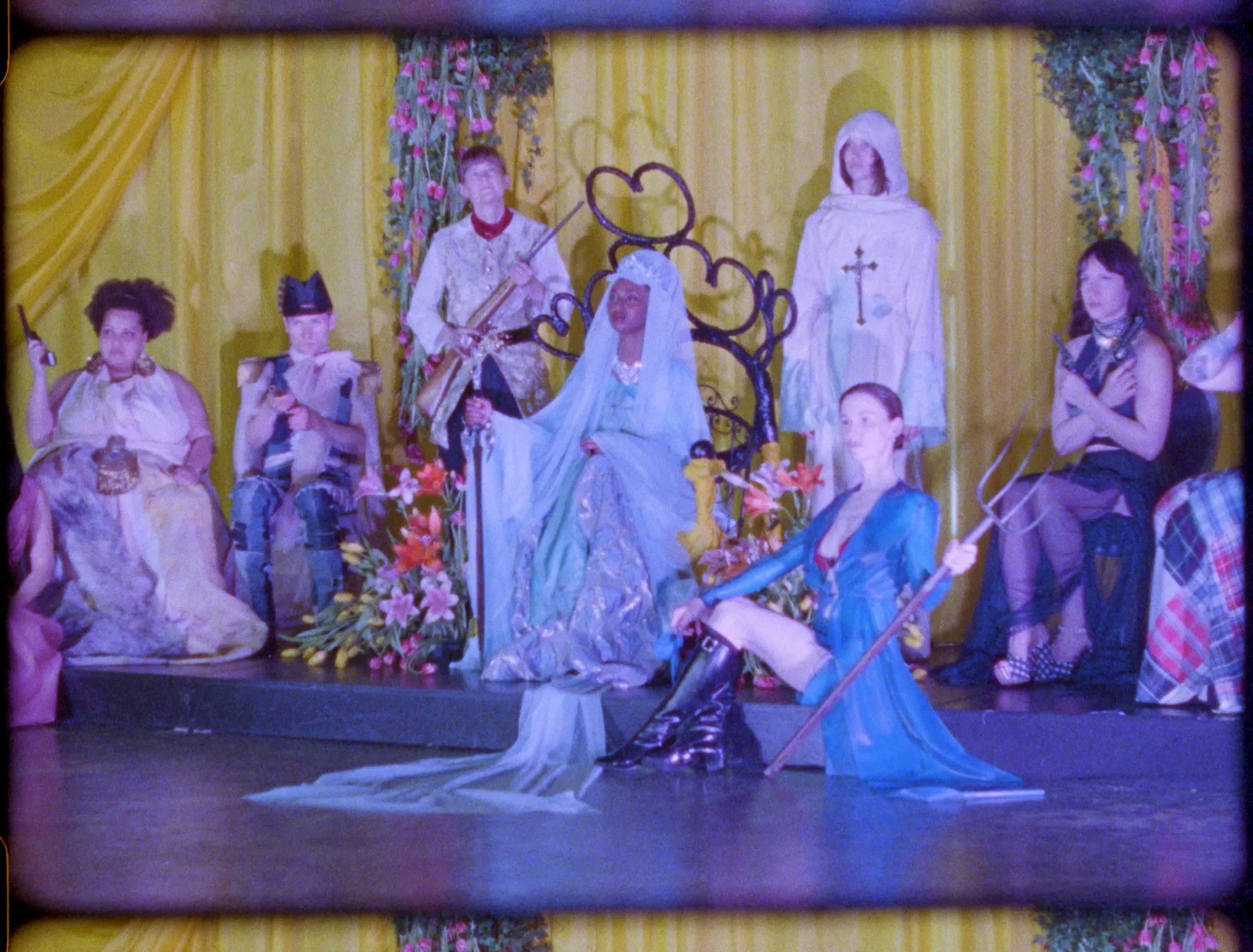
Anette Gellein, Annus Horribilis (2026), film still
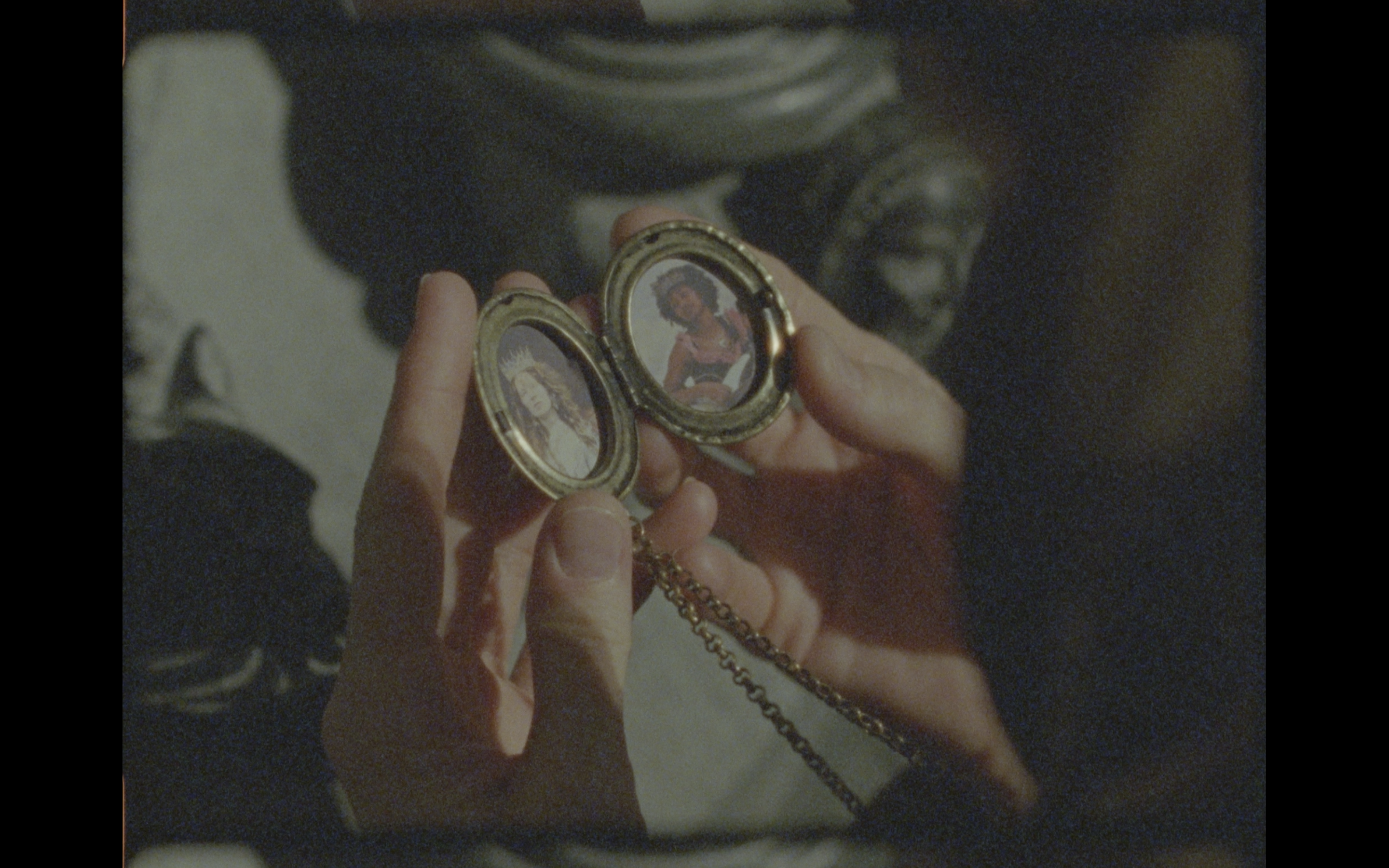
Anette Gellein, Annus Horribilis (2026), film still
Anette Gellein, Annus Horribilis (2026), film still
Anette Gellein, Annus Horribilis (2026), film still
1 / 5
At the end of Precedents, Cahun flips abruptly from the third person back to the first, with “I have just heard my laugh.” It’s a laugh from a remembered past, but it’s heard in the present, and, even after all these years, it has “scarcely changed.” Hearing themselves laugh across time in this unstable, littoral setting, they conclude that, “faced with the sea, with love, with all the forces of the elements (we so willingly surrender!) age, sex, even individuality cease to be relevant.”
This time-travelling, gender-expansive, oceanic encounter invites us to think about gender defiance in ecological and cosmic ways, beyond the bounds of human separatism. Constructs like straightened-out timelines and obligatory binary sex legibility no longer hold up. Individual personhood, as we know it, loses relevance. In the froth and foam of the crashing waves, Cahun finds, the “separation of souls and bodies that seek to unite is not possible.”
Almost sixty years after the publication of Cancelled Confessions, the theorist, performance artist, audio engineer, and computer programmer Sandy Stone wrote The Empire Strikes Back: A Posttranssexual Manifesto, a text that became foundational for the academic field of trans studies in the US. Stone argued that medical, legal, and psychological establishments in the postwar era had enforced obligatory alignment with a standardized trans narrative; a narrative that demanded tidy linearity and simplified consistency. Stone described how anyone trying to access gender-affirming healthcare (something that has always been severely gatekept along race and class lines) had to present themselves as the right kind of trans person, which meant reproducing the dominant medical narrative: a lifelong, unwavering struggle with gender dysphoria, traced to early childhood memories (the earlier the better), and leading to a need for a medical transition that would be linear, legible, and final.
This kind of story might be accurate enough for some. But when it is codified as the only possible way to narrate trans experience, variations and complexities and impurities and less linear trajectories are sidelined. Many trans people were forced to create false histories for themselves, in order to align with the rigid diagnostic criteria. For Stone (who was, at the time of writing, a grad student working with Donna Haraway, who had just published A Cyborg Manifesto), the force of the standardized medical narrative also meant that trans memoirs and autobiographical writings tended to be shot through with the problems of what she termed “purity and denial of mixture.”Sandy Stone, “The Empire Strikes Back: A Posttranssexual Manifesto” in The Transgender Studies Reader Remix ed. Susan Stryker and Dylan McCarthy Blackston (New York: Routledge, 2023) 15-30; 20.
Nobody could accuse Cahun’s Cancelled Confessions of any denial of mixture or attachment to purity. Contemptuous boredom with purity and lush affirmations of monstrous mixings animate the whole book—determining both content and form. It can certainly be read within a lineage of trans autobiography, but, as the title suggests, Cahun sets out to trouble the confessional genre. Their dissatisfaction with notions of authentic selfhood can be traced throughout the text, including in the Precedents section outlined above, where we encounter a mode of gender disobedience that is at odds with any sense of a stable, core identity.
The continual de- and re-gendering in Cahun’s writing is part of the possibilities that open up when the (cisgender) assumption of gender stability and legibility comes apart.
The continual de- and re-gendering in Cahun’s writing is part of the possibilities that open up when the (cisgender) assumption of gender stability and legibility comes apart, within a broader undoing of the idea of the individual self. The contours of this cosmically attuned nonessentialism are what I want to try to explore in this text. Along with some ideas around spread and contagion, which I will get to after a brief examination of born this way as a terribly limited and limiting strategy for claiming queer legitimacy.
Anette Gellein, Dyke Dreams (2024), film still
Anette Gellein, Love and Greed and Pain and Lust (2023), film still
... Gay is better?!
“I gave a speech recently, an empowerment speech to a gay audience, and it included the line ‘I’ve been straight and I’ve been gay, and gay is better.’ And they tried to get me to change it, because they said it implies that homosexuality can be a choice. And for me, it is a choice. I understand that for many people it’s not, but for me it’s a choice, and you don’t get to define my gayness for me.”
This is the actor Cynthia Nixon, back in 2012. At the time, some mainstream gay rights advocates were horrified by this public declaration of a “gay by choice” life. “She needs to learn how to choose her words better, because she just fell into a right-wing trap, willingly,” wrote one outraged gay male blogger. “Every religious right hatemonger is now going to quote this woman every single time they want to deny us our civil rights.”Cited in Gael Fashingbauer Cooper, “Cynthia Nixon: I’m gay by choice,” NBC News (Jan. 24, 2012), https://www.nbcnews.com/pop-culture/pop-culture-news/cynthia-nixon-im-gay-choice-flna1c9386406.
2012 in the USA was surely one of the most treacherous historical contexts in which to publicly declare the possibility (for some) of happily choosing to be gay. This was the height of Obama-era “born this way” respectability discourse, leading up to marriage equality, and Lady Gaga’s electro-pop anthem Born This Way was blasting the airwaves. Released in 2011, Gaga’s track became one of the best-selling singles of all time. She had been campaigning for gays in the military, and the Department of Defense would repeal its discriminatory “Don’t Ask, Don’t Tell” policy within months of Born This Way’s release. The song was inspired by the disco-era gay liberation anthem I Was Born This Way (1977) by Archbishop Carl Bean. Some of Gaga’s lyrics are super cringe (“You’re Lebanese; you’re Orient!”), but, for many, the loud message of “God makes no mistakes … I was born this way” felt empowering.
One of the basic ideas of #BornThisWay is that it counters the bigots who think conversion therapy works. It’s an argument against the anti-LGBTQ+ campaigners who love to platform “ex-gays” and people who detransition, as if their existence proves that cisheterosexuality is naturally universal and nobody is “really” queer or trans. For those who are told that their gender or sexuality is “just a phase”—that they are “confused,” that they have been “corrupted,” that they are merely “following a trend,” that they could be “cured,” that they could choose alignment with a livable straight life instead—it’s entirely understandable to respond with “no, this is who I am.” In a culture of manufactured panic around ideas of queer and trans contagion / influence / seduction / grooming, it can also be a strategy to say: we’re just a delineated biological minority, it’s ok, it won’t spread, straights don’t have to worry about catching it from us because we’re born with it.
All of this might be understandable as a response, but ultimately, I would say, it’s dubious. I’m not alone here: increasingly over the years, born this way has been critiqued by queer and trans theorists and writers. Many question the validity of appealing to the dominant cis-heteronormative culture for a conditional acceptance that continues to see queerness as an affliction. Talia Bhatt writes that “the desperate pleading with our oppressors to please not oppress us, we can’t help it, our queerness is an Essential Characteristic we have no choice in,” has outlived its usefulness. “Arguably,” she suggests, “it was never productive to engage with zealots and homophobes on their terms, to assure them that we wouldn’t be queer if we had any other choice.”Talia Bhatt, “Love in the time of lesbophobia,” Trans/Rad/Fem (Mar 10, 2026) https://taliabhattwrites.substack.com/p/love-in-the-time-of-lesbophobia
Others have pointed out how the insistence on born this way as an obligatory justification for sexual and gender variation delegitimizes (some) people’s experiences of later-in-life shifts and sexual / gender fluidity over time. Trans studies scholar Marquis Bey writes that the system of cisgender-normativity “requires that only one subject live in this body […] only one category be here where it was supposed to be. No mixing, no polysemy, no multiplicity. One, singular, linear.”Marquis Bey, Cistem failure: essays on blackness and cisgender (Durham: Duke University Press, 2022) 53. Part of the problem with born this way, for Bey, is that it “takes on the logic of cisnormativity and the belief that the more long-standing something is, the more valid, the more true, it is. It says that if you have been such and such a way since a young age, that way must be what you truly are.”Marquis Bey, Cistem failure, 17.
It was definitely having amoment in the 2010s, but the born this way argument for queer rights can actually be traced back to the nineteenth century. The century in which both the idea of “the homosexual” and the homosexual person named Claude Cahun were born. As Foucault taught us, doing gay shit is ancient, but the idea of a gay person is new. In previous centuries in Europe, same-sex acts were viewed in terms of criminal and sinful behavior. This changed in the second half of the nineteenth century, when homosexuality became an identity category. While the sodomite had been someone who succumbed to a vice that might be a temptation for anyone, the newly invented homosexual was a member of a discreet minority group (constituting a distinct “species,” to use Foucault’s term).Michel Foucault, The History of Sexuality Volume 1: An Introduction (translated by Robert Hurley) (New York: Pantheon Books, 1978) 43.
As Foucault taught us, doing gay shit is ancient, but the idea of a gay person is new.
It took the sexologists and early theorists of (what we now think of as) queer identity a while to agree on what to call it. “Uranian” and “invert” were in circulation in the nineteenth and early twentieth centuries, as was “homosexual,” which ended up lasting much longer. Cahun was engaged with the early European sexological literature from a young age. As a teenager, they wrote a hallucinogenic text titled Uranian Games, while getting high on ether (in c. 1913). “Uranian” was a term for sexual and gender variance proposed by the German writer and lawyer Karl Heinrich Ulrichs in the 1860s (in this context, there was no concept of gender identity as entirely separate from sexual identity). Ulrichs is sometimes remembered as the first person to publicly come out, and the first gay rights campaigner (to use current-day terminology). Cahun’s text is very (again, using today's vocabulary) queer and nonbinary and transmasculine.
Under a series of pseudonyms, Cahun later became a contributing co-editor of Inversions, the first explicitly queer journal in France (which called itself “a review not of homosexuality, but for homosexuality”).See Michel Carassou, Inversions: une autre histoire de la première revue gay française (Editions Non Lieu: 2016). They also discovered the work of the British sexologist Havelock Ellis, who (together with John Addington Symonds) was the author of Sexual Inversion (1897), a groundbreaking study that is remembered as the first English-language scientific textbook on homosexuality. Cahun corresponded with Ellis, and translated his work into French.
Anette Gellein, Love and Greed and Pain and Lust (2023), film still
Anette Gellein, Love and Greed and Pain and Lust (2023), film still
Anette Gellein, Love and Greed and Pain and Lust (2023), film still
Like Ulrichs a few decades earlier, Ellis went in hard for the born this way line of justification. That exact phrase wasn’t around yet; back then, they used the word “congenital” (which means the same thing—born with—though my puerile brain can’t help but notice that it sounds like it could mean with genitals). In contexts of extremely virulent, life-destroying homophobia, Ulrichs and Ellis and a few others argued for the (at least partial) decriminalization of homosexual acts on the basis that sexual inversion was natural and mostly inborn. The idea was that it had to be understood as an innate, “organic predisposition” (as Ellis put it) in certain individuals, so that a clear case could be made for accepting it, not trying to change it, and delinking it from sinfulness, madness, and criminality.
This might sound straightforward, but there were problems built into the argument from the start. For one thing, there was the problem of Ancient Greece. Like many others within European homosexual subcultures of the nineteenth century, Ulrichs and Ellis turned to “Greek love” as a legitimizing precedent from classical antiquity. As Jana Funke has demonstrated, however, this complicated the born this way explanation. The Ancient Greek world did not differentiate between ‘homosexuals’ and ‘heterosexuals’ as different kinds of people, and, Funke writes, when it came to the ancients, “it did not make sense to argue that all men who experienced same-sex desire were simply ‘born this way’, since they grew up in a cultural environment that accepted and even encouraged such desires.”Jana Funke, “Born This Way? Sexual Science and the Invention of a Political Strategy,” July 15, 2014 https://notchesblog.com/2014/07/15/born-this-way-sexual-science-and-the-invention-of-a-political-strategy/.
Ellis and his collaborator Symonds understood that the Ancient Greek example was not fully compatible with the congenital argument, or with taxonomic identity categories for sexuality. Nonetheless, the “inverts” in Sexual Inversion are presented by Ellis as having been (mostly) born that way. Funke points out that the book was published in the direct aftermath of Oscar Wilde’s infamous 1895 trial, and this was a context in which social anxieties around ideas of queer influence, seduction, and contagion were heightened. Ellis’s emphasis on congenital homosexuality can thus be understood, at least in part, as a strategic attempt to defend same-sex desire against homophobic accusations of corrupting influence.Jana Funke, “‘We Cannot Be Greek Now’: Age Difference, Corruption of Youth and the Making of Sexual Inversion,” English Studies (94:2, 2013) 139-153. Which brings us back to the twenty-first century, and to my next section:
Transgender for Everyone
The latest repackaging of the old gay contagion panic is, of course, the current hysteria around “trans social contagion” and the pseudoscientific concept of “rapid-onset gender dysphoria”—a manufactured hysteria that is bound up with the global rise of fascist authoritarianisms. “Transgender for everyone,” is how the USA’s mad king phrases it. Over and over and over again.GLAAD tracked no less than 50 instances of Trump mentioning “transgender for everybody” or “transgender for everyone” during the first year of his second term in office:https://glaad.org/fact-sheet-for-reporters-challenging-transgender-for-everybody-rhetoric-at-state-of-the-union/ He’ll be in the middle of what was advertised as an address on the cost of living crisis, and then all of a sudden, he’s saying “transgender for all” and “transgender for every member of your family.”
This might, for some, relate to a sense of having a soul or a spiritual or ancestral or extraterrestrial inheritance that is tied to a gendered or sexual specificity.
One way to respond to this anti-trans trope is to deny the contagiousness of gender, to insist on a safely delineated biological minority (“trans people are less than 1% of the population”), and to follow the nineteenth-century gay rights campaigners with their born this way defense. And there are, of course, people who have a sense of their genders (and/or sexualities) as somehow intrinsic, essential, and enduring. This might, for some, relate to a sense of having a soul or a spiritual or ancestral or extraterrestrial inheritance that is tied to a gendered or sexual specificity. There is also the indisputable fact that queerness and transness have long blossomed in extremely barren and hostile environments, where people could grow up with no “possibility models” at all; no obvious sources of identification or contagion; no access to any sense of queer or trans sociality, culture, or history.
Anette Gellein, Annus Horribilis (2026), film still
The world of cis-heteronormative coercion erects itself on erasure, so that it can pretend to be the entirety of the whole world.
The world of cis-heteronormative coercion erects itself on erasure, so that it can pretend to be the entirety of the whole world. Looking at Ellis’s case studies from the late Victorian era, it’s often heartbreaking to encounter queer and trans folk who felt absolutely alone, many of them describing a time when they lived believing they were the only person who had ever been this way. “I suffered tremendously from the feeling that I was isolated and unique in the world,” recalls one “sexual invert.”Havelock Ellis, Sexual Inversion(Studies in the Psychology of Sex, Volume 2), Third Edition, Revised and Enlarged, 1927, Project Gutenberg eBook #13611 (released October 8, 2004) https://www.gutenberg.org/cache/epub/13611/pg13611-images.html Another, whom Ellis identifies as Miss D., describes having a lifelong understanding of themselves as neither girl nor boy, despite having no sources of exposure or inspiration:
Ever since I can remember anything at all I could never think of myself as a girl […] I began to say to myself that, whatever anyone said, if I was not a boy at any rate I was not a girl. This has been my unchanged conviction all through my life. When I was little, nothing ever made me doubt it, in spite of external appearance. […] I could not see why it should have anything to do with the matter. […] everything I liked was called wrong for a girl […] They confused and wearied me by their talk of boys and girls. I did not believe them and could hardly imagine that they believed themselves. […] I used to wonder whether they were dupes, or liars, or hypocrites, or all three. […] I was so confused by the talk, about boys and girls. […] I had never come across any theories on the subject.Havelock Ellis, Sexual Inversion.
So yes, there are folks for whom born this way feels real and accurate. There’s nothing wrong with that. There is something wrong when it becomes obligatory and totalizing, as the only legitimate way to speak about being trans/queer. Then we’re stuck in the trap of legitimacy, and we’re losing touch with the many different ways that gender and sexuality can be lived and practiced and auto-theorized and embodied and created. We’re stuck telling Cynthia Nixon she’s not allowed to choose to be gay. We’re gatekeeping and separating the “transtrenders” and other impure subjects out from the real ones. We’re insisting on consistency and legibility and linearity and delineation. We’re forcing alignment with a single, pre-determined narrative, the way cishetnormativity forces its obligatory alignments and foreclosures on whole horizons of possibility.
We’re stuck telling Cynthia Nixon she’s not allowed to choose to be gay.
If straights are more likely to be tolerant of divergence when they believe queers have no choice in the matter (apparently this is the case), well, that’s a problem with straight culture. Why continue to meet it on its terms? Why should congenital gayness count for more than the gayness someone caught through exposure, when their immune system was down? Why should it matter if someone is born trans, or reincarnated trans, or becoming trans at the very end of their life, or going through a trans phase, or whatever?
What if, instead of arguing against the possibility of trans contagion (and unintentionally reinforcing a framework that rests on the belief that both trans and contagion are things best avoided wherever possible), we said, yes, actually, gender abundance and self-determination can spread and move towards unknown horizons? What if we said, yes, it can augment through exposure, possibly destabilizing the safely delineated, suspiciously ahistorical “less than 1%” statistic? What if we responded to Simon(e) van Saarloos’s invitation to think about strategies of contagion for “encouraging the rapid onset of something we desire”?Simon(e) van Saarloos, “Frivolous like Fashion,” TSQ: Transgender Studies Quarterly (Volume 12, Number 2, May 2025), 259-262; 262.
Anette Gellein, Dyke Dreams (2024), film still
Contagion sounds bad and scary if it’s only understood in terms of unwanted disease and infection, necessitating defensive fortification and quarantining. But the etymology of contagion gives us touching together, and there is much deliciousness that is produced and transmitted socially and inter-corporeally. Infectious laughter. Kindness that produces more kindness. The contagious euphoria that can spread through the dancefloor when bodies have moved together for hours. The transmission and co-constitution of erotic excitement. The circulation of freedom dreams and practices of solidarity, care, mutual aid, resistance, and liberation that can and could and do gain momentum through social movements. As Gellein’s film Annus Horribilis reminds us, revolutionary longing is contagious!
As Gellein’s film Annus Horribilis reminds us, revolutionary longing is contagious!
Through this framework, it seems like a no-brainer to say that contagion can be at work in the shared practices and expanded horizons of possibility for the (brutally constricted, inadequately named, infinitely strange and mysterious) things we currently call gender and sexuality.
Speaking for myself only, here are some of the things that I think my current gender is a result of: osmosis and toil, time and place, race and class, gratification and latency, friends and crushes, laziness and pleasure, habit and failure, risks and rewards, scavenging and reclamation, accident and longing, comfort and discomfort, imposition and identification, envy and discipline, cultural imagery and archival study, context and exposure, potentiality and rejection, inconsistency and absurdity, whims and maintenance, traditions and antiquities, play and accumulation, damage and polish, false starts and concerted rewiring, addition and subtraction, knowledge and ignorance, reading and writing, evolution and devolution, trial and error. I can say that this gender is “on the same side as” (the definition of cis) an assigned femininity, but it doesn’t feel like an intrinsic core, and it also doesn’t feel like “assigned” is the whole story.
In an article called Trans Contagion: Panics and Pleasures, Koda Sokol writes: “However well intentioned, the claim that trans identification is, ‘scientifically’ speaking, an individual achievement unrelated to social relationships or content consumed problematically denies the important ways that trans people do in fact influence and make one another possible.”Koda Sokol, “Trans Contagion: Panics and Pleasures,” Social Text (166 Vol. 44 No. 1 March 2026), 63. Trans contagion, Sokol continues, can happen in many ways:
One might read a book or watch a movie about a trans person whose story makes thinkable a pathway for the reader or viewer’s own transition. One might make a trans friend whose companionship creates space for new gendered exploration and change. One might lose a friend, or a family member, or anyone really, and be undone by the loss such that a desire for gender transition gets revealed. One might be bored at home and thoughtlessly trying on a sister’s clothes, only to discover that those clothes activate a different sense of gendered self. One might develop a sexy crush on a trans person and find that the desire for this person reveals or engenders a recognition of their own transness.Koda Sokol, “Trans Contagion,” Sokol, 66.
Ultimately, it shouldn’t matter if someone’s divergent gender or sexuality is understood as acquired or chosen or nurtured or fluctuating or ancient or new or predestined or in-progress or cosmically imparted or biologically innate or caught through something in the water. The question of why the divergence exists is beside the point; the fact that it exists should be more than enough reason to insist on the flourishing of trans and queer life. And this collective flourishing is held back by attachments to hierarchies of legitimacy; by gatekeeping around fortified identity categories; by any liberalism that seeks to acquire more rights for some in a way that comes at the expense of others.
The question of why the divergence exists is beside the point; the fact that it exists should be more than enough reason to insist on the flourishing of trans and queer life.
If we return to the early European pro-gay rights sexological literature, we find that born this way was born in a soup of homonormative gatekeeping and assimilationist respectability politics. The late-Victorian “invert” (who couldn’t help it) was constructed in contrast with the “pervert” (whose behavior was voluntary and excessive). Inversion was a congenital state; perversion was a chosen vice. Inverts were worthy of rights, care, access, and respect only when they fell in line with polite society; only when they kept their sexualities private; only when they promised not to make anyone uncomfortable; only when they differentiated themselves from perversion. After all, Ellis writes in the conclusion to Sexual Inversion, polite society “cannot be expected to tolerate the invert who flouts his perversion in its face.”Havelock Ellis, Sexual Inversion.
Anette Gellein, Annus Horribilis (2026), film still
Anette Gellein, Annus Horribilis (2026), film still
Anette Gellein, Annus Horribilis (2026), film still
The case studies in Sexual Inversion focus on educated and accomplished members of middle- and upper-class white society who happened to be (involuntary) inverts but otherwise posed no real threat to the status quo. Look, Ellis said, these queers are nice, normal, healthy, sane, respectable, non-perverted, unthreatening, law-abiding citizens. They don’t deserve to be persecuted. We have to stop lumping them in with the dirty perverts and sex workers. The sick and insane ones. The deviant and criminal ones. The unruly and corrupting ones. Those who couldn’t or wouldn’t keep their sexualities private. Those who couldn’t or wouldn’t be rehabilitated within the bounds of bourgeois respectability. Those, in historian Emily Rutherford’s words, “whose commitment to queer cultures and politics indicated something more challenging and transgressive than a ‘born this way’ strategy of legitimation.”Emily Rutherford, “Symonds’s Facts, Our Future,” Public Books, 7.5.2023, https://www.publicbooks.org/symondss-facts-our-future/ Ultimately, Rutherford argues, “the invention and the legitimization of ‘the homosexual’ marginalized other forms of queer and trans life.”Emily Rutherford, “Symonds’s Facts, Our Future.”
Look, Ellis said, these queers are nice, normal, healthy, sane, respectable, non-perverted, unthreatening, law-abiding citizens.
The primary wins from the era of Gaga’s Born This Way were gay marriage and (out) gays in the (murderous institution of the) US military. Today, with the intensification of attacks on trans life, it is perhaps easier than ever to acknowledge the inadequacy of mainstream respectability politics focused on conditional tolerance at the expense of broader visions of collective solidarity and liberation. As many critics of homonormativity and individualist respectability politics have argued, strategies of accommodation within the existing power structures do not, on their own, challenge the foundations of those structures. Such strategies produce limited gains and secure incremental inclusion for a select few, while fracturing solidarity, sidelining the most marginalized, and maintaining the oppressive status quo. Even on their own terms, these strategies fall short: proximity to power does not guarantee protection, and moments of backlash reveal how quickly conditional acceptance can be withdrawn. When the underlying systems of oppression and state violence are left intact, they can easily turn against the people who managed to open the door just wide enough to squeeze themselves in.
More Precedents
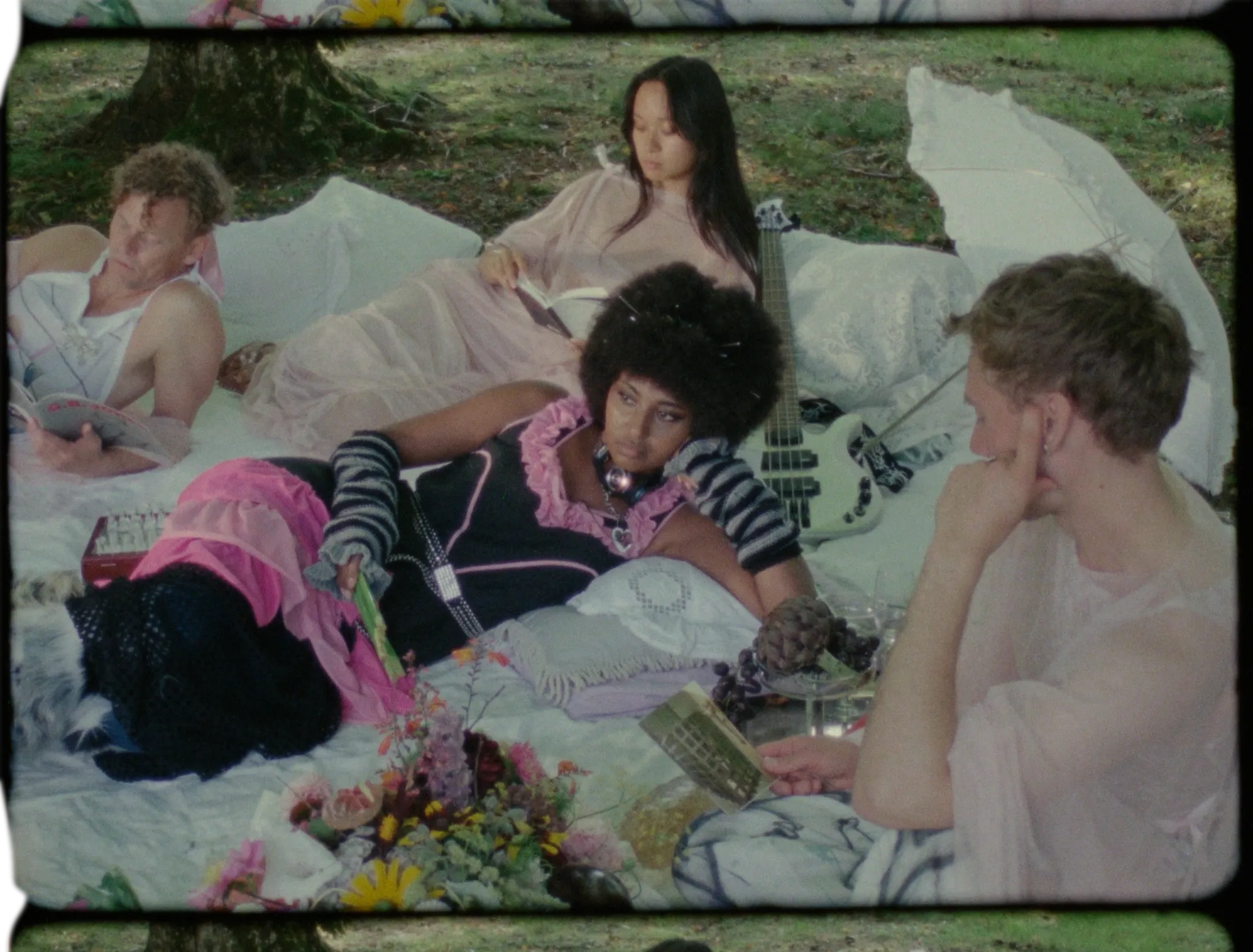
Watching Annus Horribilis—one of the three films in Gellein’s Despair trilogy—I was reminded of Cahun’s chronology-mocking description of laughing across time and being/becoming a boy at the seashore in the past. Annus Horribilis plays with the aesthetics of the European period costume drama, but it also plays with amusingly flagrant anachronisms, mixing pasts and presents unapologetically. In the picnic scene, for instance, these eighteenth-century queers are playing electric guitar, looking at twenty-first-century lesbian comics by GB Jones, and reading feminist and trans studies texts by contemporary writers like Paul B. Preciado and Sara Ahmed.
Some would accuse me of anachronism for using modern-day terms like “queer” and “trans” while talking about gender and sexuality in historical contexts where such terms and concepts did not exist in the same way—or for intentionally avoiding gendered pronouns when writing about Claude Cahun, who did not have access to “they/them,” or any French-language equivalent, in the way we now do. I am working on a different essay about these kinds of accusations, and about the trans or proto-trans consciousness that can be traced in Cahun’s oeuvre. Here, I have attempted to think across some continuities and discontinuities in several different historical conjunctures—including the harrowing present, the recent (Obama-era) past, Cahun’s historical context, and the circumstances of the European nineteenth century’s invention of the homosexual individual. If I’ve committed the historian’s mortal sin of anachronism, I hope that it has at least done something to open up possibilities of con-tagious nonlinear resonance and touching together across time.
Death as transition. Ocean as transcestor. Seashore as portal of renewal. Ancient, salty waters for the dissolution of the given.
One part of Gellein’s Annus Horribilis that seems particularly resonant with the cosmically enmeshed nonessentialism offered in Cahun’s Precedents is the sequence in which Queen Anna goes to the beach alone, enters the sea, commits (a form of) suicide by drowning, and is later found washed up on the shore. Her sister is devastated by her death, but it’s also a birth: Queen Anna comes back as an eighteenth-century nonbinary revolutionary and mathematician, the main character of the rest of the film. “The ocean cradles her into a new existence,” the voice-over tells us. Death as transition. Ocean as transcestor. Seashore as portal of renewal. Ancient, salty waters for the dissolution of the given.
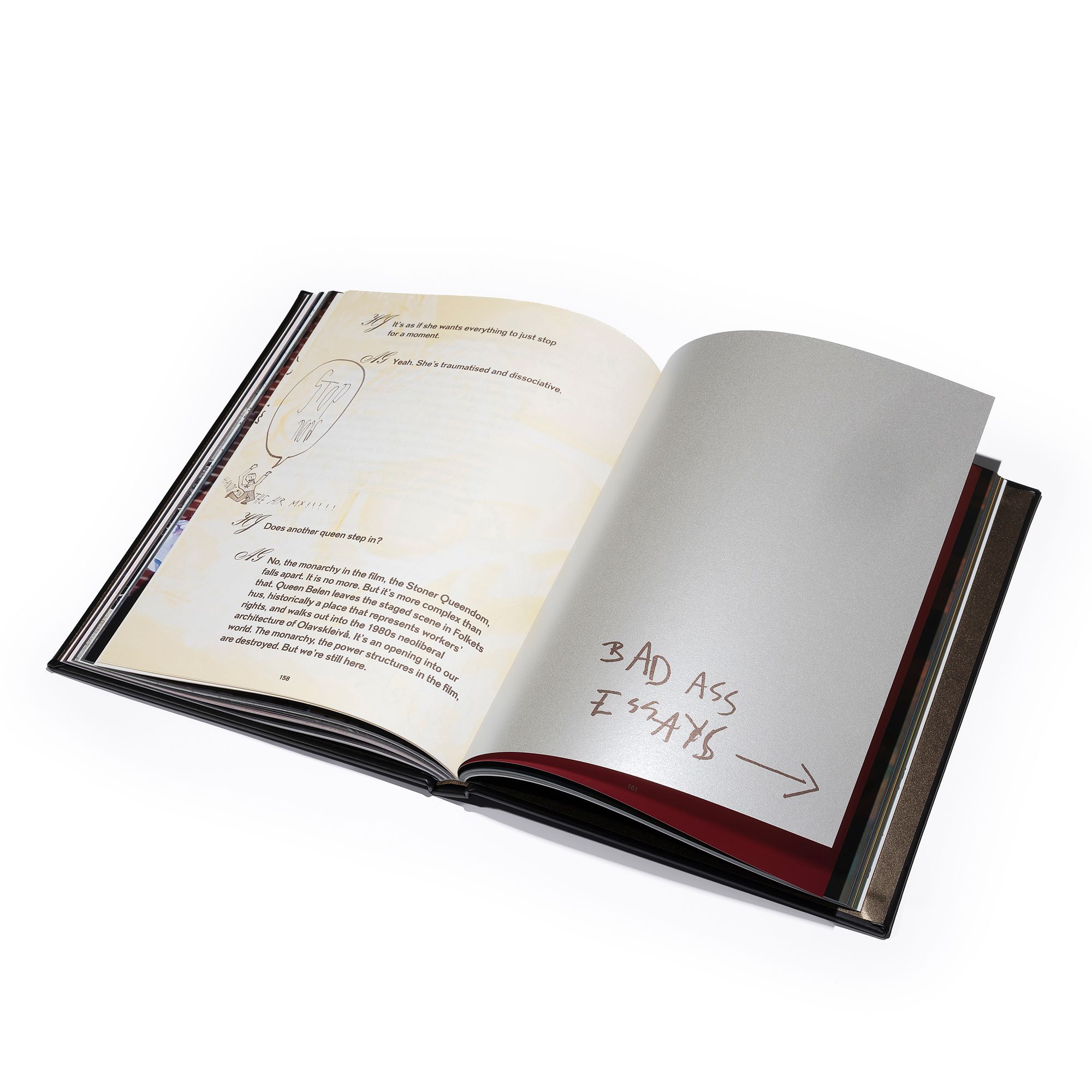
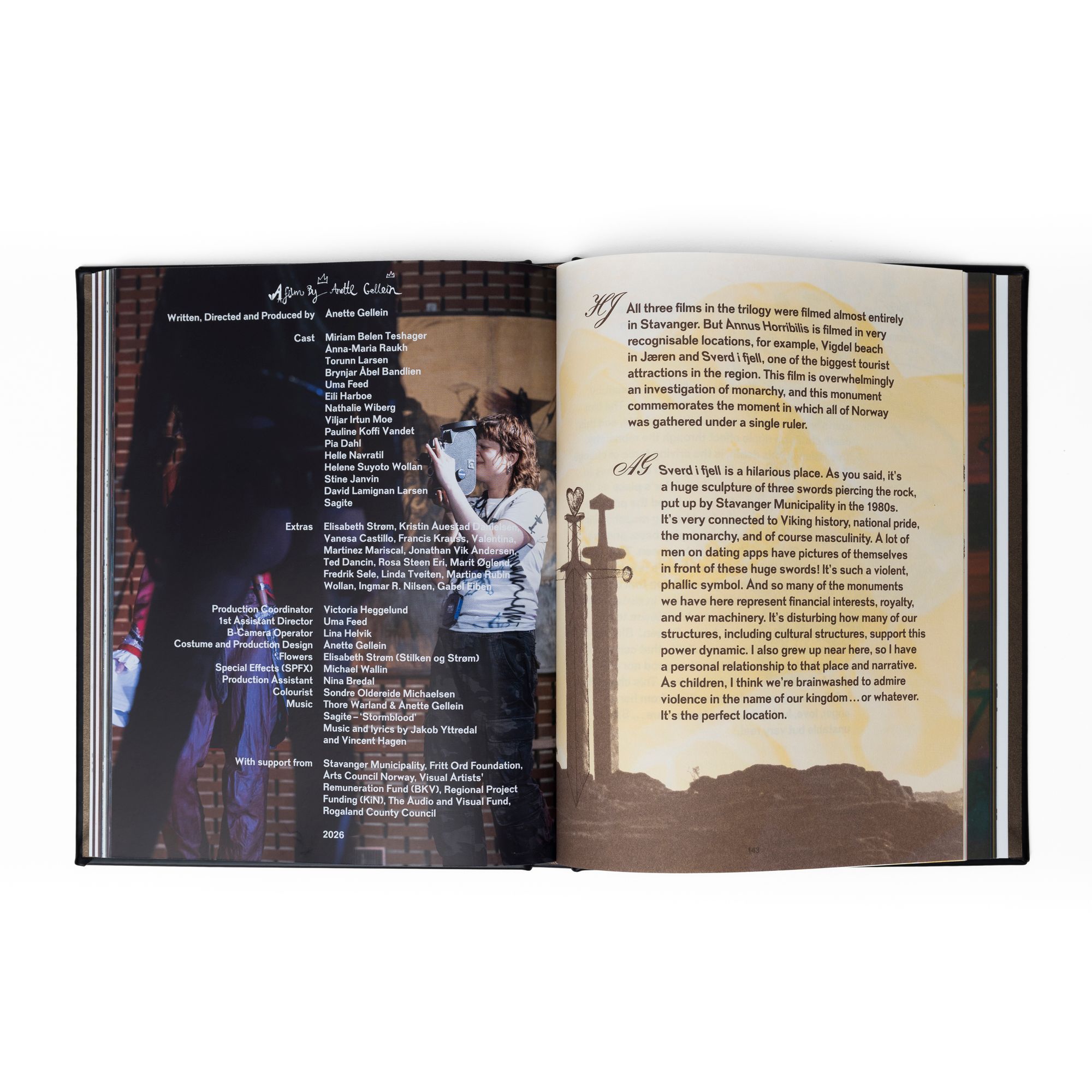
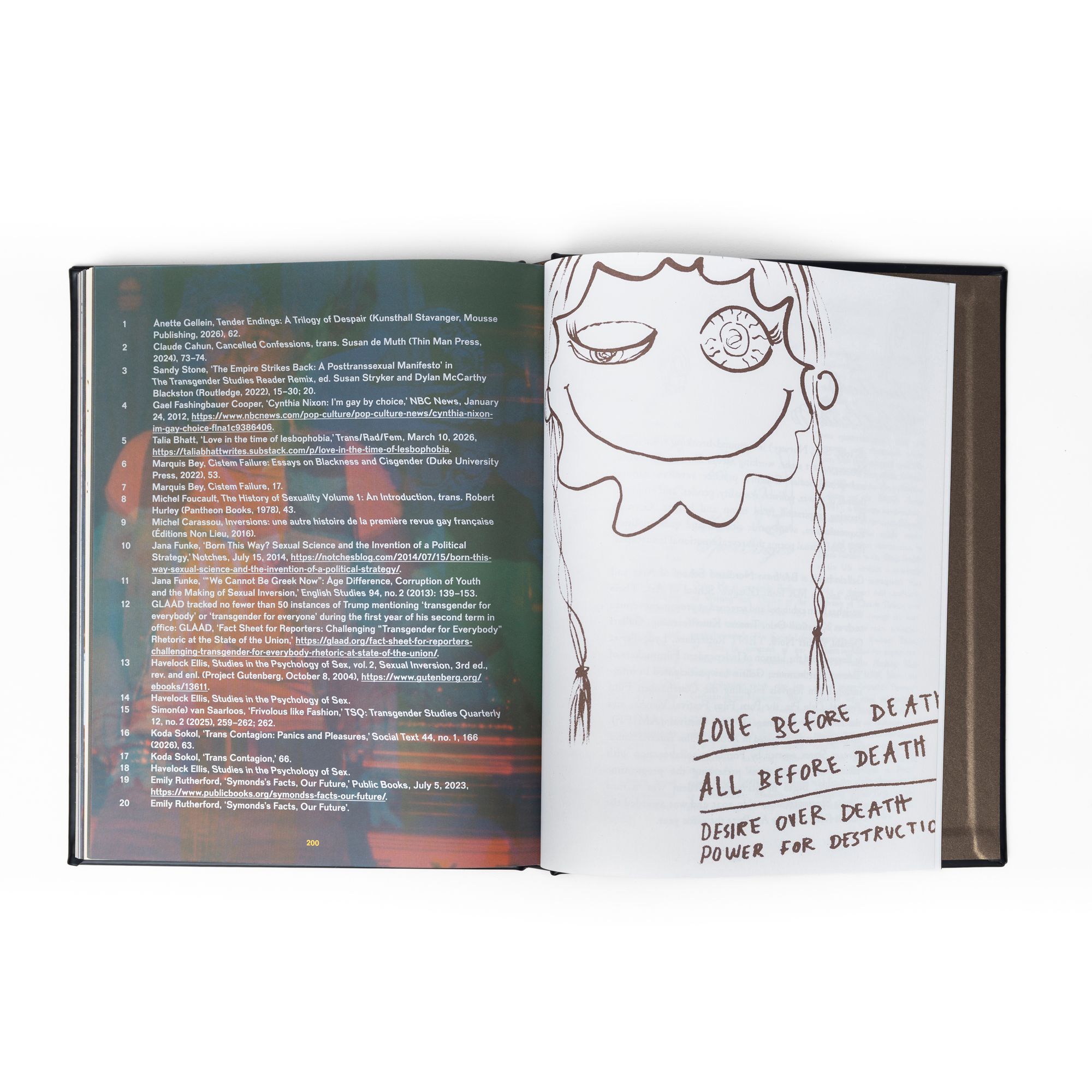
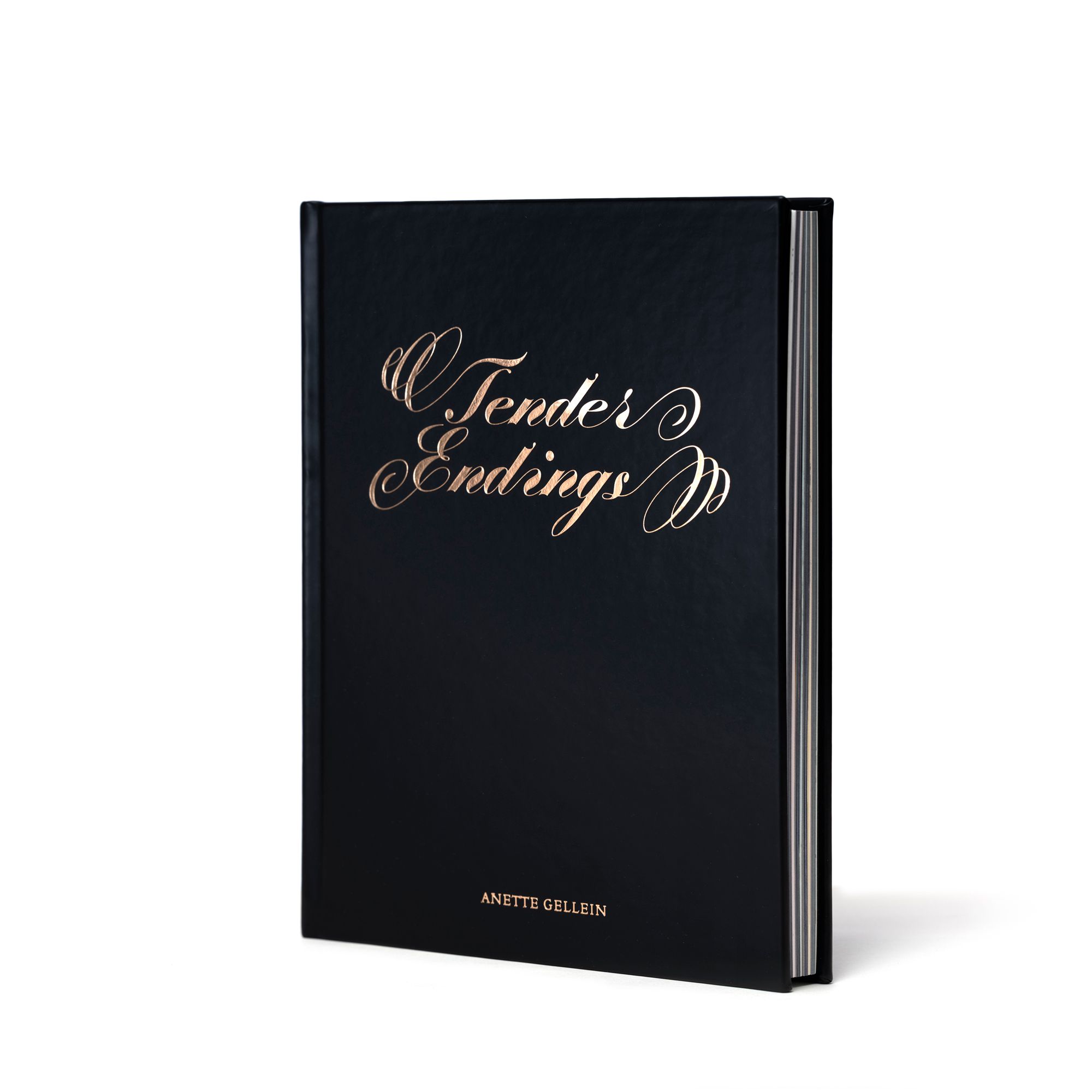
Anette Gellein, "Tender Endings", 2026. Edited by Heather Jones and Joseph Constable. Published by Kunsthall Stavanger and Mousse Publishing.
Anette Gellein, "Tender Endings", 2026. Edited by Heather Jones and Joseph Constable. Published by Kunsthall Stavanger and Mousse Publishing.
Anette Gellein, "Tender Endings", 2026. Edited by Heather Jones and Joseph Constable. Published by Kunsthall Stavanger and Mousse Publishing.
Anette Gellein, "Tender Endings", 2026. Edited by Heather Jones and Joseph Constable. Published by Kunsthall Stavanger and Mousse Publishing.
Anette Gellein, "Tender Endings", 2026. Edited by Heather Jones and Joseph Constable. Published by Kunsthall Stavanger and Mousse Publishing.
Anette Gellein, "Tender Endings", 2026. Edited by Heather Jones and Joseph Constable. Published by Kunsthall Stavanger and Mousse Publishing.
1 / 6
More info
Anette Gellein, Tender Endings, 2026. Edited by Heather Jones and Joseph Constable. Published by Kunsthall Stavanger and Mousse Publishing. Photo: Helle Navratil. Designed by Studio Bergini. Text by Joseph Constable, Anette Gellein, Amelia Groom, Heather Jones, Lola Olufemi and Mike Sperlinger.
Disclaimer: Heather Jones, editor of Tender Endings, is also the International Editor of CAS – Contemporary Art Stavanger.
About the author
Amelia Groom (she/they) is a writer, researcher, and cultural critic with a focus on queer cultural production, feminist theory, the minor, the everyday, the outdoors, the divinatory, the oblique, the body, the bodies, questions of knowledge production(s), divergent temporalities and pleasures, practices of refusal, practices of collective emancipation.