Exploring the visual art scene of Norway's southwest coast ➜ Since 2015
Nations performing themselves
Norway has won two World Cup matches in a row for the first time, and Erling Braut Haaland fever is officially upon us. Art and football writer Orit Gat takes a closer look at Haaland murals, the aesthetics of the Norwegian team group photo, and what it reveals about the idea of the journey itself as the ultimate goal (sic).
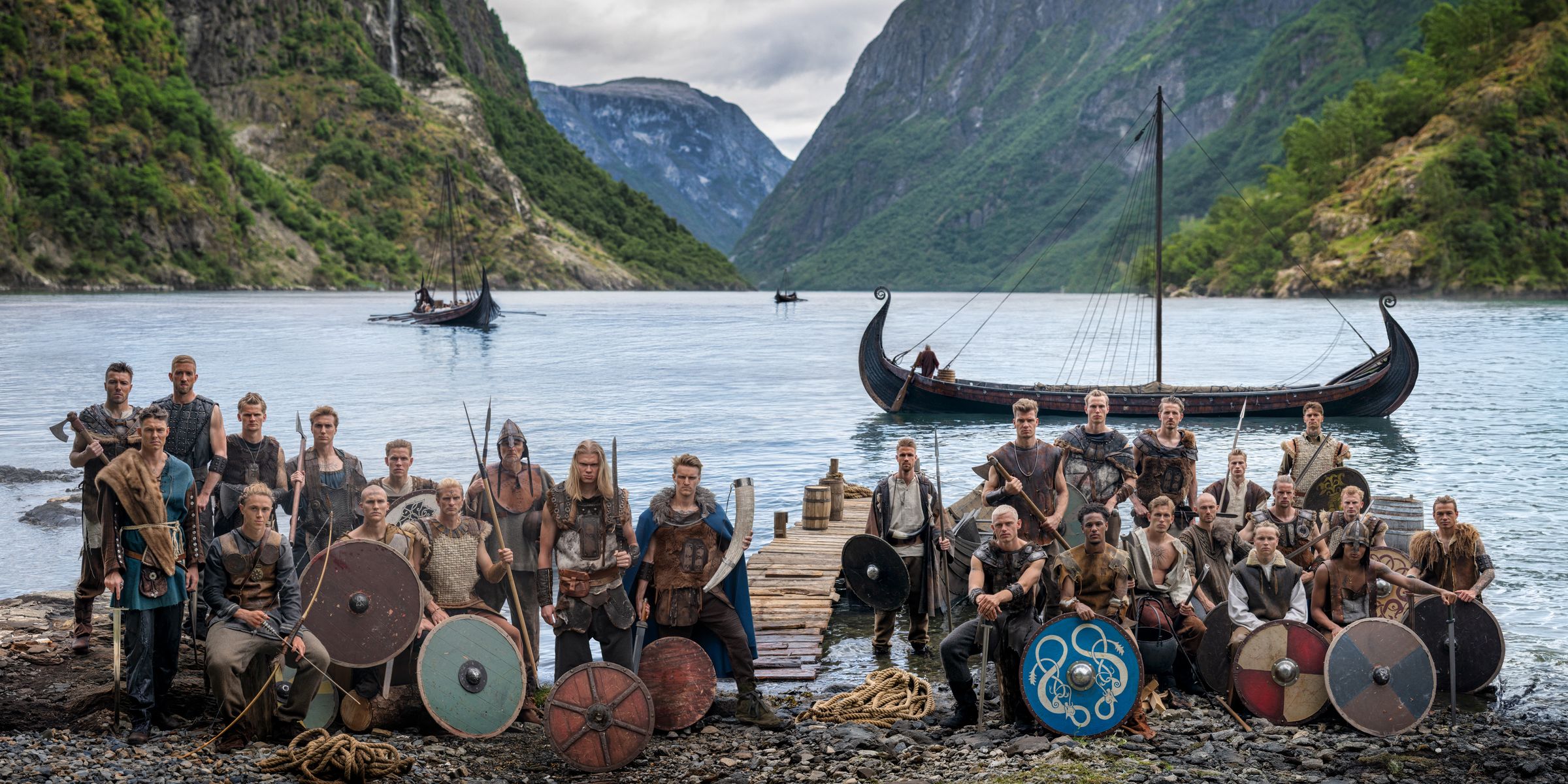
David Yarrow’s image of the Norwegian National Team. Photo: David Yarrow / Norsk Fotballforbund. Published with permission from Norsk Fotballforbund.
One of the best things about a World Cup is not the football, it’s the people who love football. Watching fans in stadiums and cities celebrating and crying, emoting and experiencing the truth of fandom: success or failure, it’s about coming together. This is what I watch. I’ve seen fans of the Norwegian football team do the Viking-row in the stadium (and on a Boston escalator, and in Times Square). I’ve read in the paper that parliamentarians in Norway also did it in support of the football team, following Speaker Masud Gharahkhani as he led the row. I’ve seen other nations do other such things. The Icelandic Viking Thunder Clap. How the Dutch dance in unison right and left. The Flower of Scotland with bagpipes in the grounds. The English singing ‘Sweet Caroline’ (‘Good times never seemed so good I've been inclined To believe they never would’).
There is an element of cosplay to this; nations performing themselves, or a version of their culture that can be caught in a glimpse in order to separate themselves from other fans.
These fans are practicing something uniquely their own, not just chanting versions of the same song. They are performing who they are, they are practicing coming together. Still, there is an element of cosplay to this; nations performing themselves, or a version of their culture that can be caught in a glimpse in order to separate themselves from other fans, to create a culture around the team. This World Cup, a perfect example is photographer David Yarrow’s image of the Norwegian National Team on a fjord in Oslo, dressed up as Vikings. The choice of Yarrow to photograph the team was not random. Yarrow is famous for capturing the iconic image of Diego Maradona raising the 1986 World Cup among a throng of photographers, and had previously photographed Erling Haaland as a Viking. In fact, it was Haaland's suggestion that Yarrow shoot the national team. In this new image, we see Erling Haaland with his hair down and a chest plate looking straight at the viewer. Alexander Sørloth holds a wooden club. Antonio Nusa wears a helmet to cover his not-so-Viking artificially bleached hair.
Erling Haaland with his hair down and a chest plate looking straight at the viewer. Alexander Sørloth holds a wooden club. Antonio Nusa wears a helmet to cover his not-so-Viking artificially bleached hair.
Also, as if it weren’t artificial enough, the photo is digitally altered. It was taken on Saturday, 30 May. Norway’s captain Martin Odegaard was a bit busy that day, playing for Arsenal in the Champions League Final (Arsenal lost on penalties). So in the shoot, his national teammates left a blank space for him, he was photographed alone a few days later and digitally added into the image.
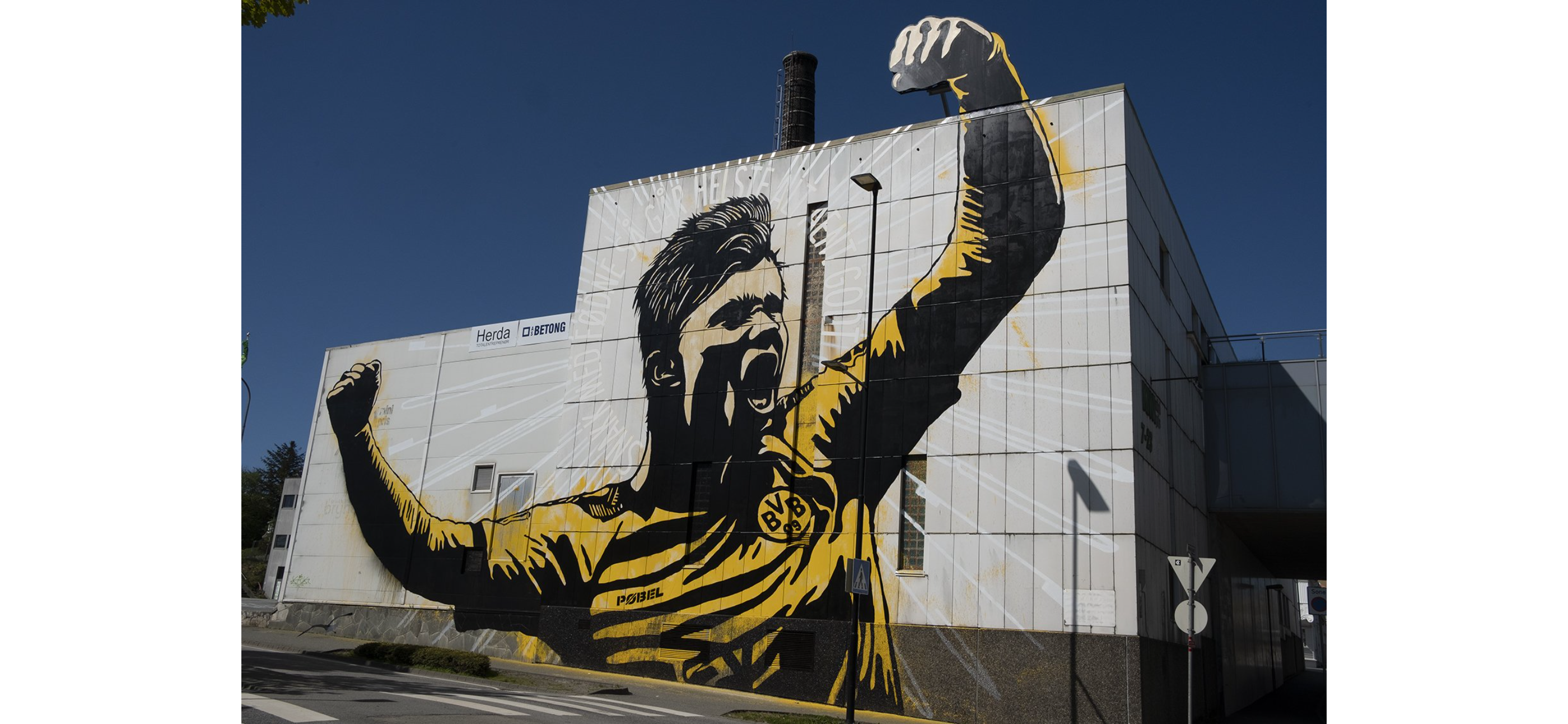
Erling Braut Haaland (2022) by Pøbel. Photo: Finn E. Våga / Time kommune
This doesn’t feel like a straightforward image. Other national teams are photographed on the training pitch, in their uniform. But in this team photo we see the fjord, large green mountains rising on either side, three longboats in the water and the footballers on the shoreline, complete with tunics, armours, axes, spears and shields. I first read about it in The Athletic, where they discuss how it’s likely that Vikings made the trip to North America centuries before Christopher Columbus and other Europeans. ‘And now they are back’, writes Senior Football Reporter Greg O'Keeffe. He calls the players ‘grizzled Nordic warriors’. He says they are ‘ready to raid’.
As a female football fan, I don’t love the connotation of raiding.
As a female football fan, I don’t love the connotation of raiding. I’ve also never been one for warriors, nor are grizzled men my type. There’s a common way of trivialising these associations of sport with power, domination and war, describing athleticism as men preparing for combat and as a peaceful substitute to violence. Neither feels like a particularly useful or contemporary take. Still, I watch these men regularly, and I am open to thinking about self-representation, and to wondering if these players may like being photographed this way.
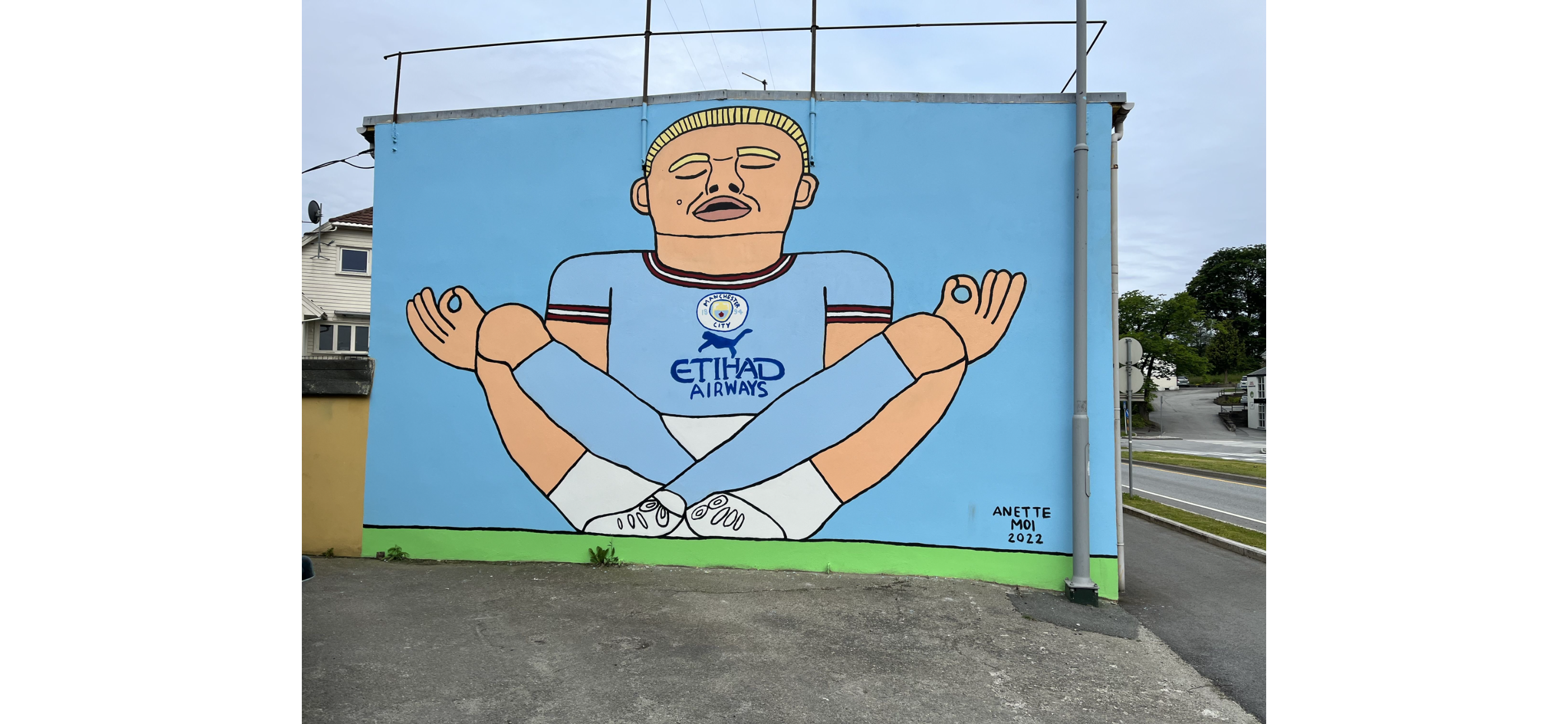
Erling Braut Haaland (2022) by Anette Moi. Photo: Finn E. Våga / Time kommune
Footballers are usually imaged in the exact same way – on the pitch or the training ground, in a kit or a uniform, with a ball. The exceptions are amazing: In 2023, GQ featured Haaland on the cover wearing a crisp white shirt, top buttons undone as was his hair, a gold chain, hands crossed looking straight at the camera, almost smiling. It’s a representation that is both quite soft (in the interior pages, Haaland is also photographed in a jumper woven with pearls) and totally confident. GQ has done this before: In a warm and glamorous photoshoot the year prior, they photographed Egyptian superstar Mo Salah kitted out in full 1970s athleisure, tight striped vests and a tweed coat. Salah’s smile, Haaland’s coquettish look – perhaps these guys, who we are so used to watching and expect to present a specific kind of masculinity, long for a multiplicity of imagery, to not be all the same, always the same.
Perhaps these guys, who we are so used to watching and expect to present a specific kind of masculinity, long for a multiplicity of imagery, to not be all the same, always the same.
Look at the public murals of Haaland in Rogaland: in his ‘zen’ celebration, legs folded in lotus pose; from his Borussia Dortmund days, screaming, arms outstretched in celebration. To always be captured only in the moments after scoring, after winning, is an impulse that ignores much of the experience of what playing sport must be like: the preparation, the stepping onto the pitch, the waiting for the whistle to blow, for everything to kick off. At least in the Viking photo, the Norwegian players are not celebrating. They’re on their way. Perhaps – hopefully – to great things.
About the author
Orit Gat is a British writer and art critic living in London. Gat has written about contemporary art, books, digital culture, and football for numerous magazines including The White Review, frieze, e-flux journal and e-flux criticism, ArtReview, Jacobin and Texte zur Kunst, among others.