Exploring the visual arts scene of Norway’s southwest coast ➜ Since 2015

Notes on a Vanitas

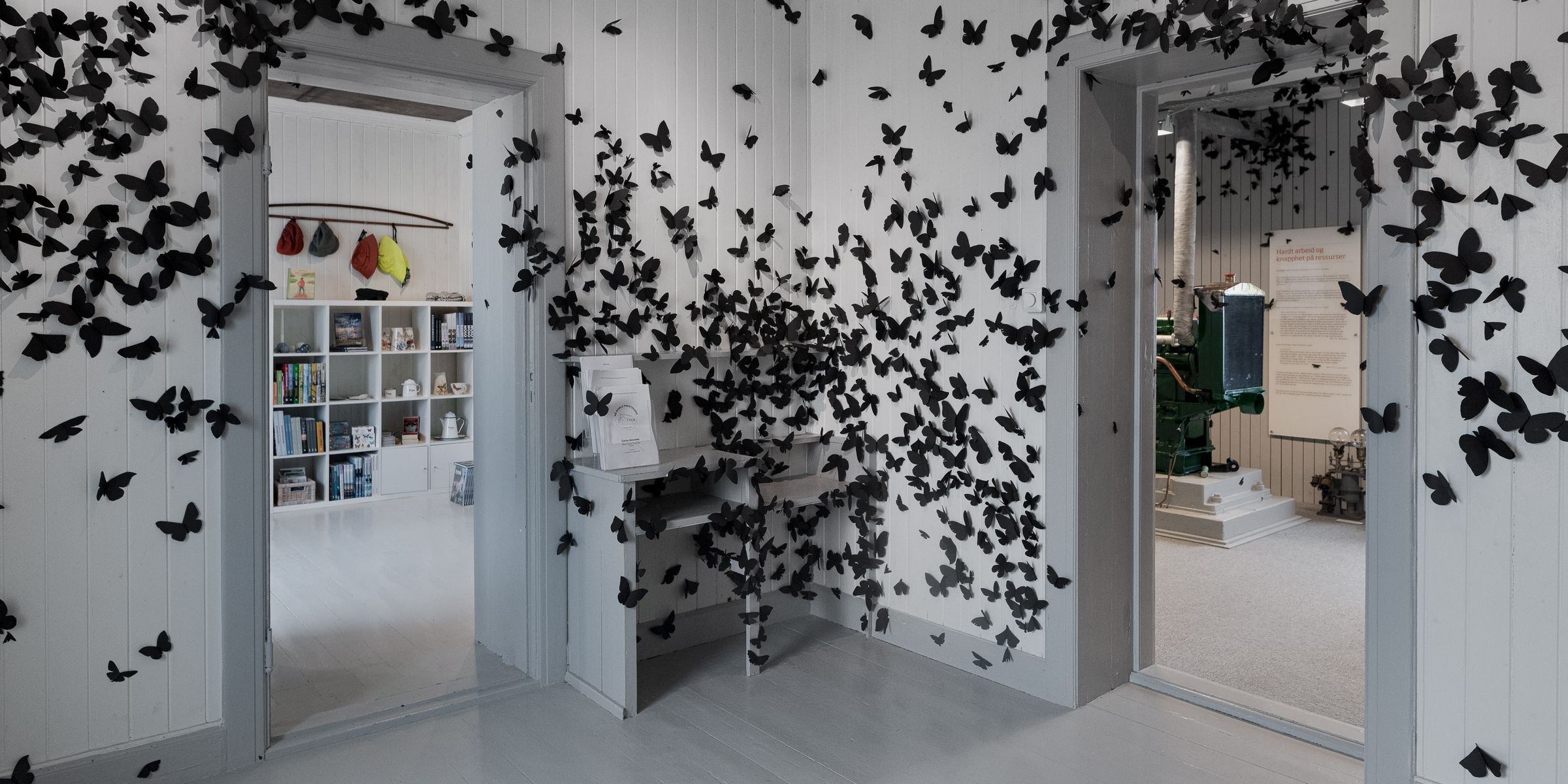
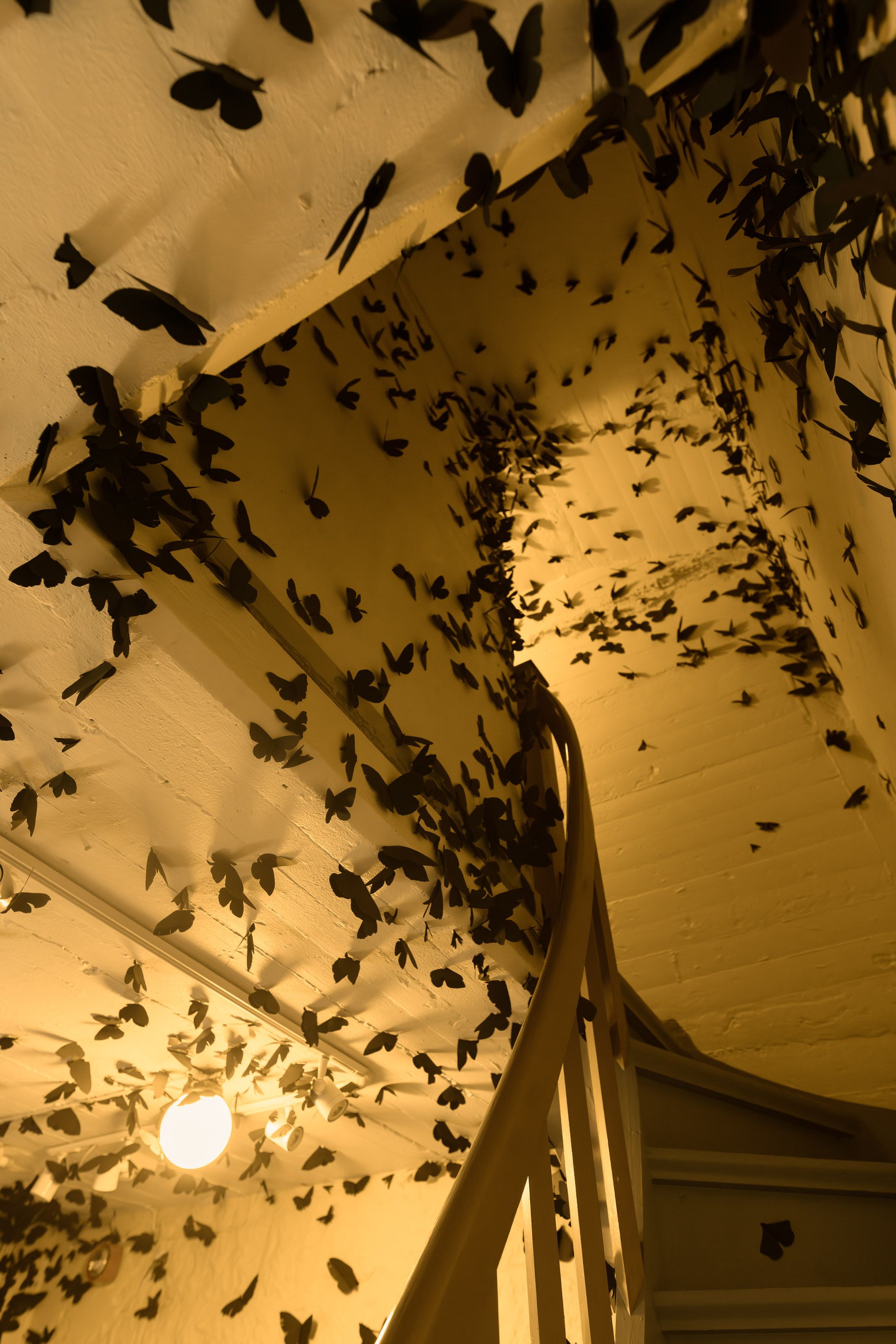
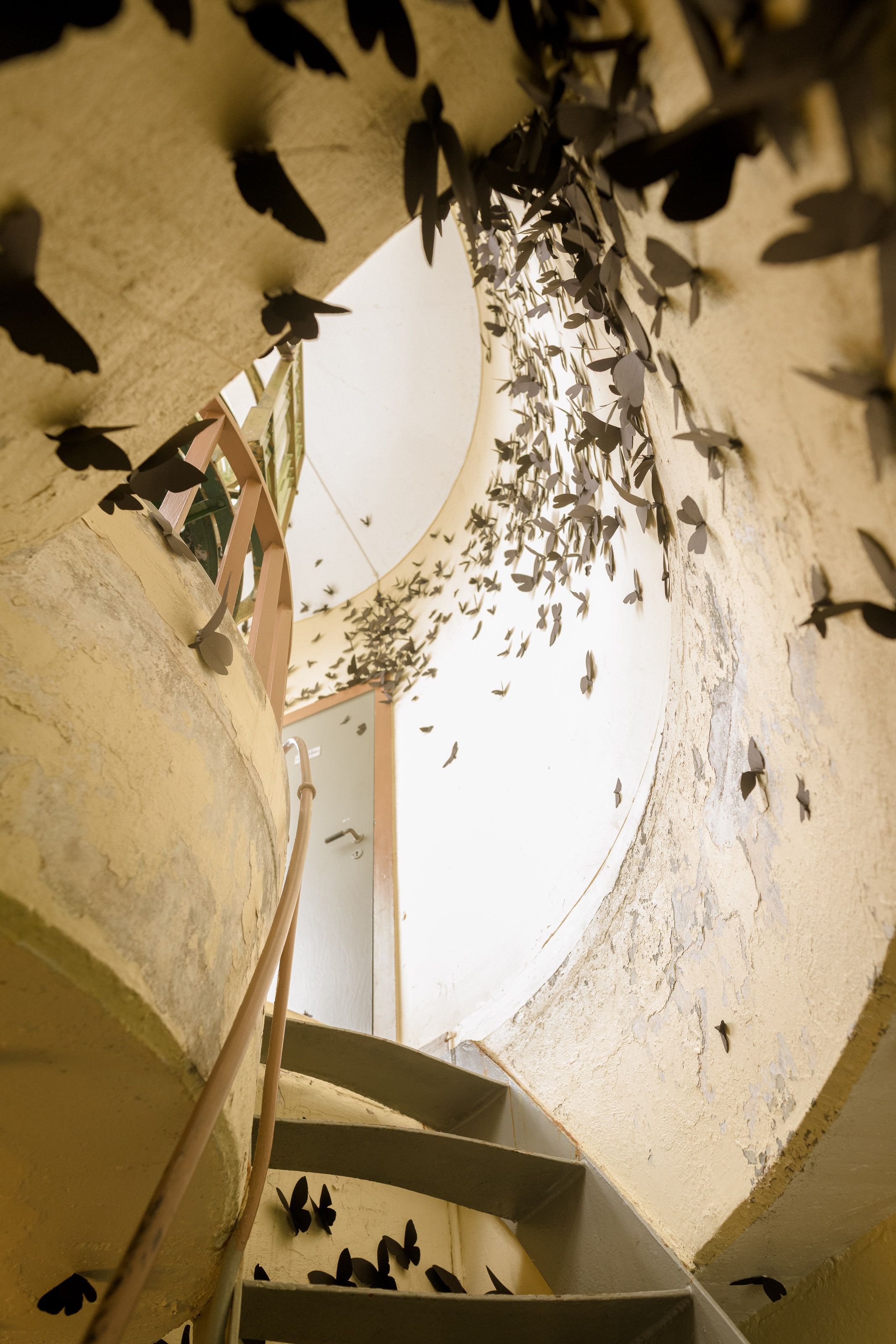
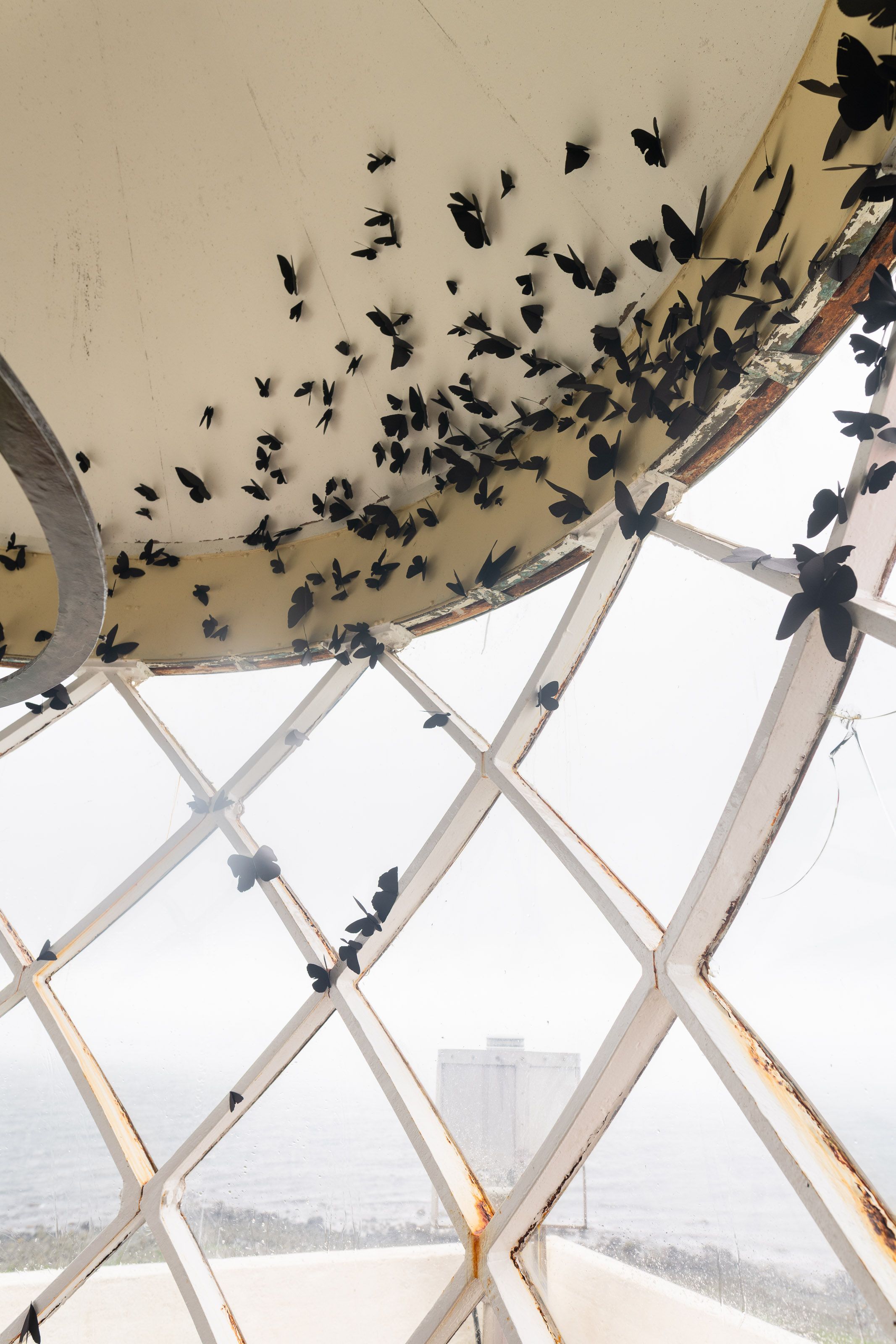
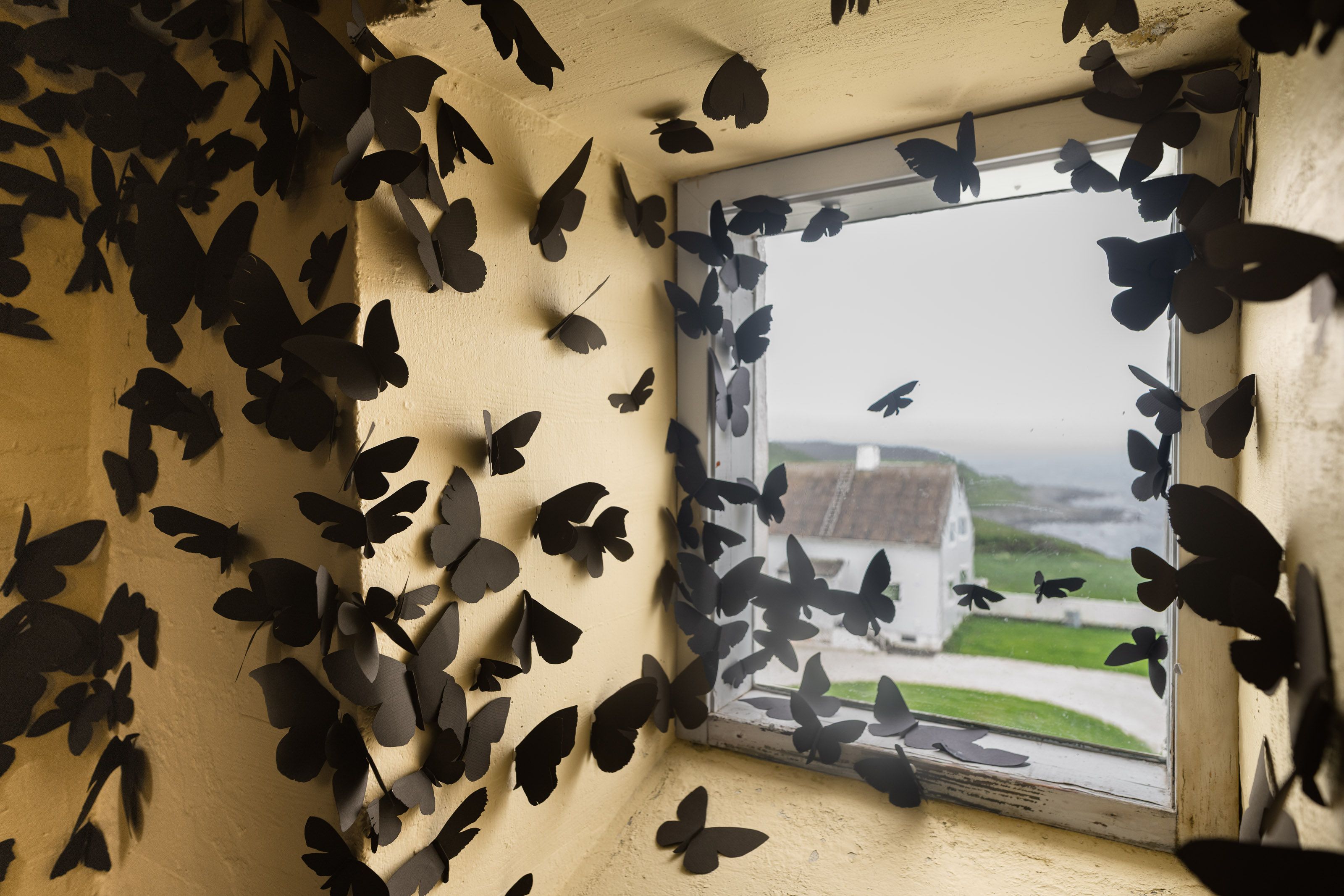
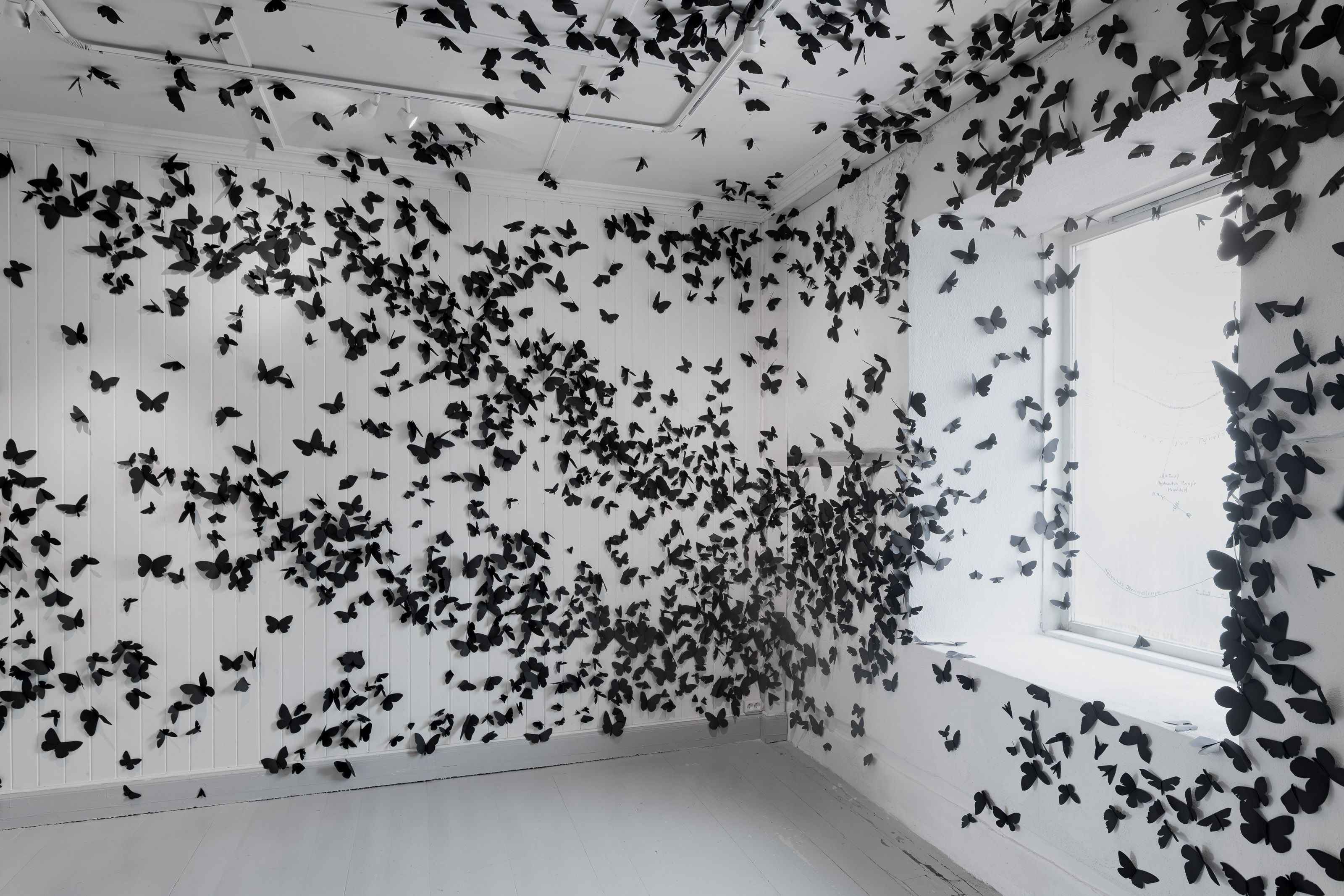
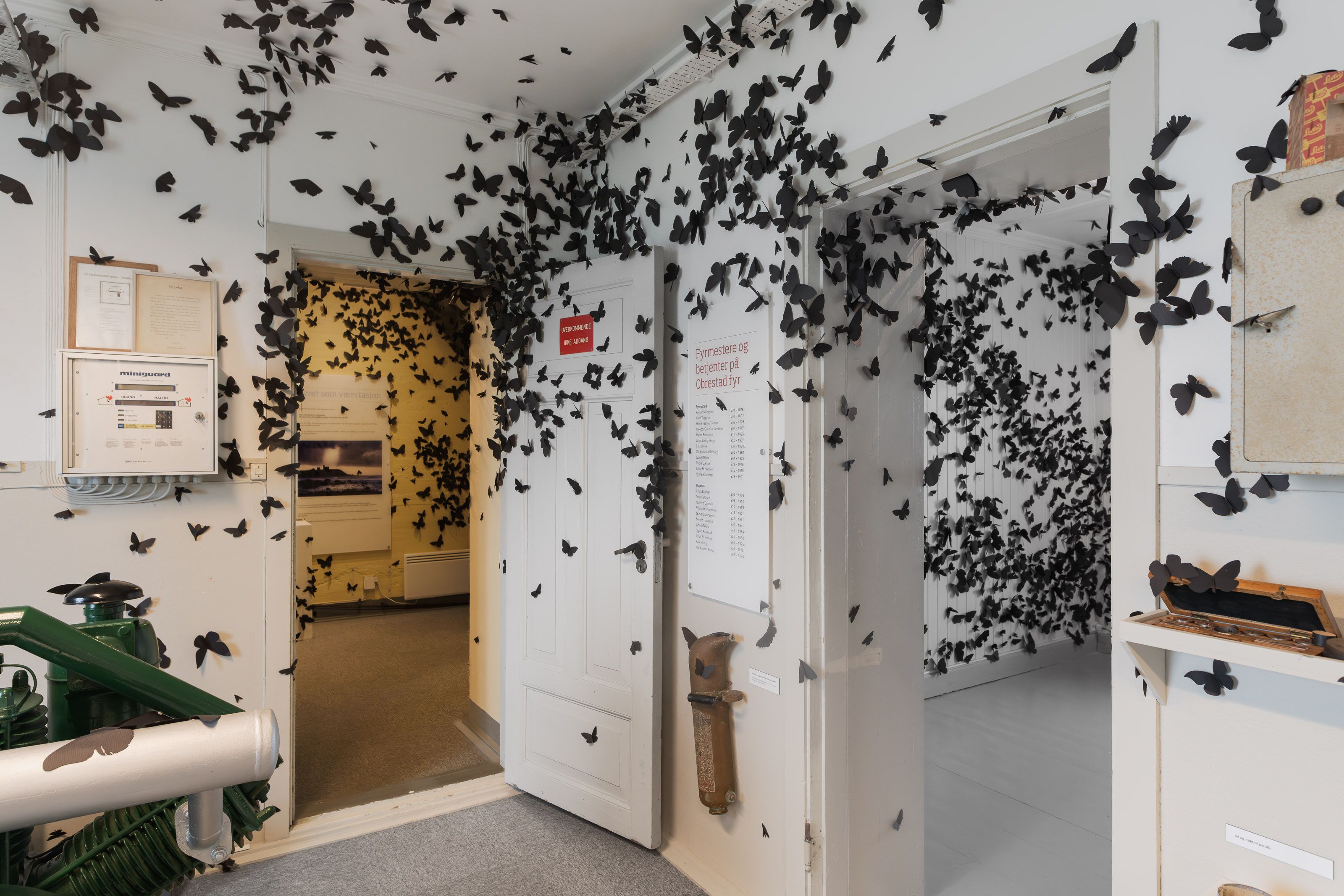
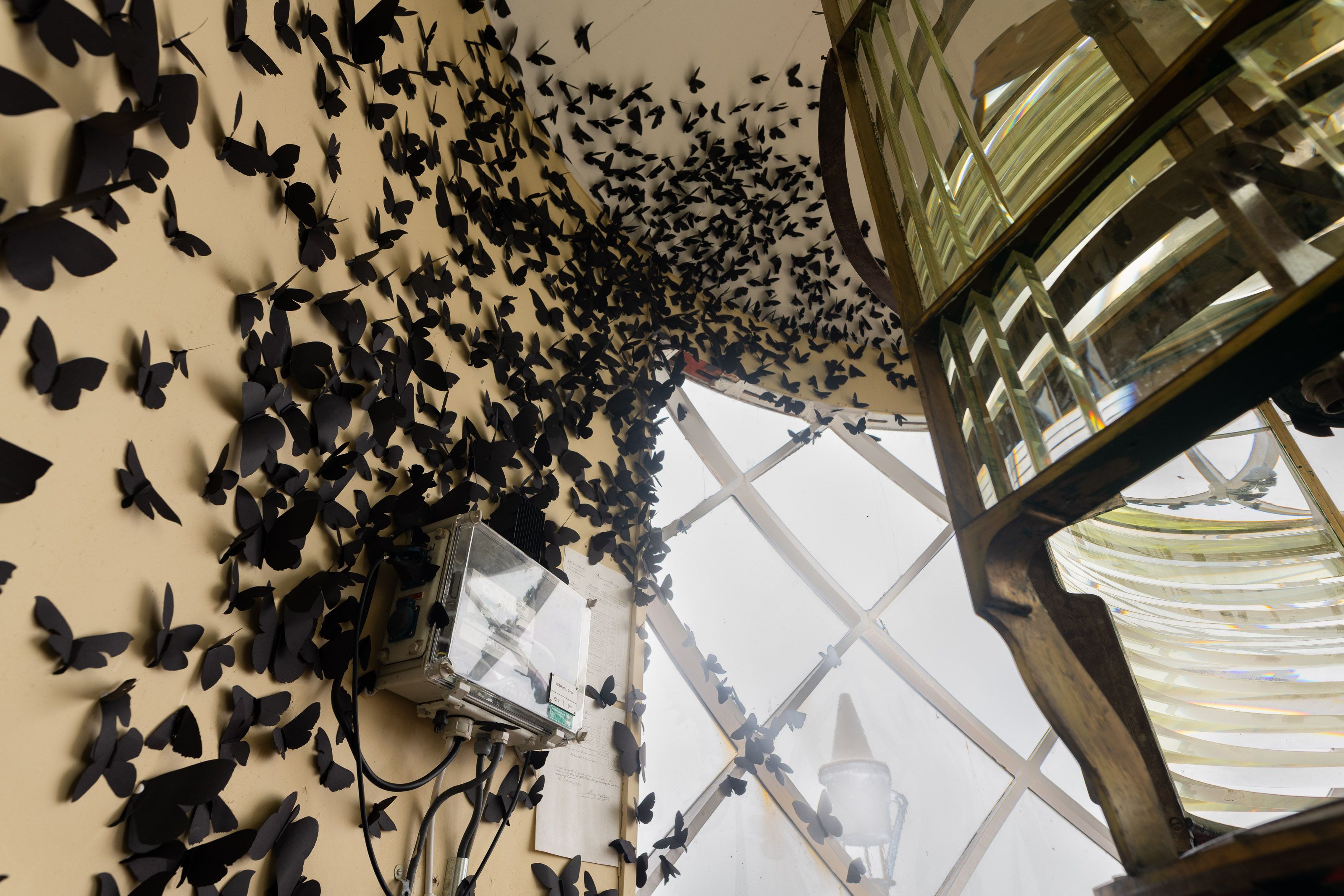
In June, Mexican artist Carlos Amorales transformed the interior of Obrestad Lighthouse with thousands of handcrafted black butterflies. The installation, titled Black Cloud, has traveled the world since 2007, responding the specific architecture and conditions of each site. On the occasion of the work’s first presentation in Norway, Amorales described for CAS the deeply personal story behind the project.

Carlos Amorales, Black Cloud, 2026. Photo: Erik Sæter Jørgensen / Hå gamle prestegard.

Next year will mark 20 years since I drove to the north of Mexico to say goodbye to Carmen Moya de Morales, my grandmother. I knew that her heart was getting weaker and weaker and that soon she would pass away, so it was clear to me that this would be the last time we would meet. I wanted to spend some meaningful time with her, so I brought my two sons, Lorenzo and Clemente, who at that time were toddlers. The combination of someone exiting life and two boys just entering was special – it placed me right in the middle of the balance of life, witnessing the decaying energy of Carmelita on one side and the sweet naivety of my young sons on the other.

Carmelita spent all her time in bed while the children learned to use their bodies, taking clumsy steps. The world around us had shrunk to within two blocks of my grandmother's house. She spent her time in silence, dozing. There wasn't much to say or do other than spend time together. I liked the boredom, letting the days go by, entertaining myself by taking care of the boys' basic needs: eating, pooping, playing and sleeping, every day the same. Occasionally going to the super market, cooking something simple.

Photo: Erik Sæter Jørgensen / Hå gamle prestegard
1 / 3

As time passed in my grandmother's small and quiet house, only one thing was difficult for me: sleeping. Every night I struggled to fall asleep, thinking without stopping about my life, the life “to be” of the boys, and the departing life of the old fragile woman laying in her bed, until finally I drifted off to sleep. It was on one of those sleepless nights that the image appeared clearly in my mind: the vaulted ceiling of an old colonial building, completely covered by moths. At that very moment, I knew I had to reproduce that image in my work.

The superstition that moths are harbingers of death isn't unique to Mexico. Perhaps it's a universal superstition, I don't know. But even recently a large moth appeared in my library and my visceral reaction was to be terrified and quickly chase it out the window with a broom. I almost destroyed it trying to get rid of it, and afterward I felt terrible because the moth was actually a beautiful creature... And my superstition had been stronger than my reason.

Photo: Erik Sæter Jørgensen / Hå gamle prestegard

The way that I created Black Cloud, trying to reproduce with black paper butterflies the image I saw in my mind that sleepless night, is something I have recounted thousands of times, and perhaps now is not the right place to do so again. Instead I want to delve more into its meaning as a Vanitas and not so much into its formal composition or other more sociological interpretations that have been written throughout the almost twenty years of the piece's history. Because this installation is not inspired, as has been written several times, by the natural phenomenon of Monarch butterflies that migrate several times a year from Canada to Mexico, nor does it represent a metaphor for migration. Nor does the piece, like a cloud of carbon, represent the pollution of nature by humankind... The installation of thousands upon thousands of nocturnal butterflies that occupy the architectural space where I have been invited to install is not a metaphor for anything political. In reality, it is something else entirely: it is a vanitas, a memento mori, a reflection on death.

Regarding the vanitas, the Prado Museum website states: Within the genre of still life, the vanitas style reached a special development during the Baroque period. Its name comes from a passage in Ecclesiastes (1:2): Vanitas vanitatum omnia vanitas (Vanity of vanities, all is vanity) and it was used pictorially to introduce a reflection on the fleeting nature of life and the futility of worldly pleasures in the face of the certainty of death. "All is vanity" means that life, pleasures, and human achievements are fleeting, uncontrollable, and ultimately lack lasting purpose if satisfaction is sought only in material things or outside of God.

Photo: Erik Sæter Jørgensen / Hå gamle prestegard

I don't intend to limit the interpretation of Black Cloud to the funerary practices of any particular culture. The piece itself is free to be understood in any way by anyone, since it isn't an illustration of anything specific. I'm simply writing about how it appeared in my mind and how I think it relates to the history of art, even if through a superstitious image that, in my opinion, is more related to the landscape genre than a classical still life. Following this line of reasoning, I could say that the installation, when fully deployed in a room, forms a landscape which functions as a "memento mori."

To date, I have installed Black Cloud in over thirty different locations in countries including Mexico, the United States, Canada, Luxembourg, France, Spain, Italy, Germany, the Netherlands, Denmark, Sweden, Romania, Russia, Israel, Australia, Japan, Honduras, Panama, Colombia, and now in a lighthouse in Norway. Year after year, I am asked to install it in various types of buildings, both old and modern, where it always integrates organically with the architecture, as if it were a newly arrived plague. For me, the piece slumbers between the unconscious and the conscious, like a person asleep with their eyes open. One association, a vampire: Black Cloud, as a narrative, is similar to the moment when Dracula arrives in England on an abandoned ship. But on this ship actually travels Carmelita, my grandmother, who upon dying, like an Egyptian soul, embarked on the long journey of death, a journey that has not yet ended.

This installation has taken me around the world, and I'm grateful for that. For me, it's a magnificent memento mori made of thousands of black butterflies; an image with which I unconsciously bid farewell to Carmen. Its reference to death doesn't mean it's a dark Gothic work, but it is Baroque, in the sense that it's composed of hundreds of internal flourishes disguised with an apparent naturalism. I often imagine that when it's light, the black butterflies sleep, and when it's dark, they awaken and flutter around the museum, changing positions within the installation. For me, Black Cloud is an installation that seems still and passive but is actually energetically active. I'm not exaggerating; the piece, as I just said, flies around the world, both inside and outside art spaces, always simultaneously arousing fascination and repulsion simultaneously.

Photo: Erik Sæter Jørgensen / Hå gamle prestegard

More info

Black Cloud is on view at Obrestad Lighthouse from June 6 - September 6, 2026. Visit Estudio Amorales for more information.

About the author

Carlos Amorales (Mexico City, 1970) lives and works in Mexico. He is a multidisciplinary artist who studied at the Gerrit Rietveld Academy and the Rijksakademie in Amsterdam. He has participated in residencies with Atelier Calder, Saché, France (2012); Mac/Val, Val-de-Marne, France (2011); and the Smithsonian Artists Research Fellowship, Washington, D.C. (2010).

All articles by Carlos Amorales