Exploring the visual arts scene of Norway’s southwest coast ➜ Since 2015

Studio Days

On the occasion of his upcoming exhibition at Galleri Opdahl, CAS invited Norwegian artist Sigve Knutson to reflect on his creative process. Materials, tools, and spontaneity comes together to create his playful sculptures and installations. Read on for a day to day account of the artist's work in the studio.

Studio Days, 12. Dec – 3. Feb, 2026... I wanted to write something that could support my exhibition at Galleri Opdahl in Stavanger, but that also could exist on its own. I have always been drawn to straightforward recordings, something raw rather than something that has been worked over and over again to make it as good as possible. I am an artist, not a writer. When I make work, I try to make it through as few transformations as possible, so it makes sense for me to approach writing in the same way. Here is an honest recording of my days inside and outside my studio leading up to the exhibition.

Name: R0003486.JPG
Created: 12. december 2025 kl. 16:29
Size: 13,9 MB
Unit: RICOH GR IIIx

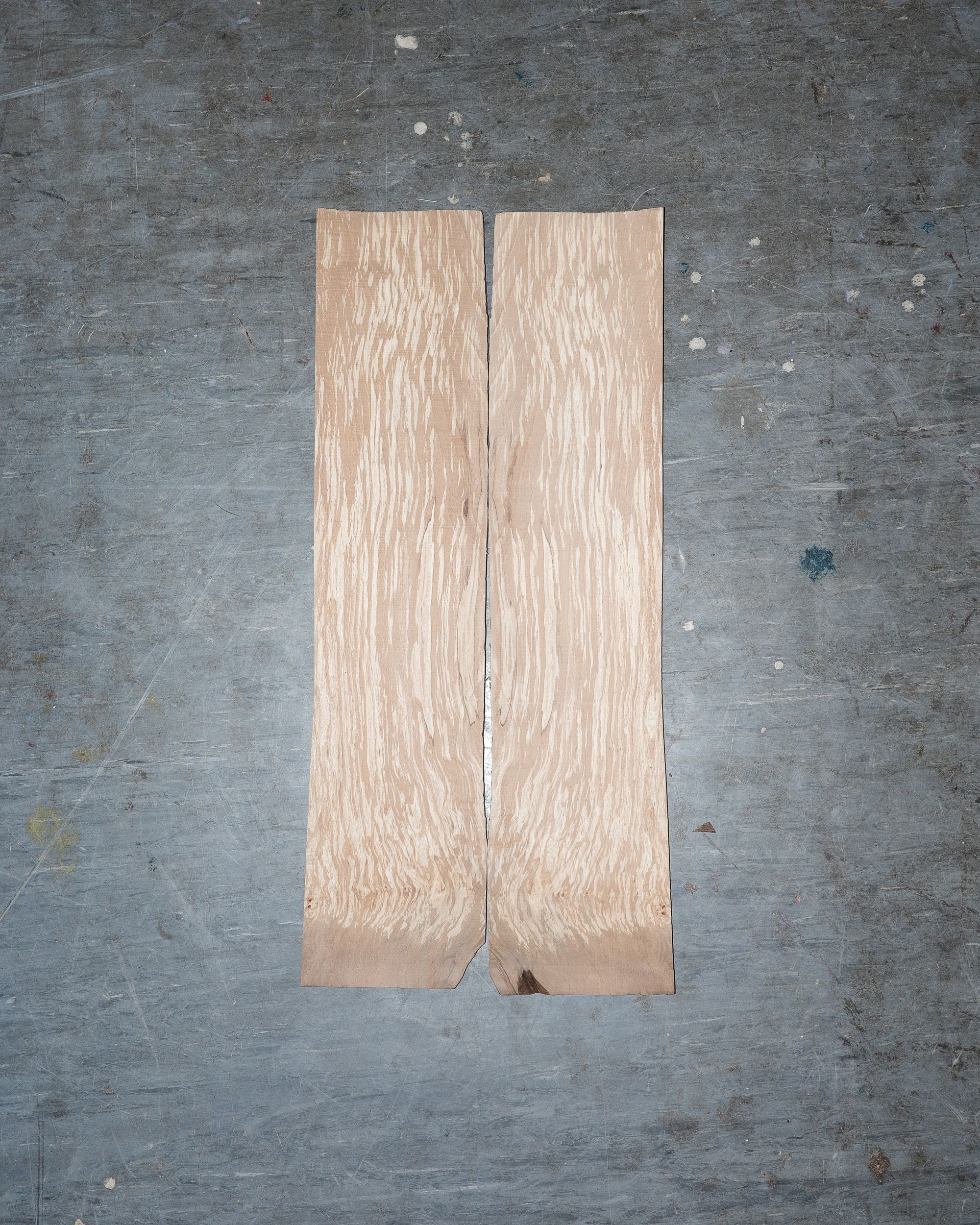
Book-matching planks for smoking tomorrow’s salmon dinner. The planks need to be in water for a day to not burn up on the grill. I used my bandsaw and put a new blade on it that I had never used before. It was a 19 mm coarse blade for ripping planks. I went outside to the pile of cut-offs from the four tonnes of beech wood I bought when I moved my studio to Lillesand from Oslo. It is very dense and hard wood, great for toys, kitchen utensils and such, but it shrinks a lot and cannot be left outside for long without rotting. That is why it is often used for small parts, or glued up in industrial wood panels.

Book matching: a piece of material where a cut is made, revealing the same material pattern on two surfaces; one is a mirrored version of the other. Laid out as a book, this becomes a cool pattern.

Bandsaw: Record 350S
Name:R0003495.JPG
Created: 15. december 2025 kl. 16:14
Size: 13,7 MB
Unit: RICOH GR IIIx


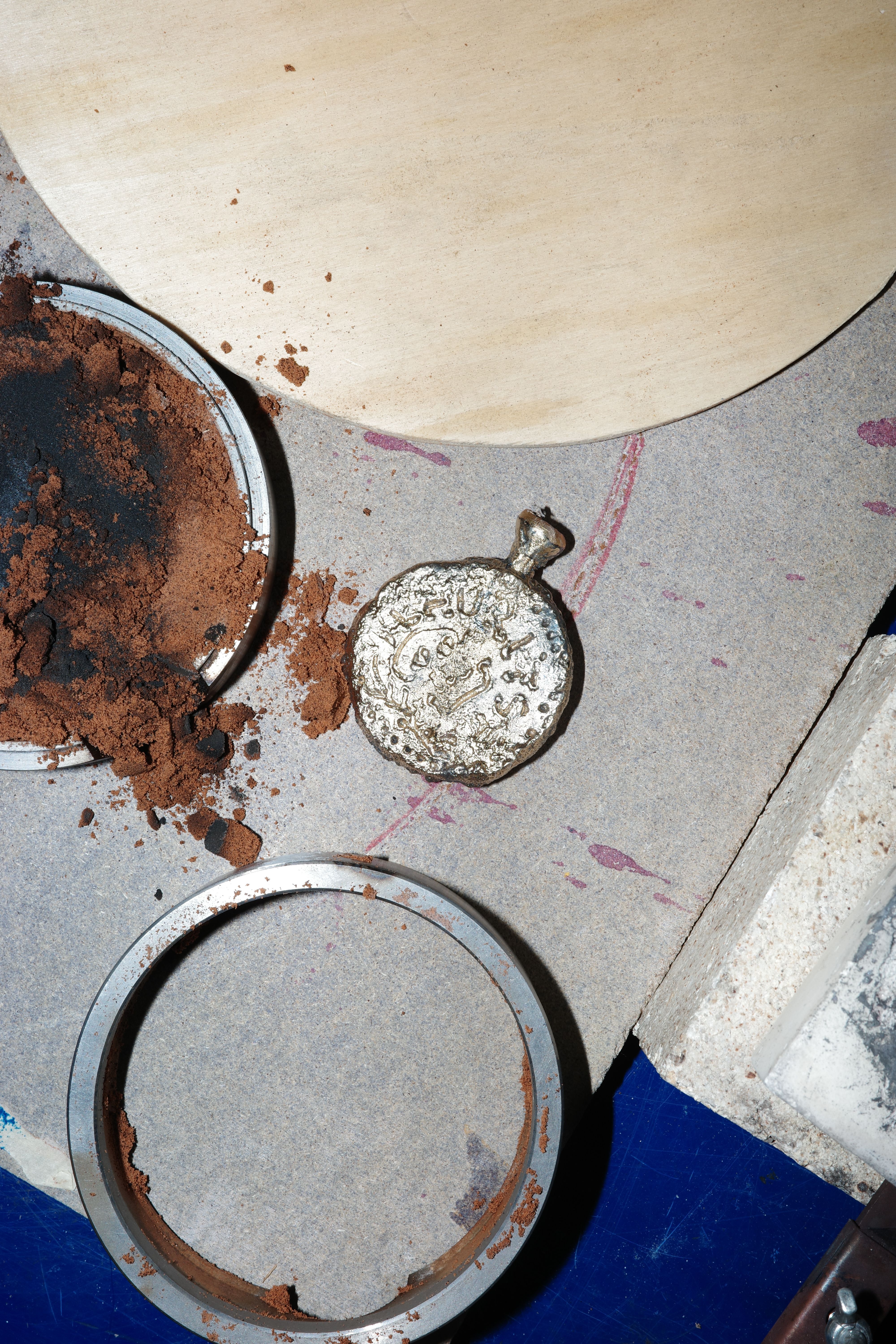
Casting experiment with bronze. I was not sure it would work to use my torch to melt the bronze in a tiny crucible, but it did. I made a small model of a large coin so I could use it as a gift for a nephew who is into pirate-type things. It was fun to see if I could model it in something clay-like, but moisture from natural clay would have created a damp mould, and possibly an explosion. I found some plastic play dough, and it gave a really nice, naïve look to the simple coin. The sand stuck a little to the play dough, but that also helped to create an interesting surface.

Bronze: an alloy made primarily of copper and tin.
Crucible: a graphite container that can handle the high temperatures, and contain molten metal.
Casting sand: Delft clay

Name:R0003514.JPG
Created: 16. december 2025 kl. 19:10
Size: 11 MB på
Unit: RICOH GR IIIx


I was cleaning out wood leftovers and cut-offs. I had made some small boxes using wooden nails as a way of making the planks stick together. After that, I thought I would make something larger using leftovers, and then plug the different pieces together with wooden plugs. No glue. This means I can take the parts apart and work them before assembling them again. Easy work.
The planks are made from some elm wood from a local guy who dries the slabs he cuts on his large bandsaw in a converted freezer shipping container. Elm is such a difficult wood to work using hand tools. It does not even have a good smell. But it really looks good, with the brown darker colour. It is not easy to find that in Norwegian woods.

Wood kiln: a kiln is often used to control the humidity levels in wood and to speed up the drying process.
Elm wood: light brown in colour and workable, but it required very sharp tools. There are not many Elm trees left anymore because of Dutch elm disease.

Name: R0003529.JPG
Created: 17. december 2025 kl. 21:26
Size: 11,8 MB
Unit: RICOH GR IIIx


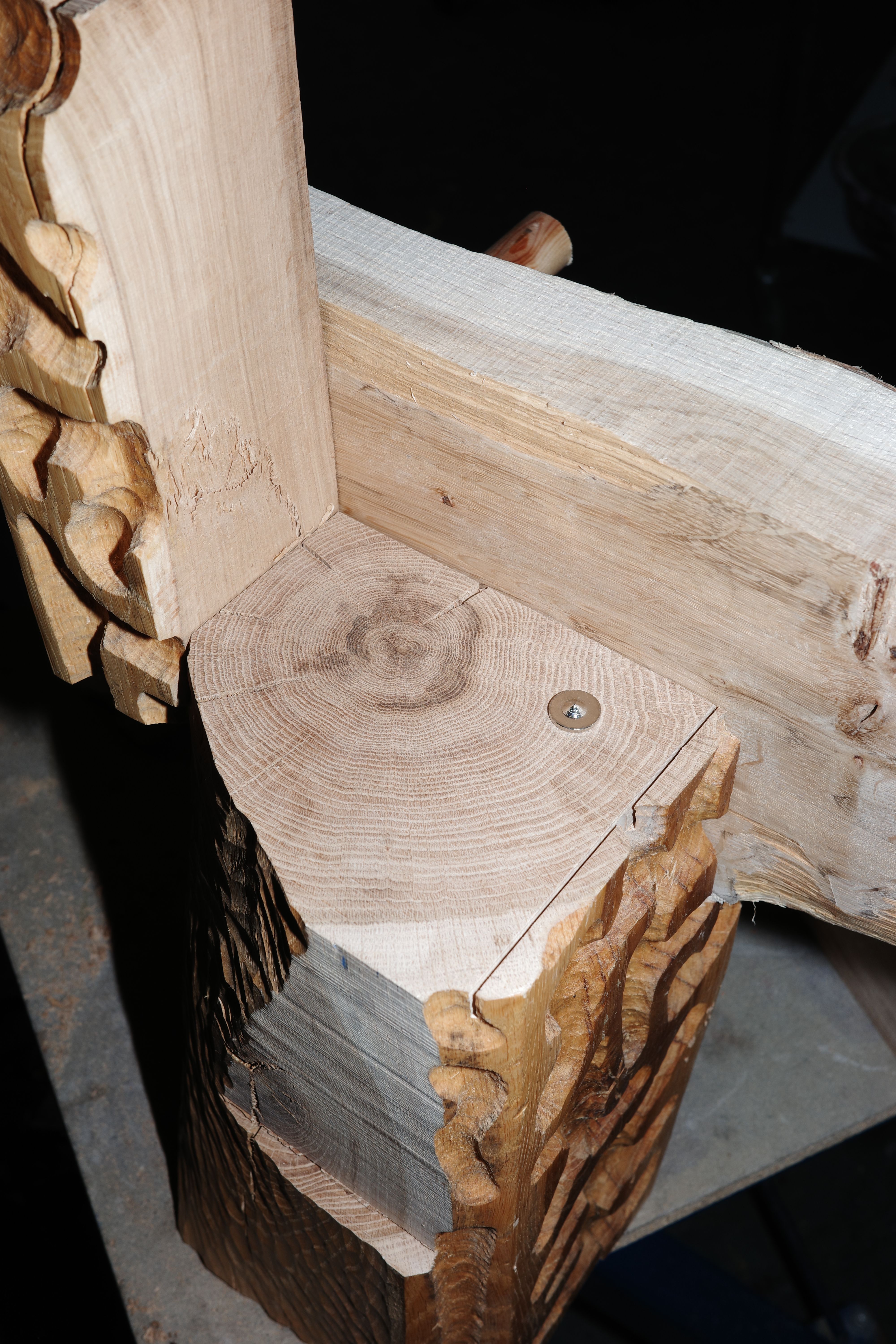
Quickly joining pieces of oak leftovers, seeing if I can make something accidentally good. I join the pieces using wooden plugs, and sometimes I use this little metal plug to mark where the corresponding hole in the other piece should be drilled. Oak is a little toxic to work with, especially when cutting on a bandsaw or sanding. It contains a lot of tannin. I like it when a sculpture of this small size has a leg part that lifts another shape up, almost as if it had a plinth built into its form.

Oak: a very strong wood that can be used for outdoor sculpture, but only the dark heartwood; the sapwood will rot.
Dowel centers: small metal tools that are placed in a pre-drilled hole in one piece to mark where the corresponding hole should be drilled in another piece.

Name: R0003532.JPG
Created: 18. december 2025 kl. 17:33
Size: 11,2 MB
Unit: RICOH GR IIIx


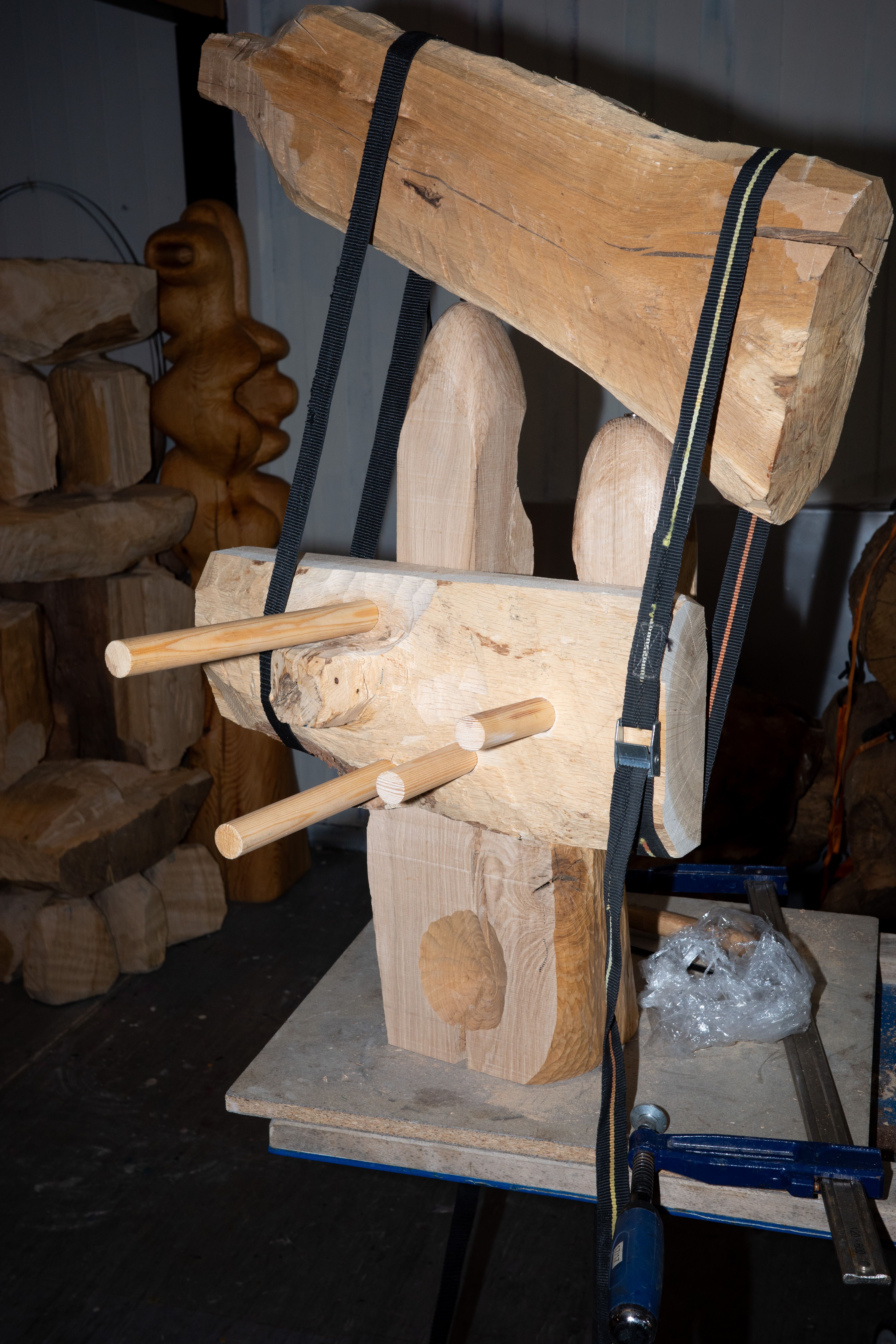
Today I was cleaning out the workshop. It used to be an old kindergarten, so there is a lot of furniture and other things from that time that needed to be taken to the second-hand shop. I used my scriber to transfer the shape of the two standing forms onto the top piece of wood. The transport straps worked well to temporarily fix the piece in position so I could scribe a pencil line. I then used this line as a guide for where to carve away material. For this sculpture, I used a lot of pine tenons to fix the different parts together.

Log scriber: used to transfer the contour of a shape onto another surface.
Tenon: round sticks of wood.

Name: R0003542.JPG
Created: 19. december 2025 kl. 18:31
Size: 12,9 MB
Unit: RICOH GR IIIx


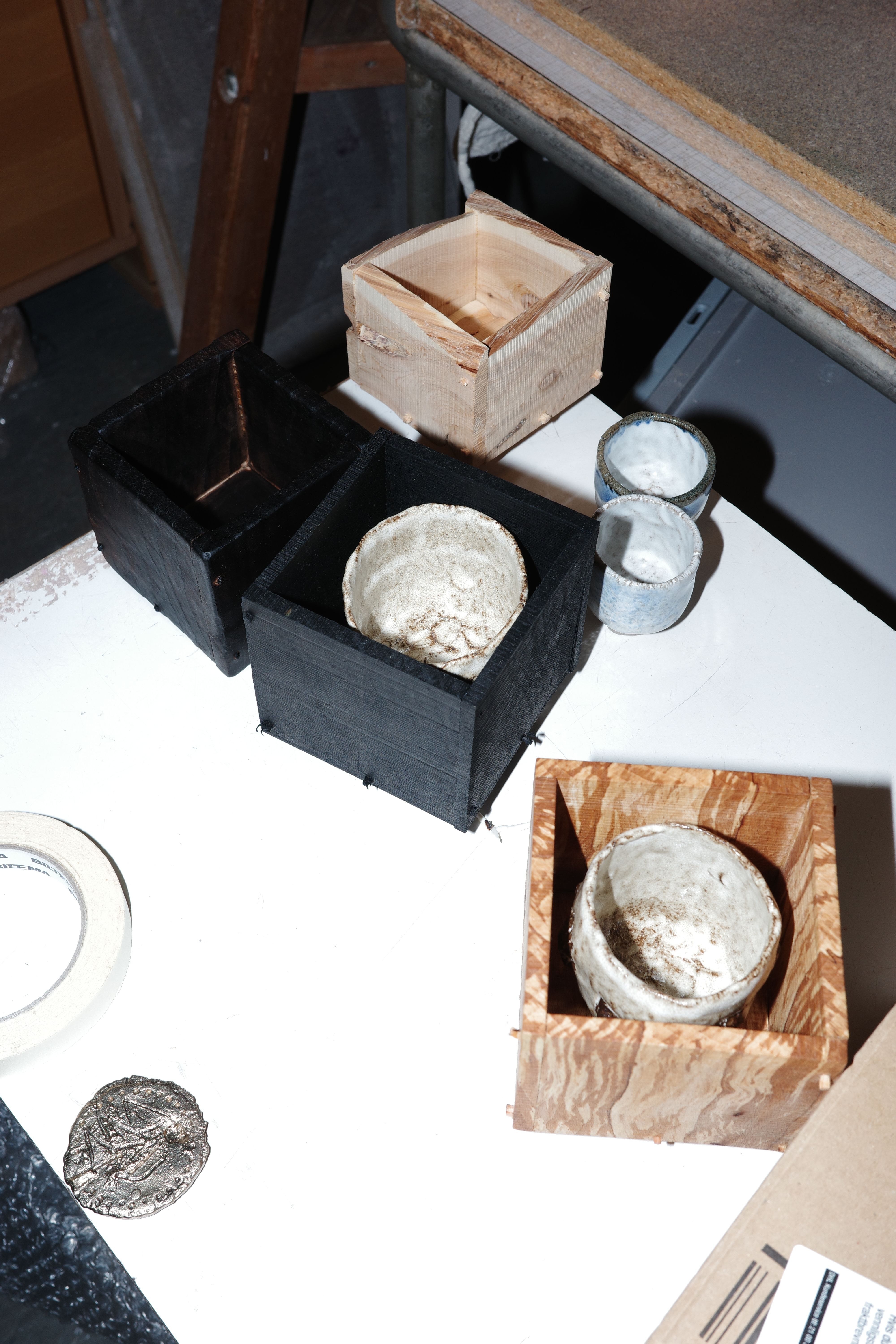
I had to get started on making Christmas gifts. I never had a bandsaw until this October. I always wanted my workshop to stay lightweight and easy to move, but I have added some weight to it lately. The bandsaw opens up so many possibilities and makes it much easier to make my own planks from the wood I have lying around. Here are some quick, rough boxes to house ceramic cups. They are made from juniper, beech and supress. The supress is burned and then brushed with a brass brush.

Juniper: a great wood to carve and use for utensils such as spoons. It has the best smell to it. It reminds me of my grandfather’s workshop.

Name: R0003549.JPG
Created: 21. december 2025 kl. 16:01
Size: 11,2 MB
Unit: RICOH GR IIIx

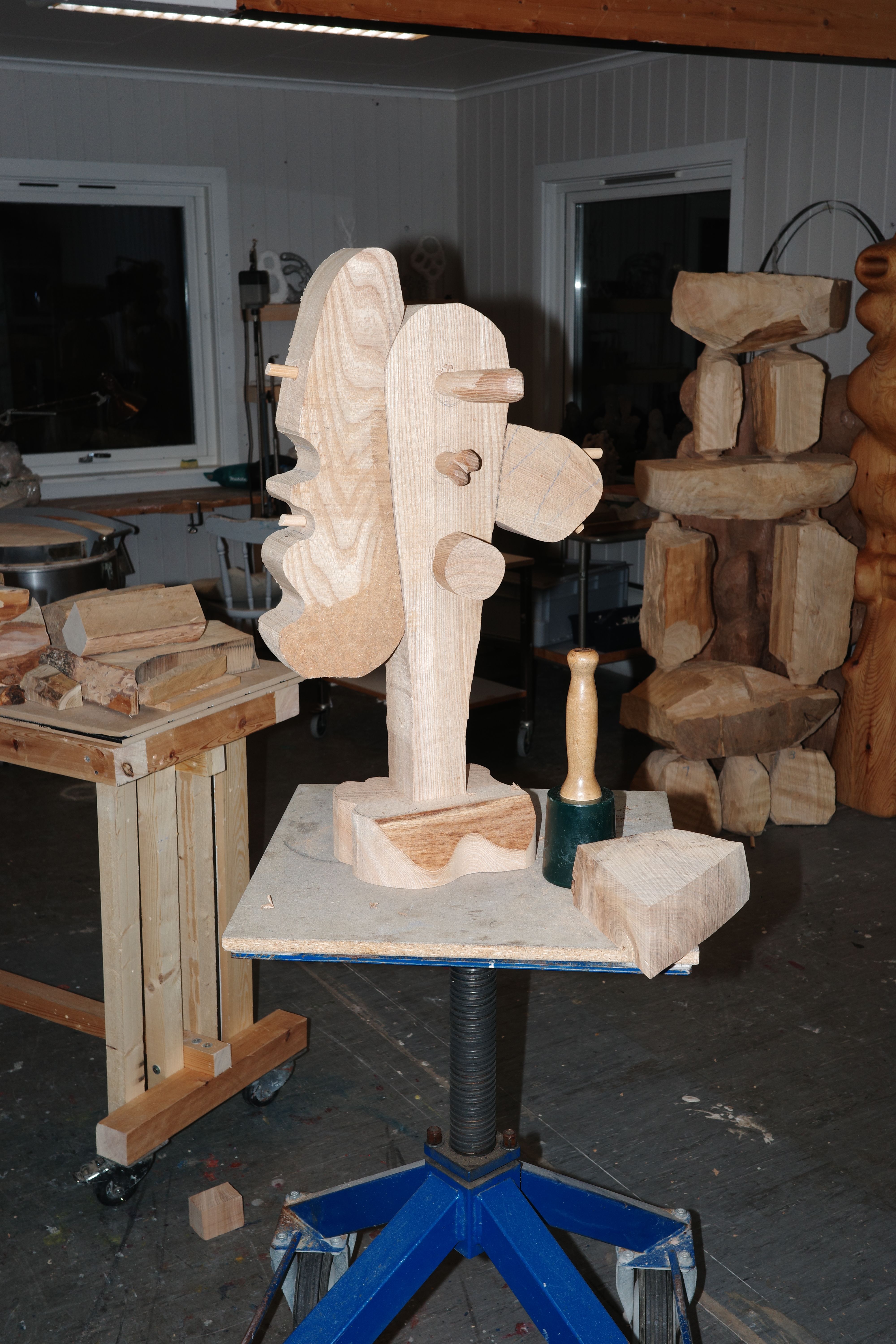
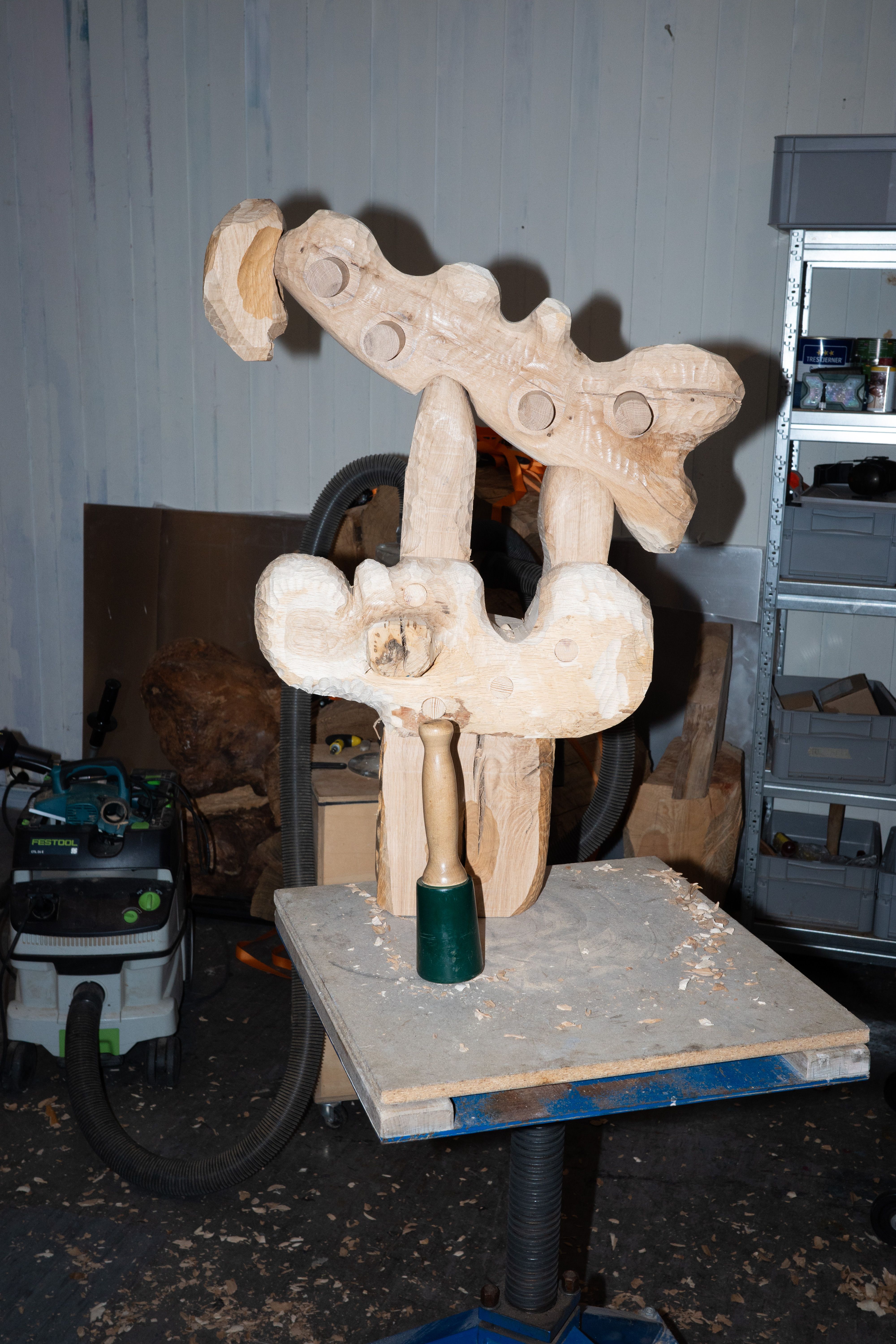
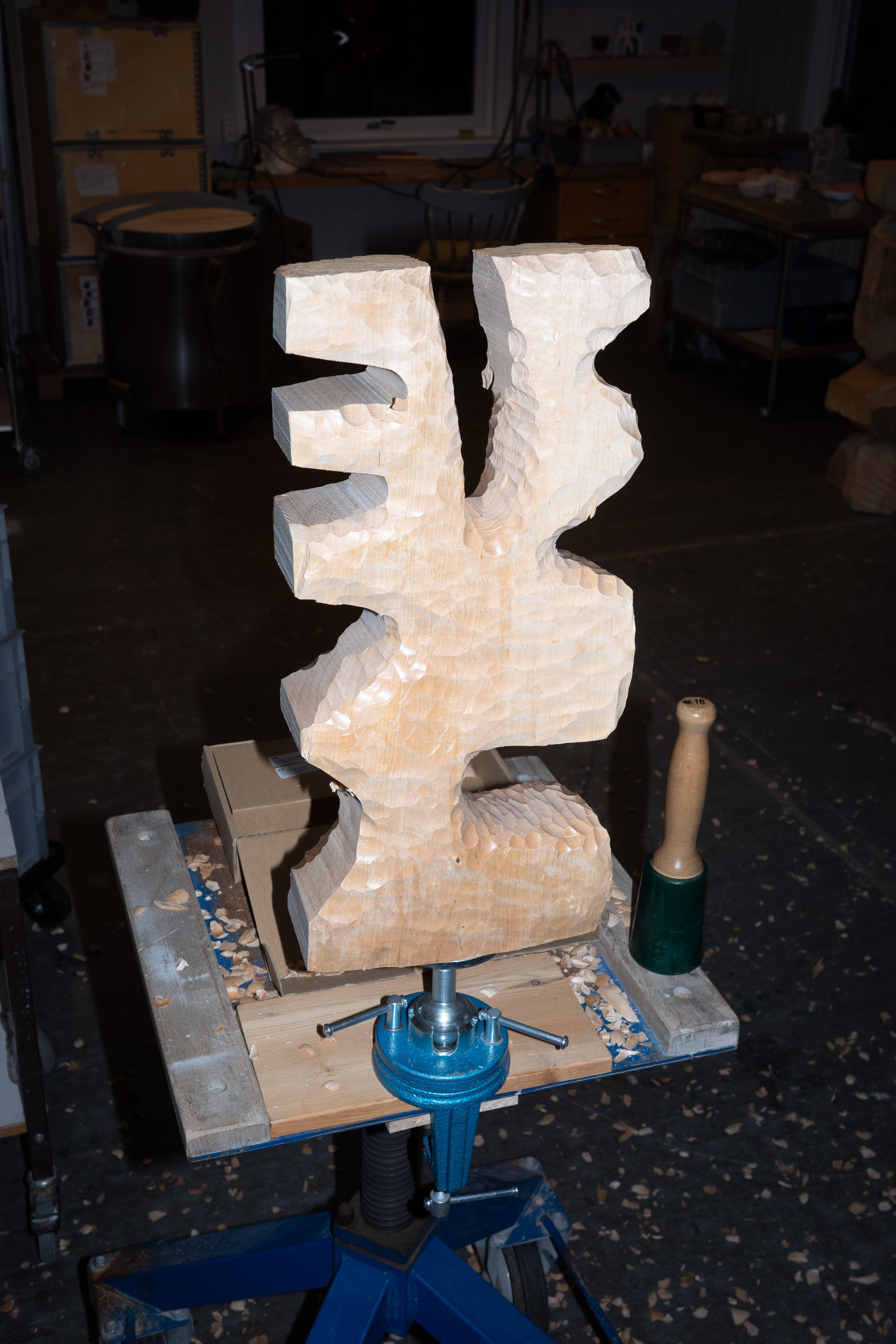
I continued to shape the oak test sculpture I had been working on for a few days. I like the category test sculpture and prefer to call it that rather than a sample or an experiment. The scribing helped to mark where to carve away so that the two stick-like shapes could fit into the top part. The workbench has been swapped for a really nice turntable made for working with stone, so it is a very solid setup. It can be fixed in position so that it does not turn all the time. The mallet is a great one from Wood is Good. The rubber is supposed to reduce some of the vibrations that go into your arm when you strike the tool.

Name: R0003559.JPG
Created: 22. december 2025 kl. 20:23
Size: 13,7 MB
Unit: RICOH GR IIIx


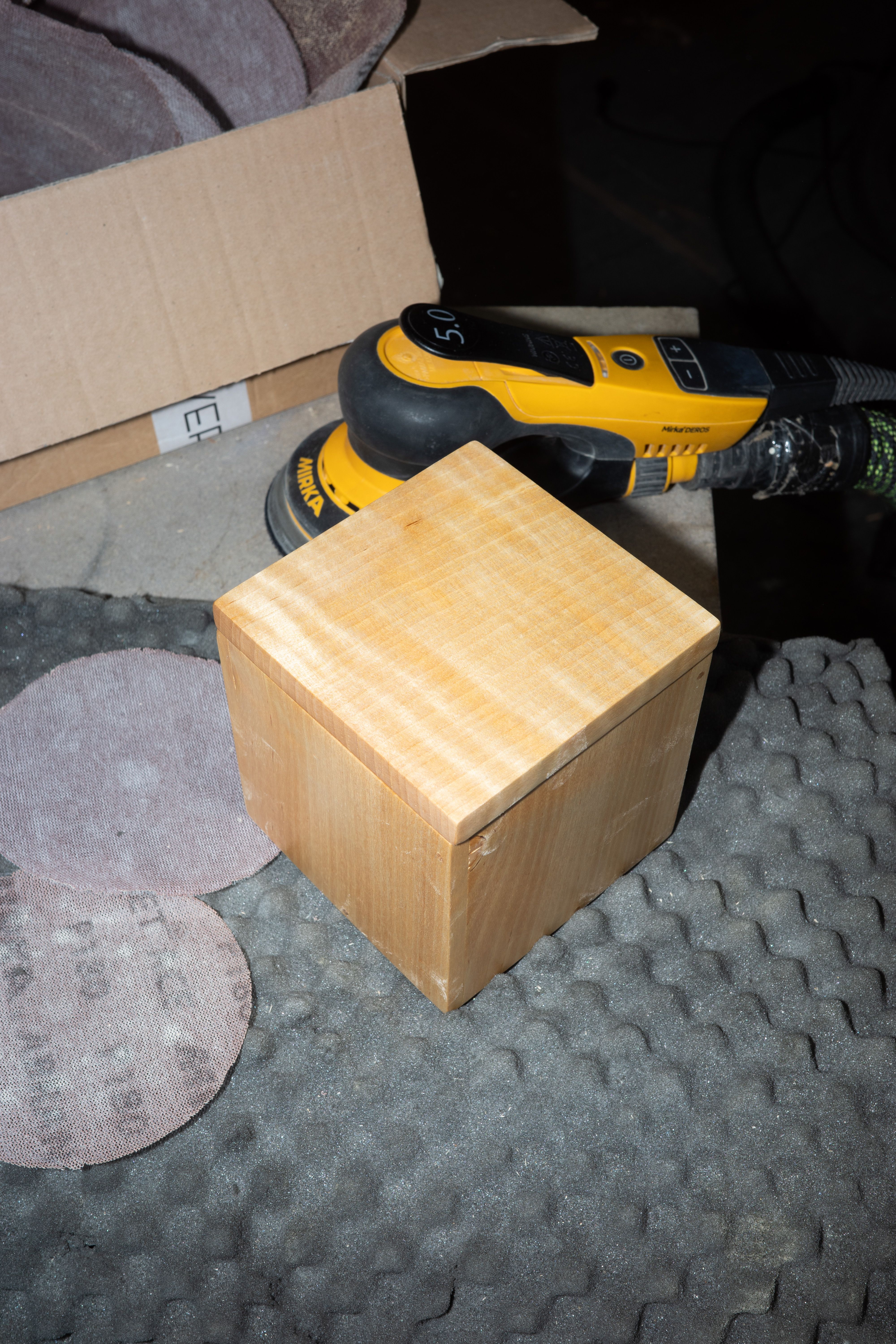
Finishing the gifts for Christmas. This box got a lid. It is made of birch and has a slightly wavy grain structure in it, which birch often does. I always use my Mirka sanders for flat sanding jobs like this, and then I finish with Kirjes oljevoks.

Kirjes oljevoks: an organic oil wax made from linseed, arctic bearberry plant, Swedish linseed oil and beeswax

Name: R0003627.JPG
Created: 31. december 2025 kl. 14:10
Size: 12,2 MB
Unit: RICOH GR IIIx


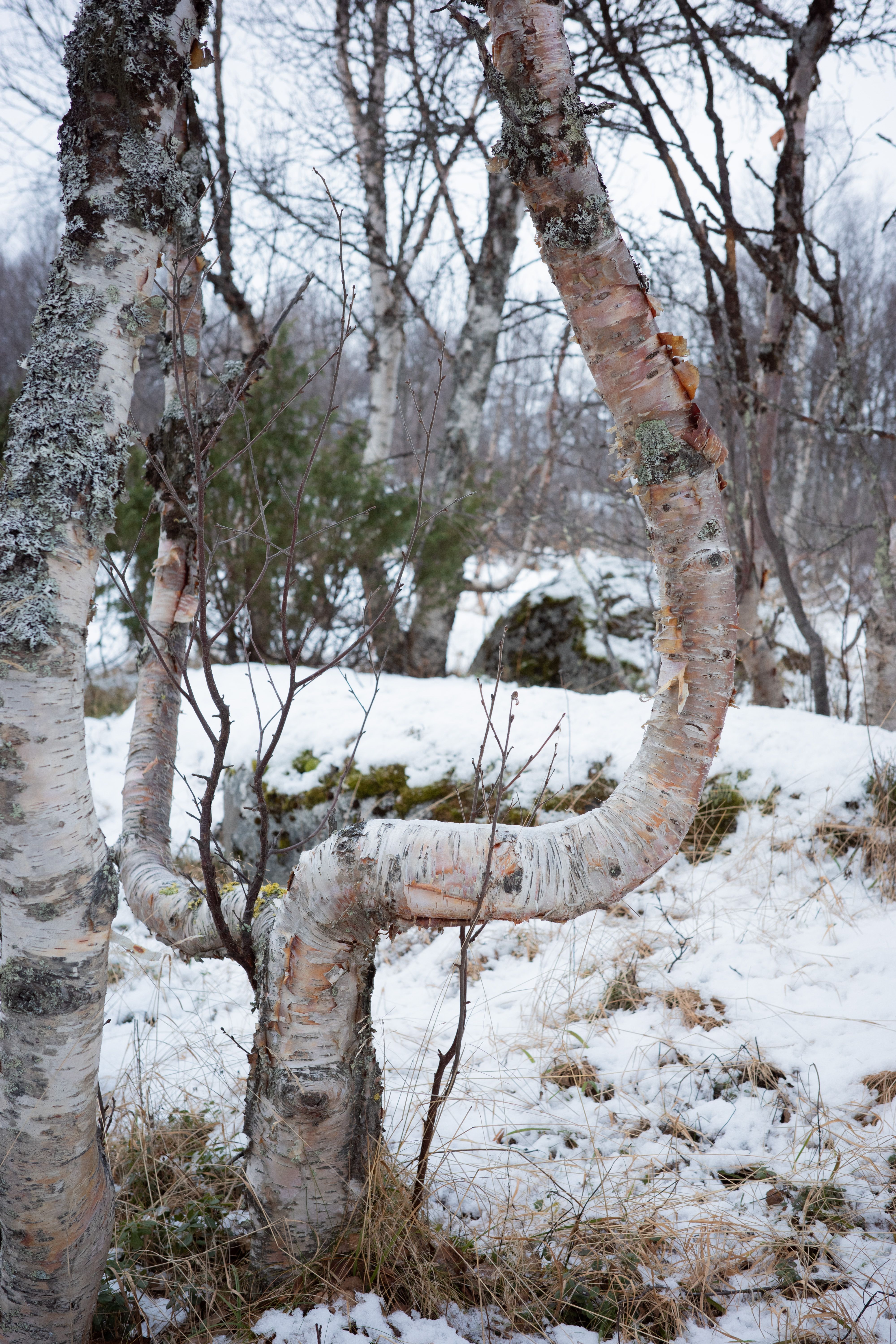
Sort of a studio activity. Skiing and looking at the wild mountain birch shapes in the mountains. I find it a very nice exercise to look for extraordinary sculptural forms in them.

Fjellbjørk: a type of birch that often marks the end of the forest and the beginning of the mountains.

Name: R0003652.JPG
Created: 4. january 2026 kl. 18:56
Size: 12,6 MB
Unit: RICOH GR IIIx


A quick sculpture that I will paint black with linseed paint. I want to make sculptures in wood that leave the traces of their making, but I keep going back to sanding the whole thing to a perfect finish. Scale plays a big role here, as these small sculptures do not benefit much from having a rough surface.

Linseed paint: made from linseed oil and pigment. It soaks deep into the fibres of the wood, dries slowly and, can self-ignite.

Name: R0003655.JPG
Created: 5. january 2026 kl. 18:32
Size: 14,2 MB
Unit: RICOH GR IIIx

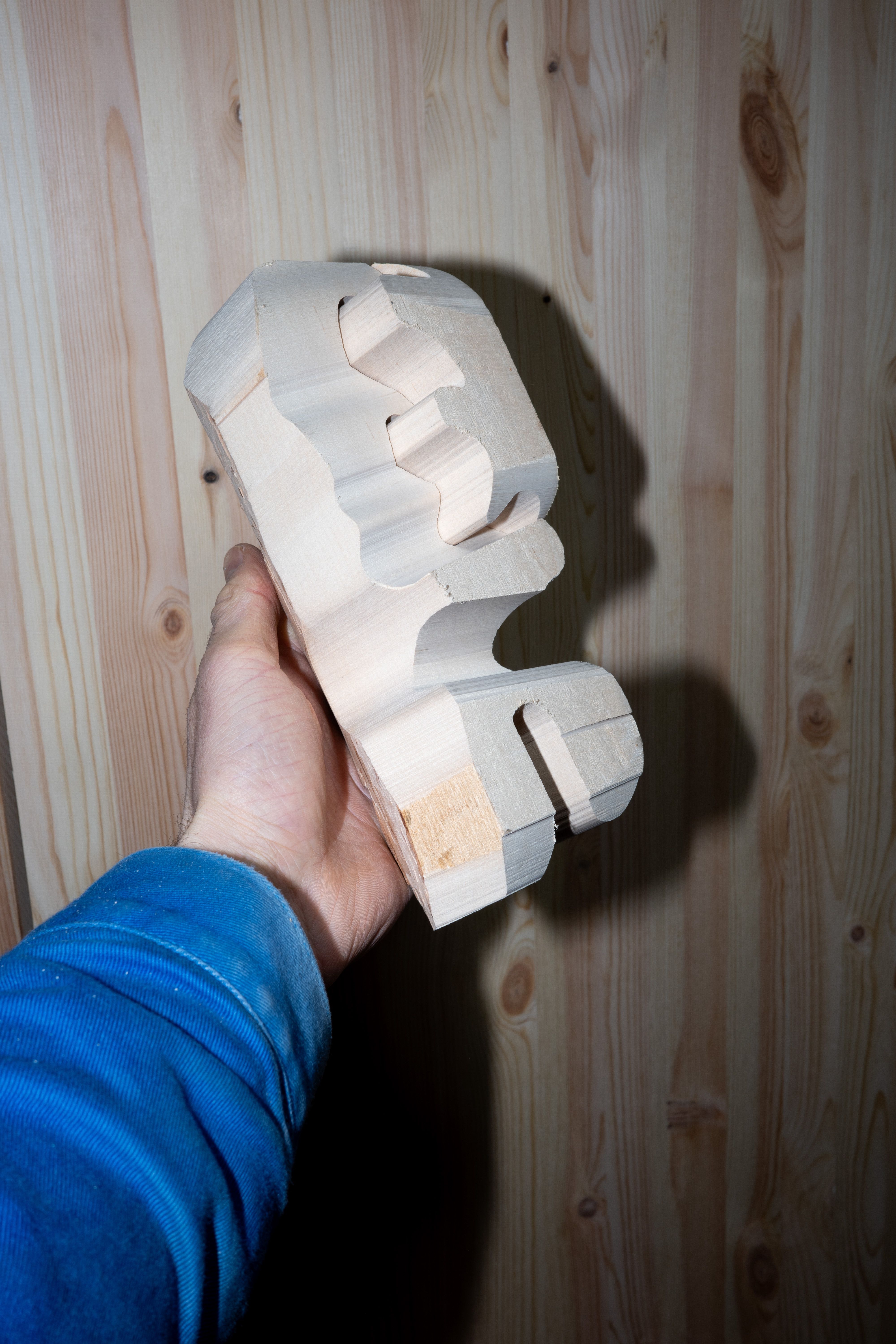
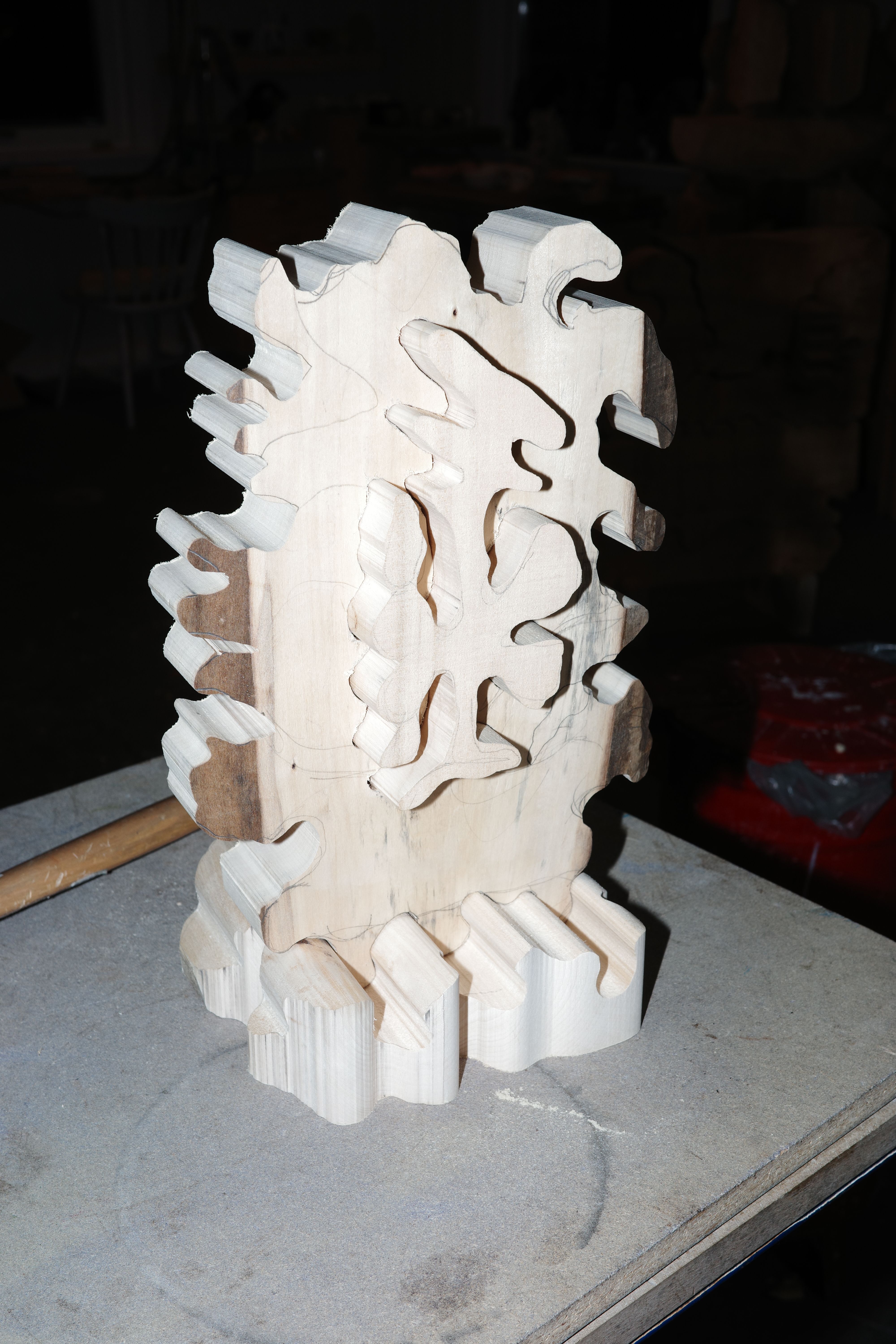
I find it really nice to use the bandsaw with a very thin blade, around 3mm, to saw out shapes in a block of wood that can then be shaped by hand with chisels and gauges. If I leave some of the original sawn surface where the two parts meet, it looks as if they are perfectly resting on each other.

Gauge: a carving tool that is used in many ways. It has several profiles and variations of the U-hape, and is used in concave areas or for leaving texture in flatter surfaces.

Name: R0003661.JPG
Created: 6. january 2026 kl. 20:58
Size: 10,9 MB
Unit: RICOH GR IIIx

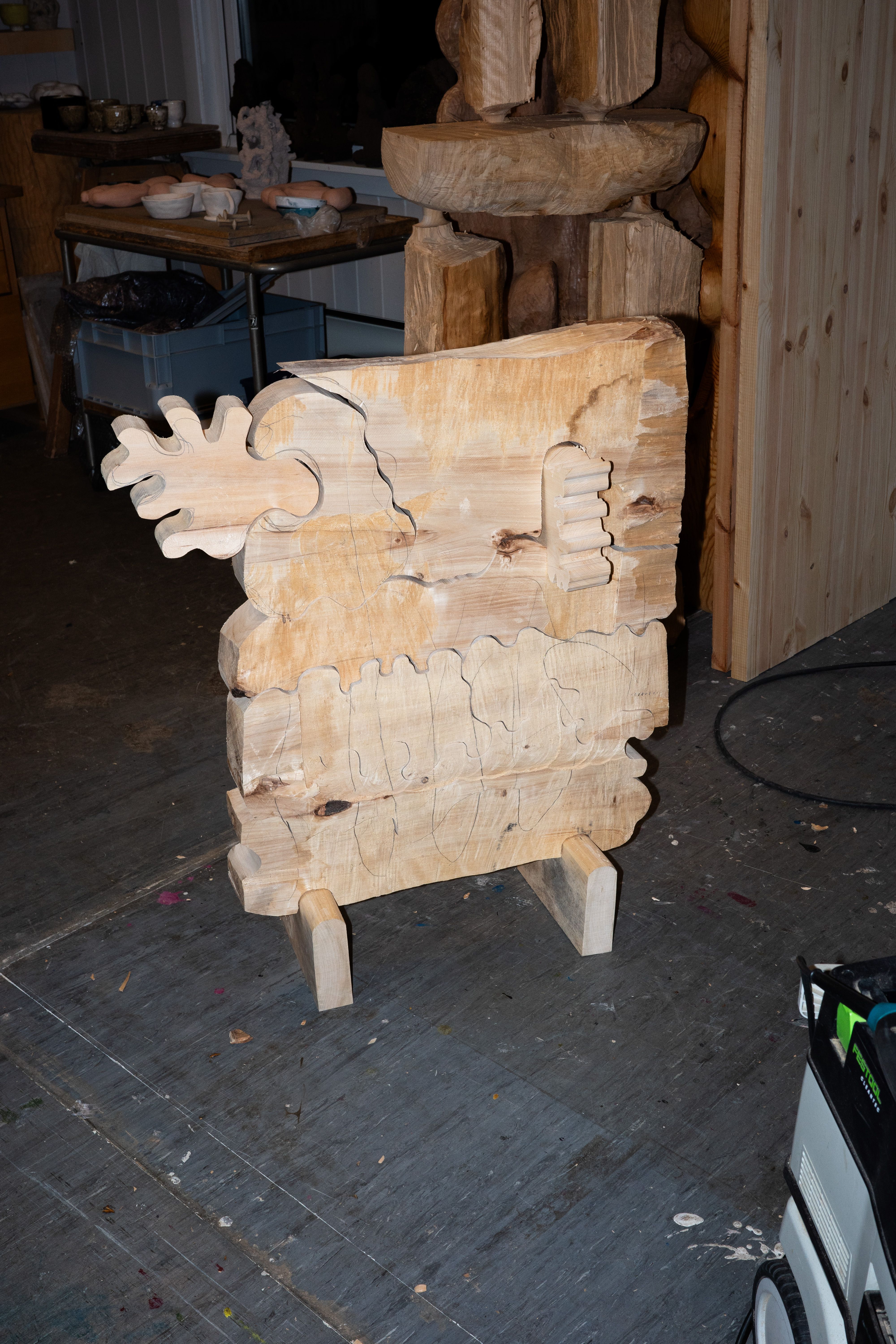
I was using the bandsaw to rough out a sculpture that consists of many parts cut on the bandsaw to fit each other. These will be shaped once all the parts, and the composition, are finished. It is easy to make the parts fit together in one direction, but more difficult when I try to build out from this wall-like shape. The form needs more elements sticking out from it.

Name: R0003668.JPG
Created: 7. january 2026 kl. 18:24
Size: 15 MB
Unit: RICOH GR IIIx


I was trying to match a cut on another piece of wood by tracing it onto the surface and then sawing very carefully and close to the line. I also traced a shape that fits into the piece of wood after it had been trimmed using a router.

Router or a trimmer: a small rotating tool with depth adjustment that can take many different bits to create profiles or, as here, to remove material in a specific area.

Name: RIMG0065.JPG
Created: 8. january 2026 kl. 14:31
Size: 3 MB
Unit: RICOH R8


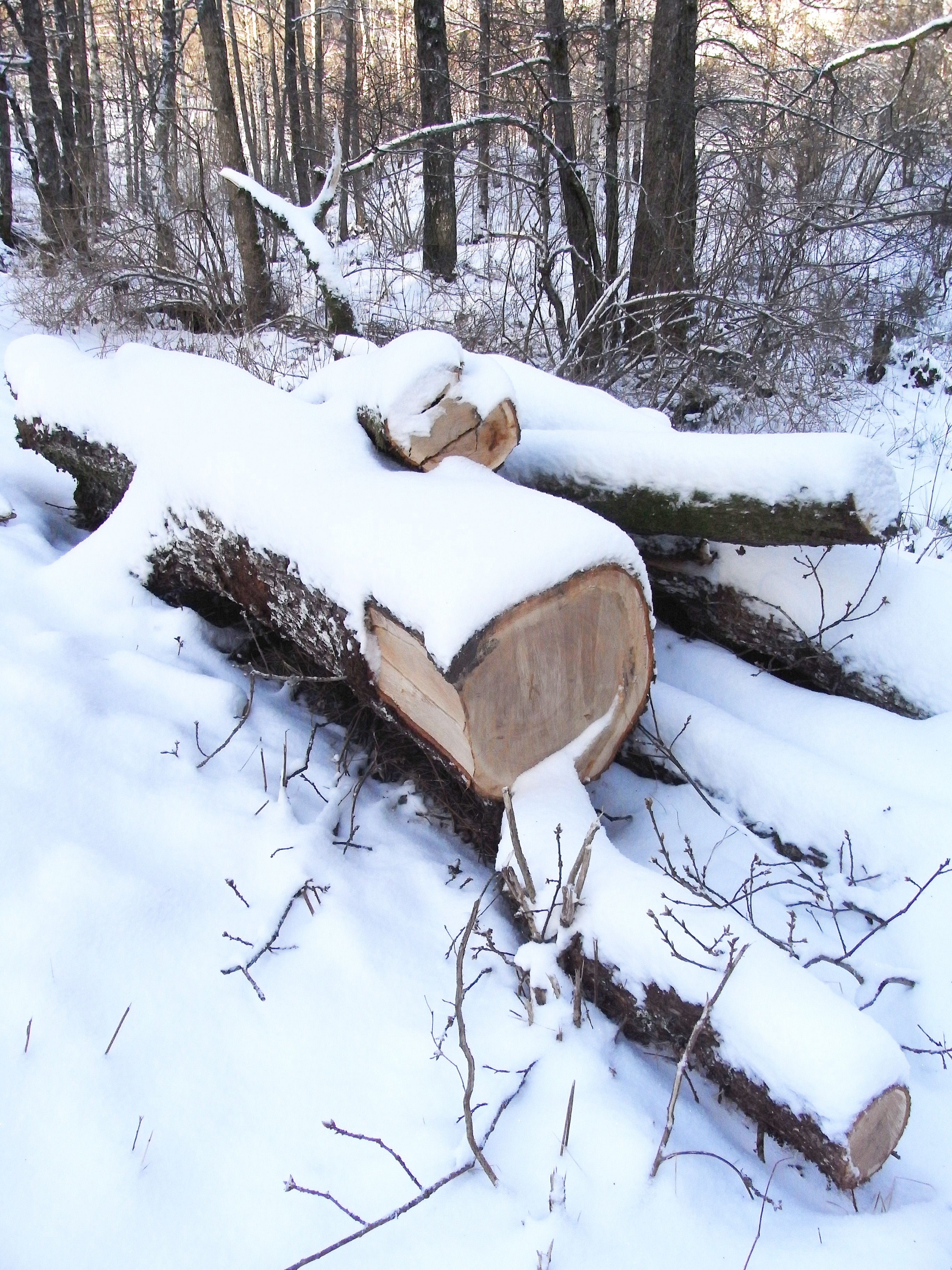
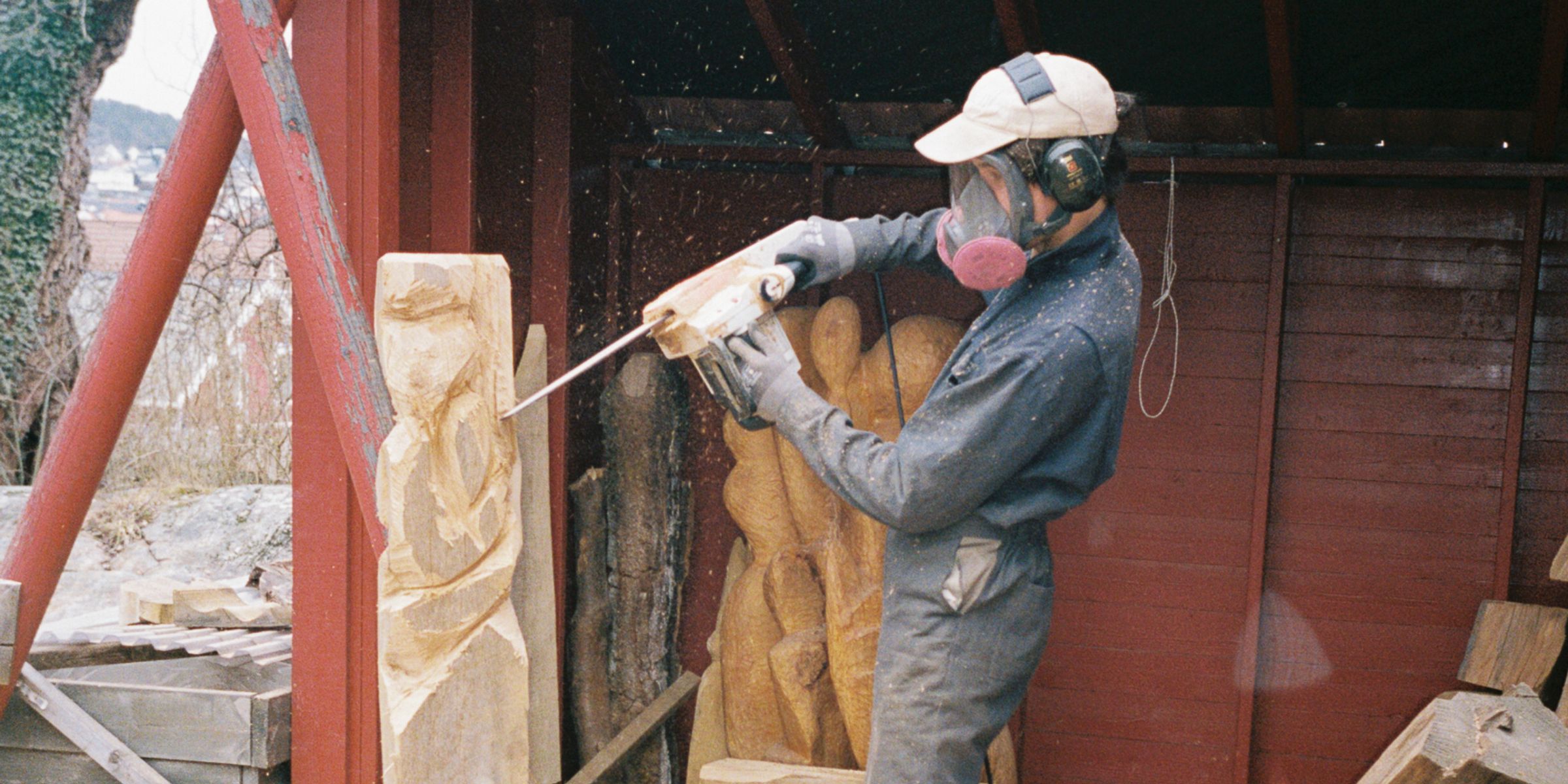
I got a tip about a large storm-felled oak that the municipality was dealing with in a forest nearby. I went for a run in the winter sun, at -8 °C, to see if it could be something for a future project. It was a super old oak that had fallen onto a wooden bridge. The lowest and largest part of the tree is huge in diameter, but looks very dangerous to start chainsaw work on. It could easily fall over or catch the blade. The pieces in the picture were from further up the tree, and these look like something I could handle. Oak can be left outside for many decades, so it is an interesting material to think about for outdoor sculptures.

Name: R0003682.JPG
Created: 9. january 2026 kl. 17:09
Size: 14,7 MB
Unit: RICOH GR IIIx

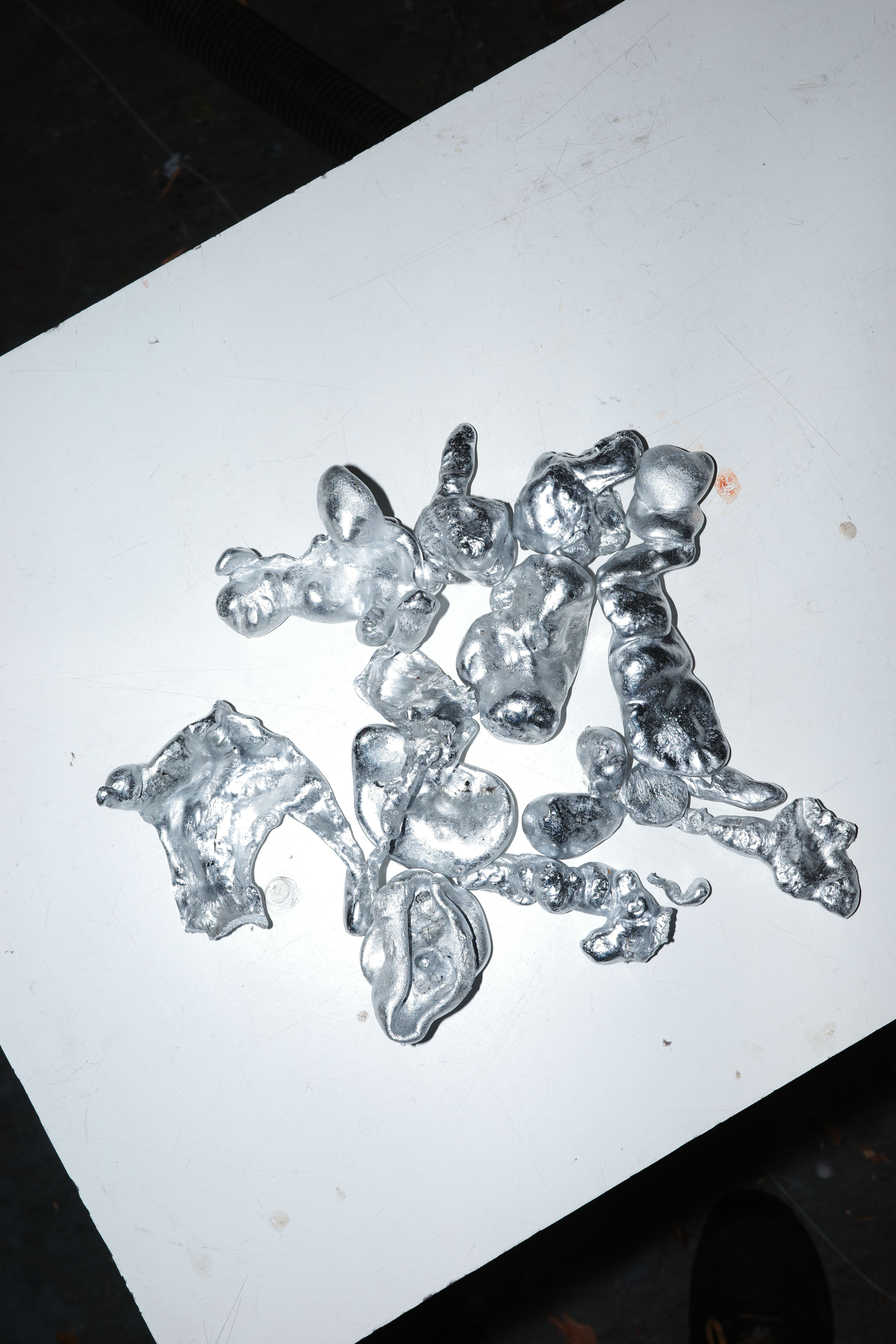
These are some of the aluminium castings I made today. It was an experiment that led to some free forms. The forms themselves were maybe too loose, but still a fascinating way to generate completely free shapes. I should scale up the experiment.

Name: R0003694.JPG
Created: 11. january 2026 kl. 18:10
Size: 14,4 MB
Unit: RICOH GR IIIx

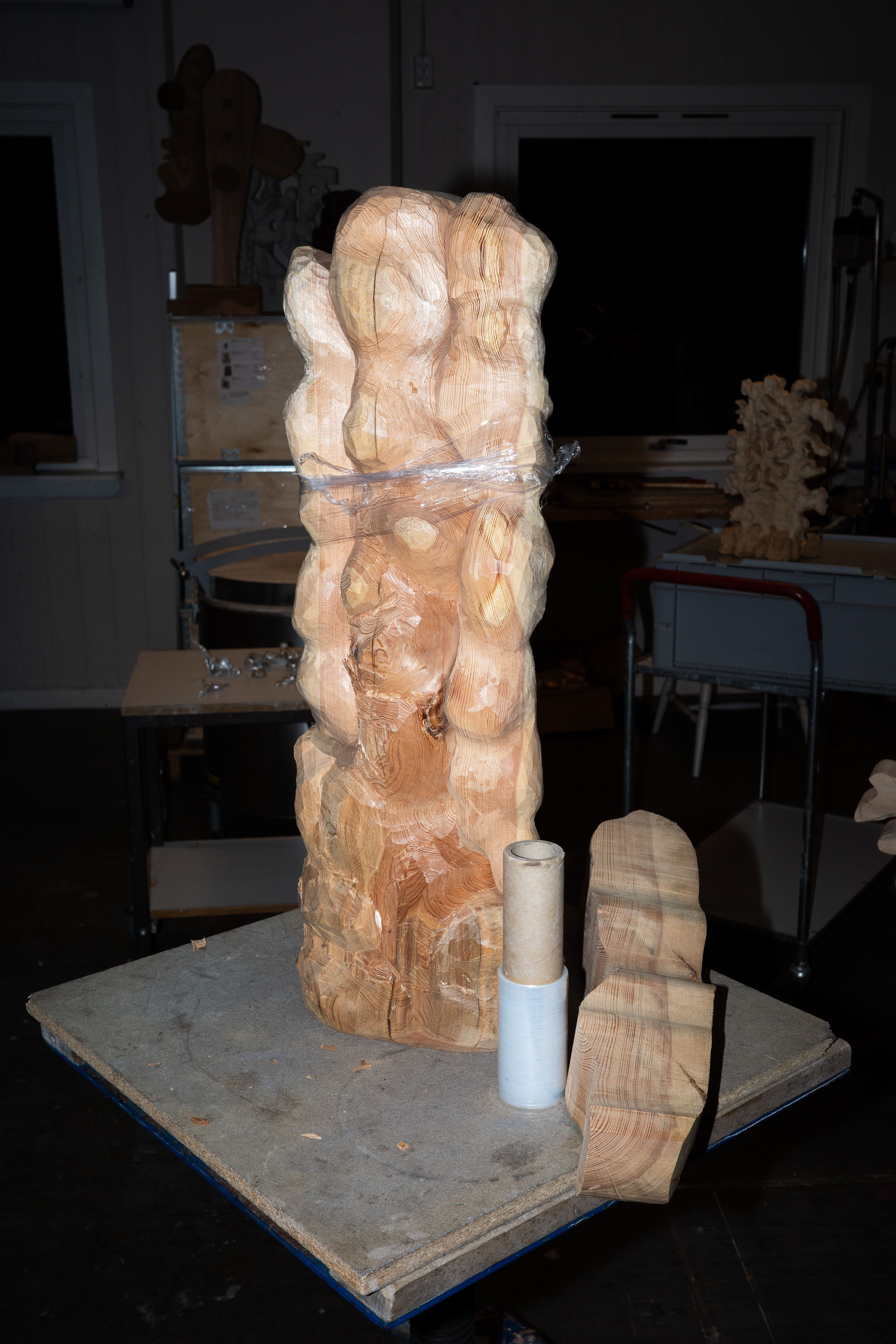
I did a little more work on this piece. I’m not really loving it, but I will still finish it. It needs some more pieces added to break away from the original format of the material. This was a super old piece of pine from a building. It had 1815 carved into it. There was a lot of sand in the cracks.

Name: R0003701.JPG
Created: 12. january 2026 kl. 12:00
Size: 10,8 MB
Unit: RICOH GR IIIx


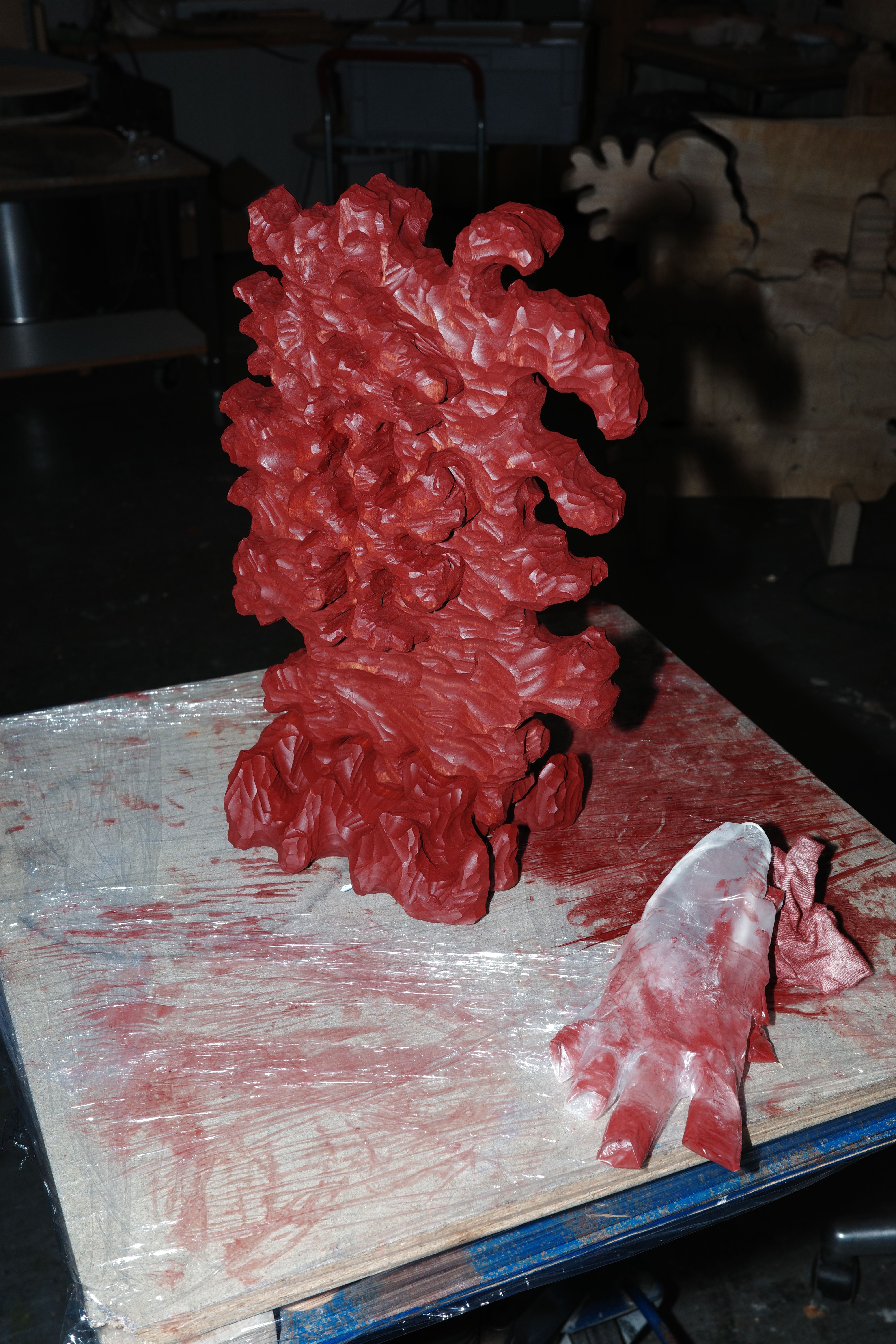
This sculpture was finished this morning. It perhaps has too much going on, but I like how the linseed oil finishes the roughed-out surface. If I left it untreated, or finished it with a neutral oil wax, it might have looked unfinished. The linden, or basswood, has a very dull colour and feel to it. In my mind, this is quite close to carving foam, the green type we used in design school to make models.

Linden wood: a light coloured wood that is very easy to carve and gentle on the hands. It also grows locally in the south of Norway, which is a plus.

Name: R0003706.JPG
Created: 13. january 2026 kl. 21:43
Size: 12,3 MB
Unit: RICOH GR IIIx


I am taking some time to finish some half-finished sculptures that have been hanging around the studio for some time. I usually like to finish the piece I am working on in one go, but sometimes I get a bit lazy in the final steps. Maybe it is good to do this more often, to leave them for a while.
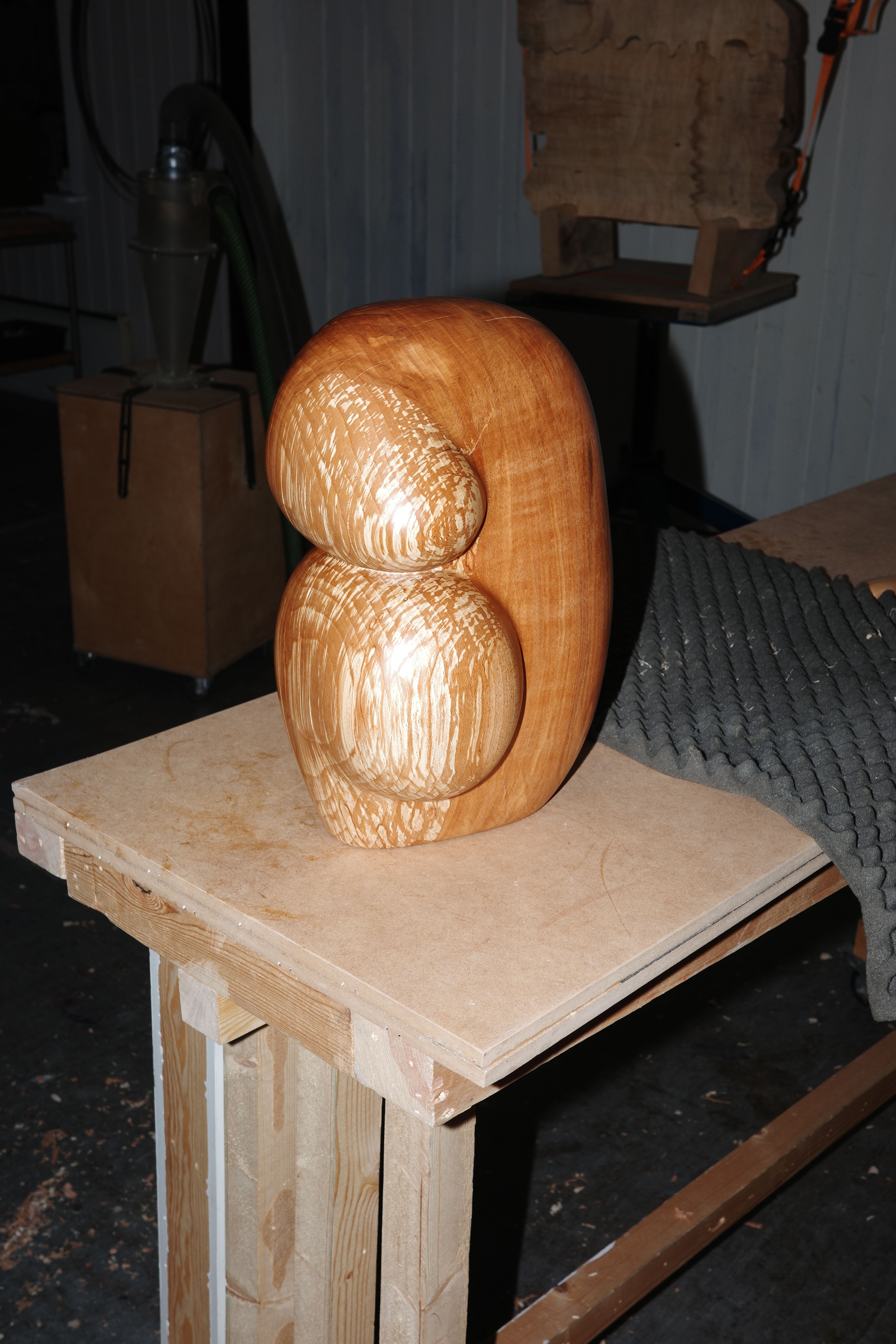
This piece is made from beech wood and finished with Kirjes organic oil wax. The beech wood comes from a huge trunk of four tonnes that I have laying outside. I am halfway through it.

Beech wood: great for smaller things such as toys or kitchen utensils. It shrinks a lot, so in larger works several cracks will be a part of the result.

Name: R0003715.JPG
Created: 14. january 2026 kl. 14:55
Size: 13,6 MB
Unit: RICOH GR IIIx


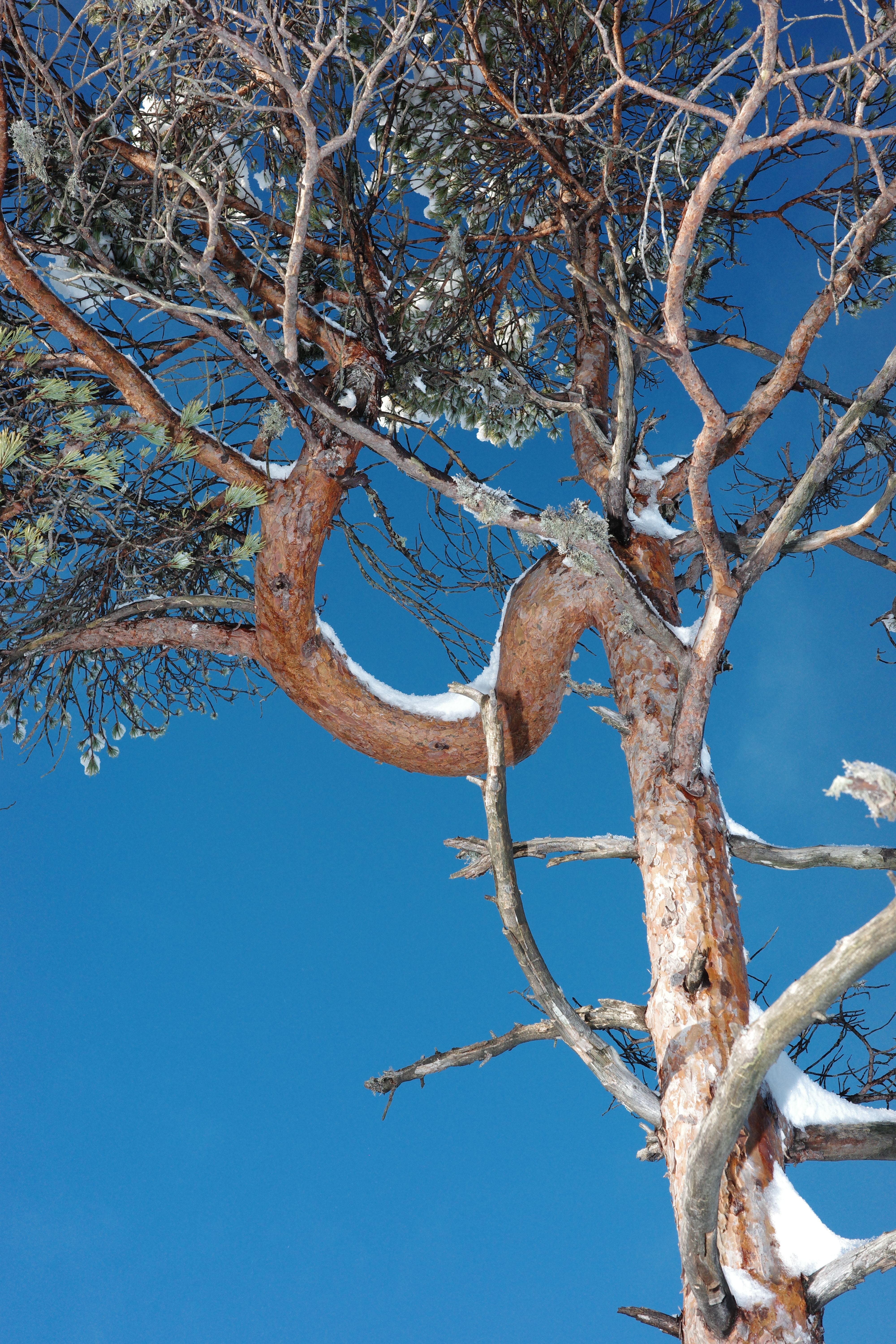
Today I worked on the computer all day. But I had a long lunch break and went skiing. The pine trees were wild and beautiful.

Name: R0003727.JPG
Created: 16. january 2026 kl. 16:52
Size: 12,6 MB
Unit: RICOH GR IIIx


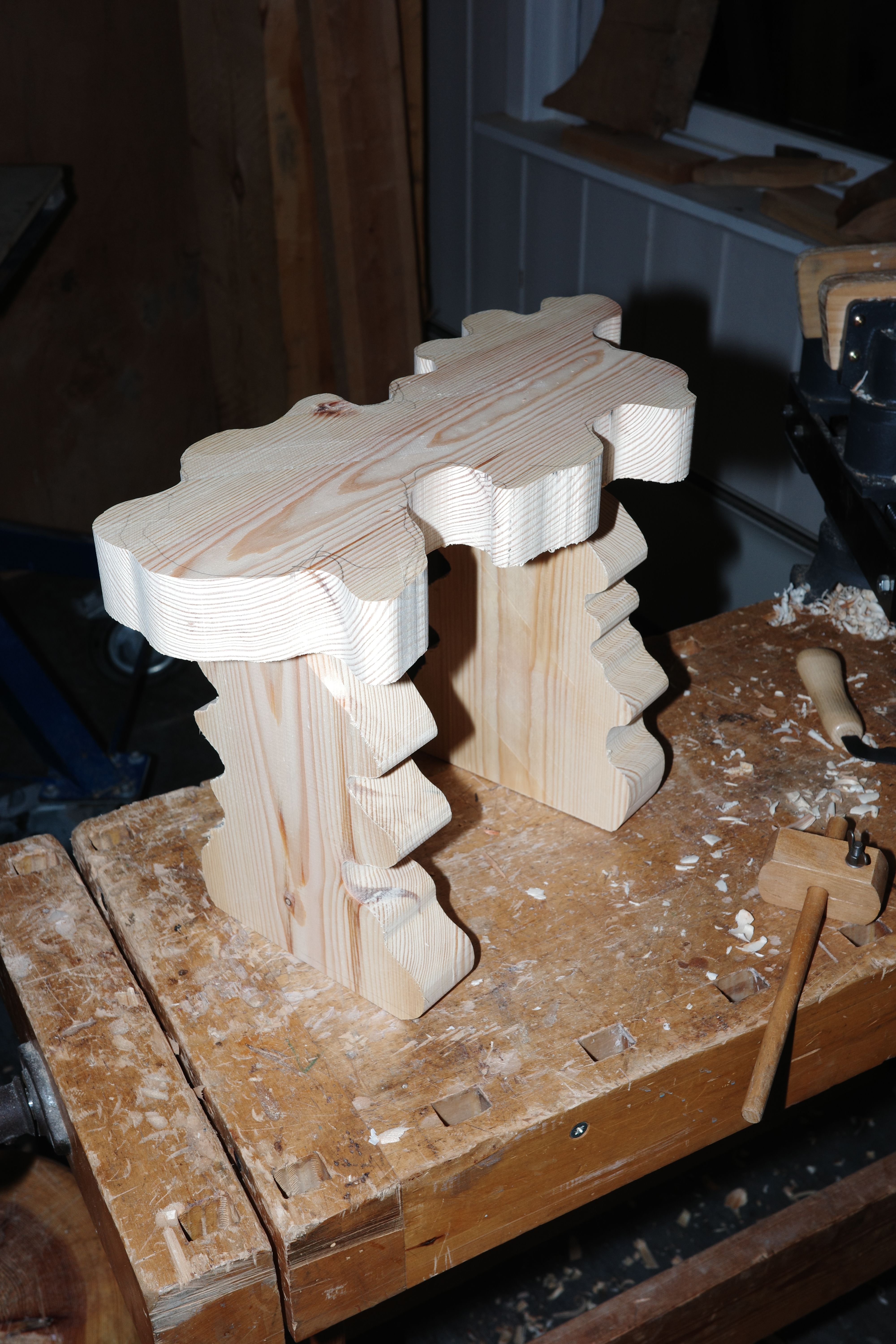
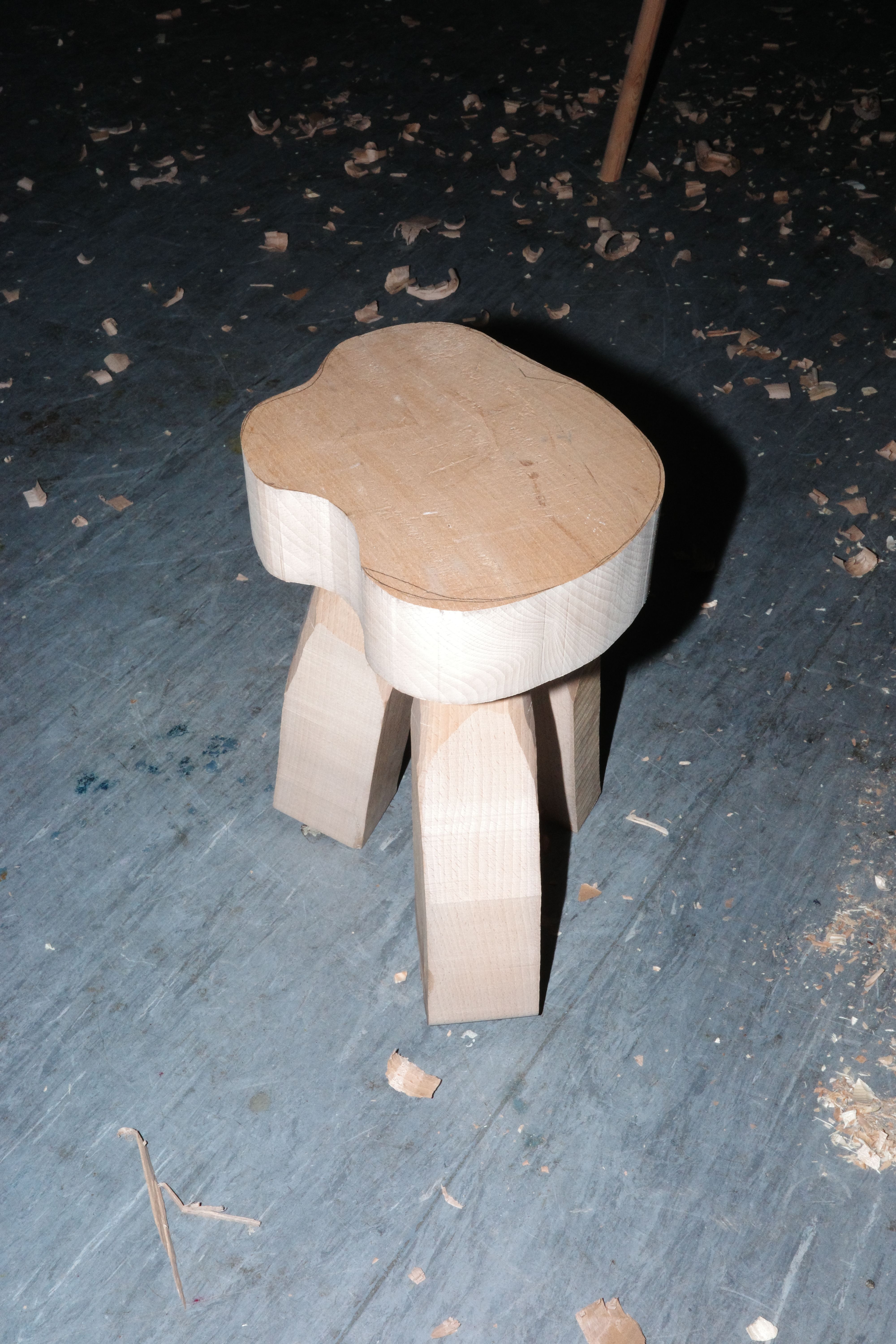
I tried making this step stool, as I am considering using the step stool as a starting point for a sculpture series that explores the format in a very sculptural way. I like the speed of it. Is it maybe one of the smallest pieces of furniture? I am using a tenon cutter to make very simple joints for the legs to go into the top.

Name: R0003768.JPG
Created: 19. january 2026 kl. 15:33
Size: 11,1 MB
Unit: RICOH GR IIIx


A wooden tripod step stool made from beech wood. Beech is so hard that it works perfectly as a step stool for heavy use. It will not be worn down easily. I like how having something that touches the floor on three points makes leveling much easier. It does not have any rocking points on uneven floors. The legs are connected with corresponding tenons fitted into drilled holes.

Name: IMG_0127.JPG
Created: 20. january 2026 kl. 10:40
Size: 3,5 MB
Unit: iPhone 12


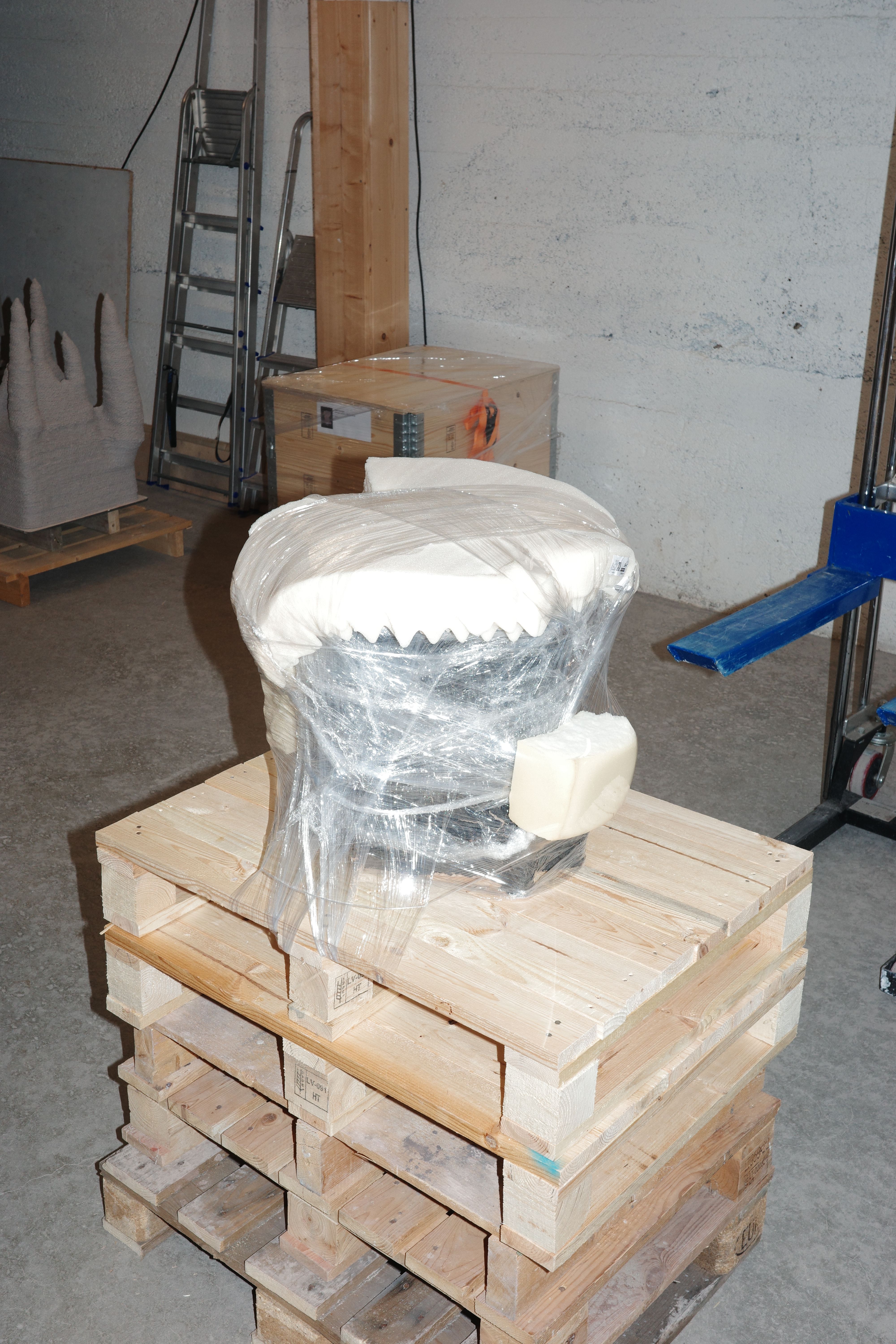
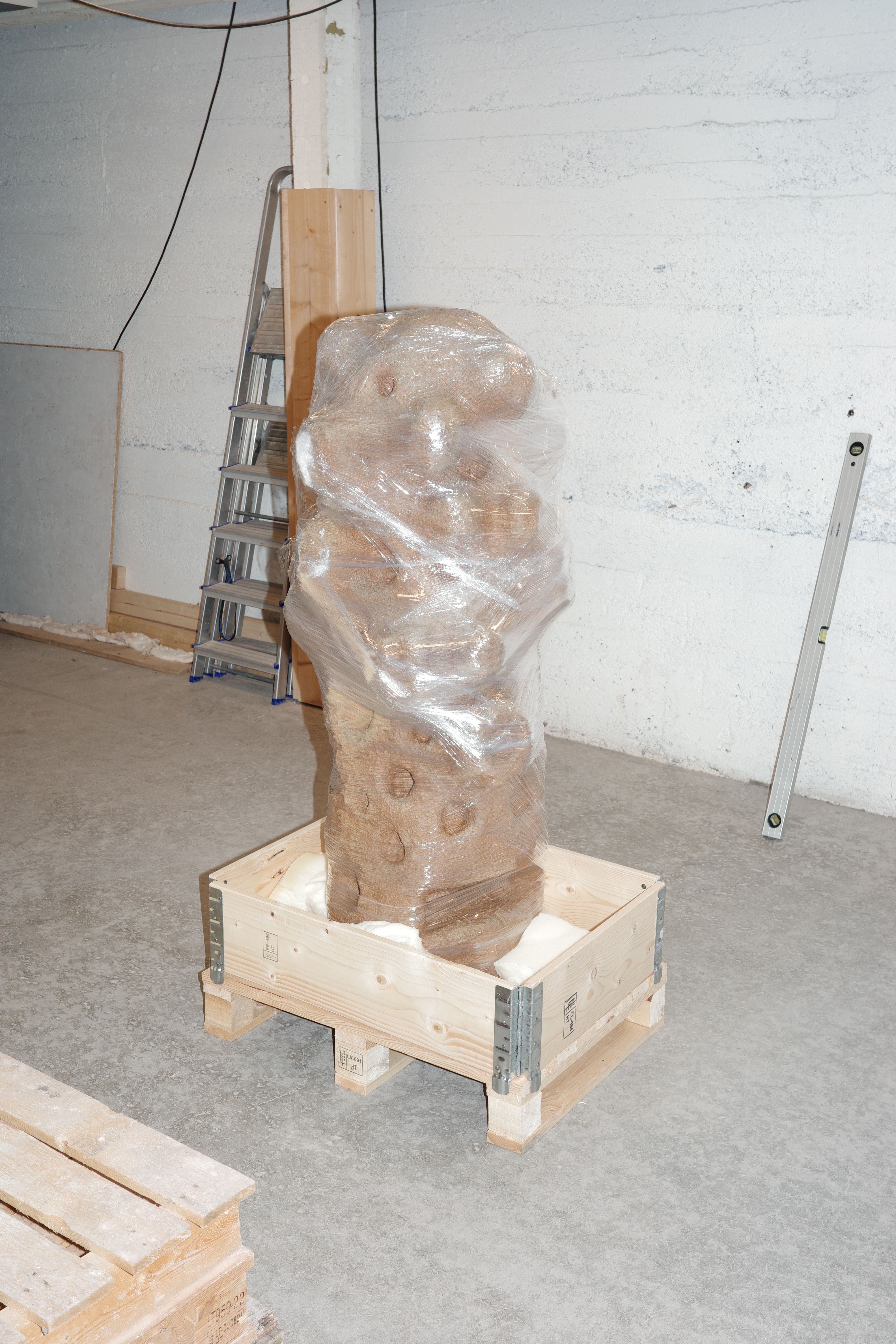
Tomorrow I am driving to Ringebu and the Senter for Keramisk Kunst to glaze and pack my ceramic sculptures for my solo exhibition at Galleri Opdahl in Stavanger. So, on this day before the trip, I have to find materials for packing the sculptures. Cargo straps from Biltema, old mattresses from second-hand shops, and some new mattresses from IKEA. The mattresses will be used to press the sculptures securely onto the pallets. Pallet frames are built up around the sculptures. A lid presses down on the foam and the sculpture with the pressure of a cargo strap. This means the sculpture cannot move under transport.

Name: IMG_0131.JPG
Created: 21. january 2026 kl. 18:31
Size: 4,4 MB
Unit: iPhone 12


Traveling day to Ringebu from Lillesand. A drive of more than six hours. Many of my works are fired high to 1250 °C without glaze. These were fired by the team at SKK before I arrived. What remains are two glaze firings. It takes five days for the kiln to fire and cool down, so a lot of time for packing, photographing, and even some skiing in Ringebu.

The SKK team: Torbjørn Kvasbø, Ingunn Svanes Almedal, Nina Standerholen, Kari Sund, Jenny Harmell and Vida Aasen are pushing the future of Norwegian and international ceramics.

Name: R0003829.JPG
Created: 22. january 2026 kl. 14:26
Size: 11 MB
Unit: RICOH GR IIIx


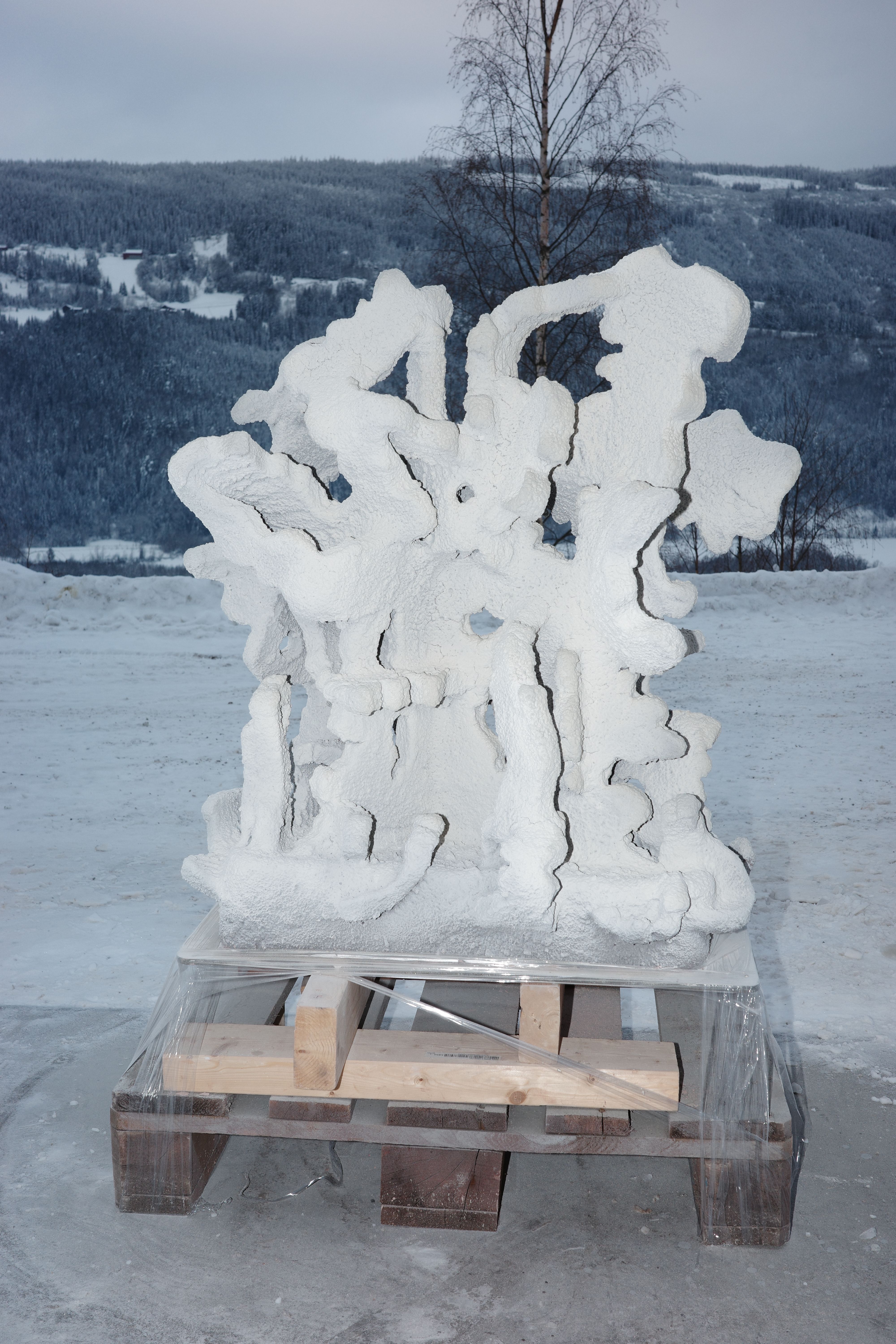
I had a full day of unloading the kiln and glazing the works with a transparent glaze. There is a concrete plateau outside that I scraped clear of snow and ice before I could roll out the individual works for spraying. It was -10 °C, so not an ideal glazing temperature. The spray gun froze several times, and I had to make sure that both the glaze and the pieces were warm, and that the liquid did not freeze. There was a funny similarity to the snow cannons that spray water when the weather is cold enough to make “fake” snow.

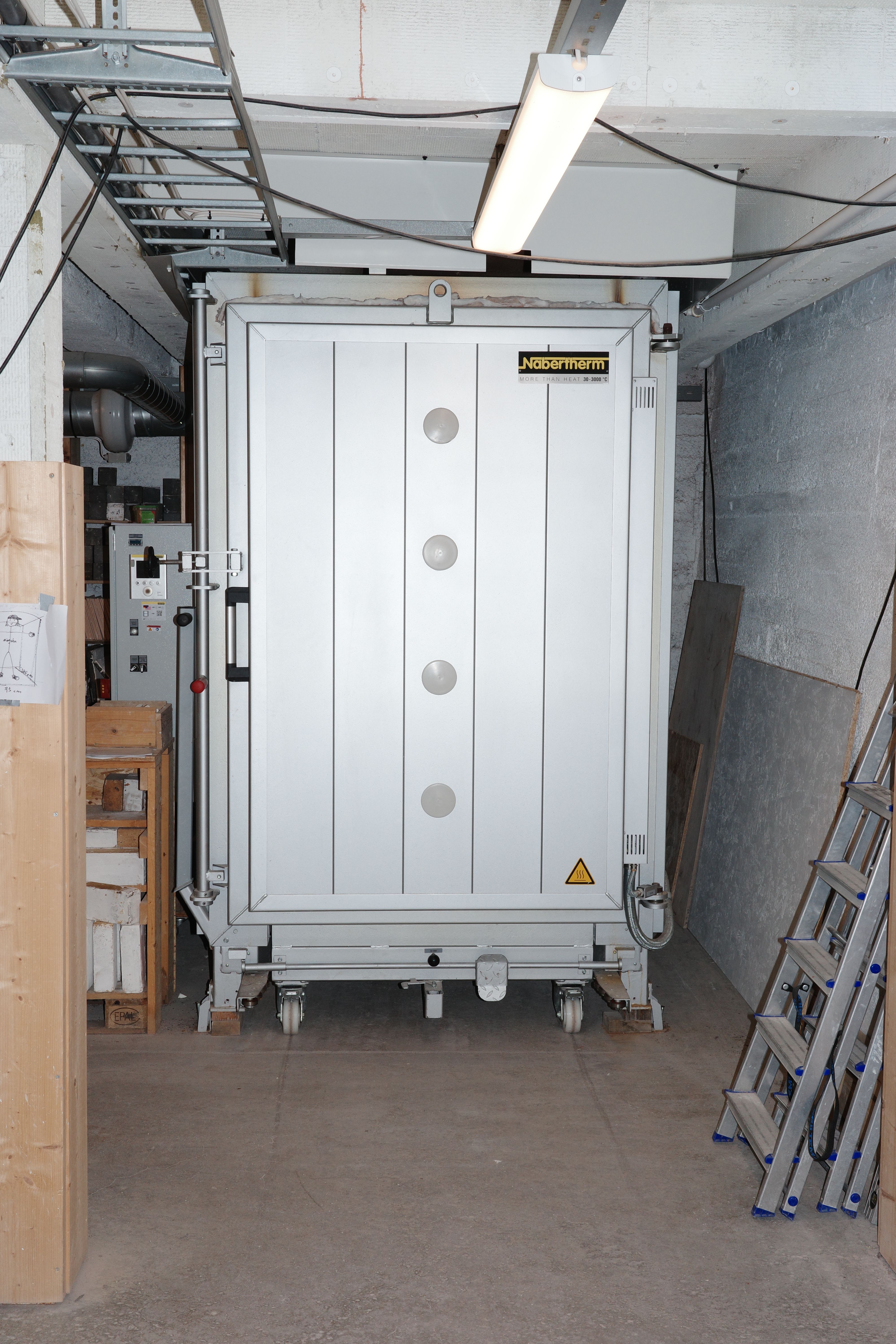
SKK: Senter for Keramisk Kunst is a unique place where artists working with ceramics can rent a workshop for a period. The workshop is equipped with an enormous Nabertherm Kiln. It was initiated by the great ceramic artist Torbjørn Kvasbø. It is truly a unique place. It hosts 600 m2 of exhibitions each year, alongside the workshop activities that take place throughout the year.

Name: R0003940.JPG
Created: 23. january 2026 kl. 17:03
Size: 11,2 MB
Unit: RICOH GR IIIx


Waiting for the big Nabertherm kiln to cool down after my glaze firing.

Nabertherm NW 2200: 2200 liter, 1300 °C, 110 kW, 400 V 3/PE.

Name: R0003952.JPG
Created: 24. january 2026 kl. 13:59
Size: 10,9 MB
Unit: RICOH GR IIIx


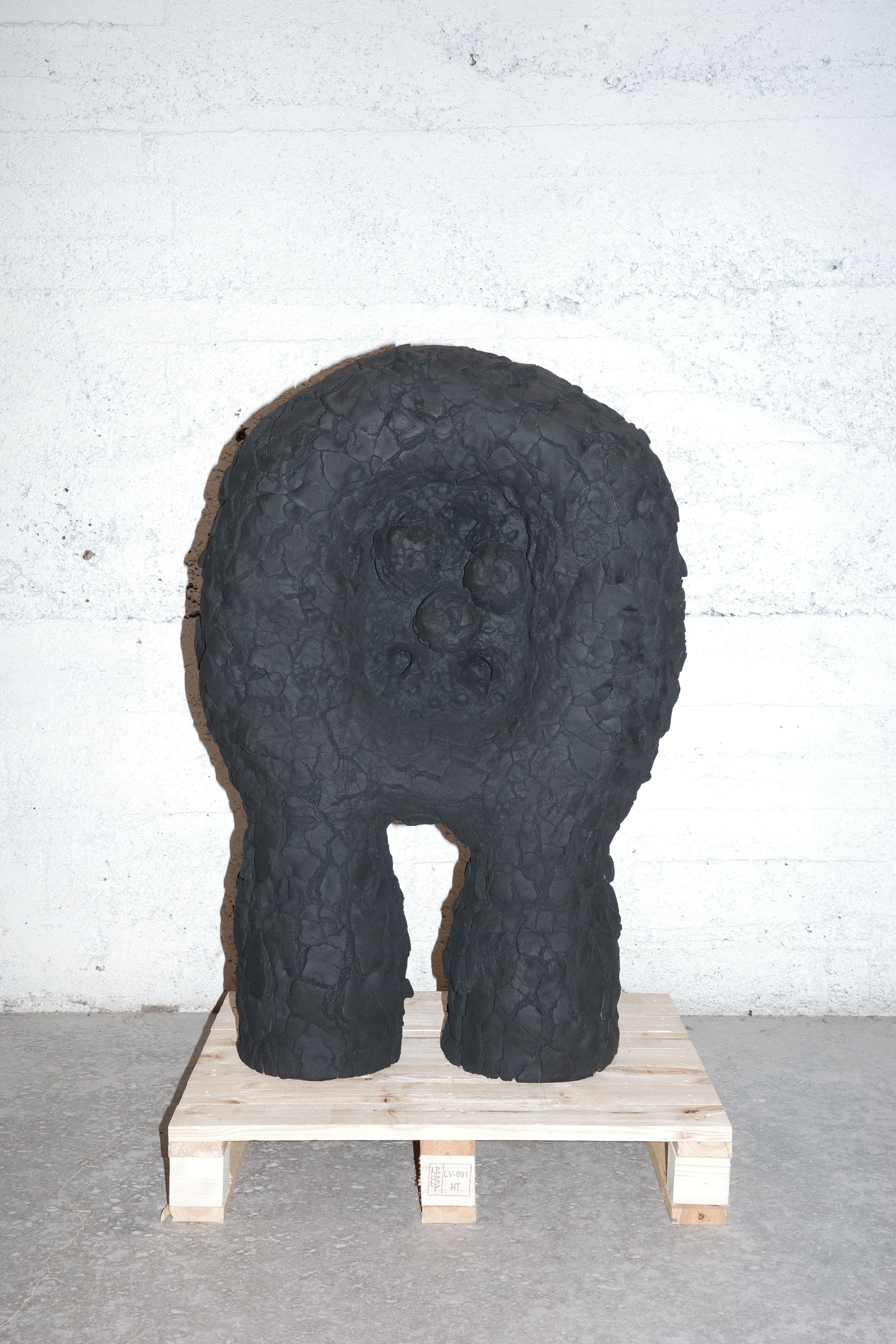
I packed three sculptures that I made during my last stay at SKK. These were a part of this summer’s exhibition at Senter for Keramisk Kunst.

Euro pallet: half or full. The best system to rely on when it comes to crates and shipping. It makes regular cargo carriers less sceptical about transporting sculptures.

Name: R0003976.JPG
Created: 26. january 2026 kl. 16:51
Size: 12,1 MB
Unit: RICOH GR IIIx


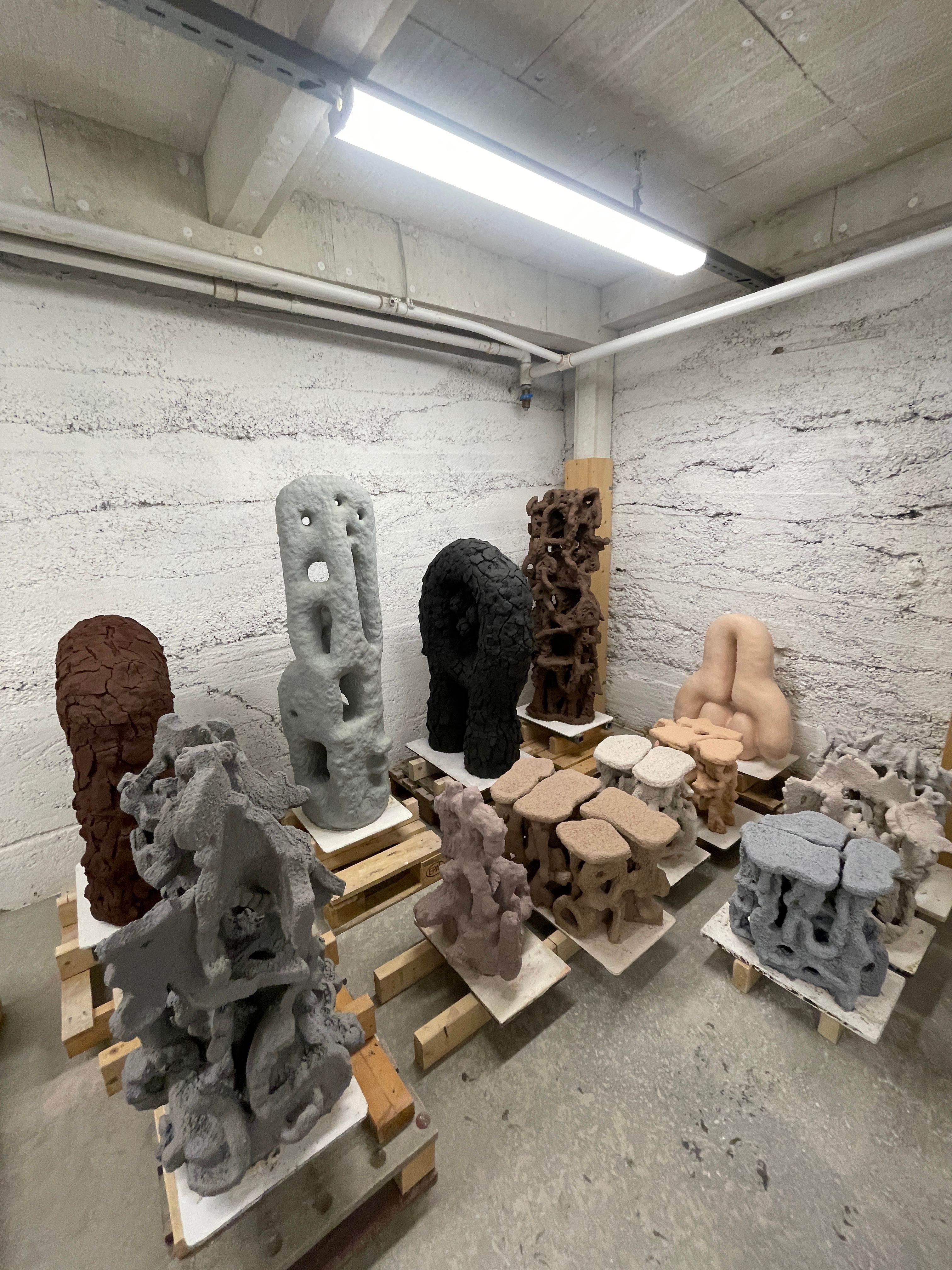
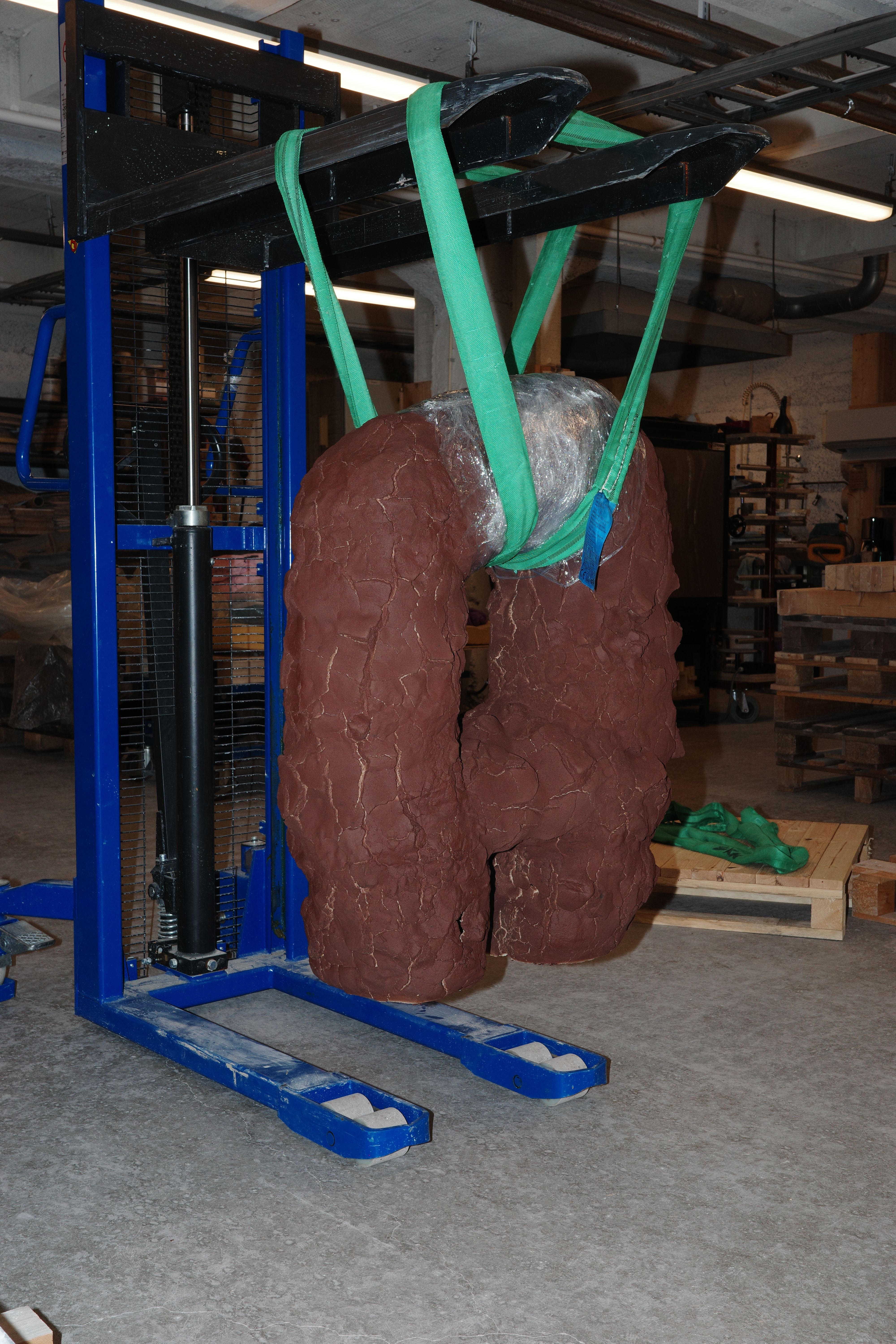
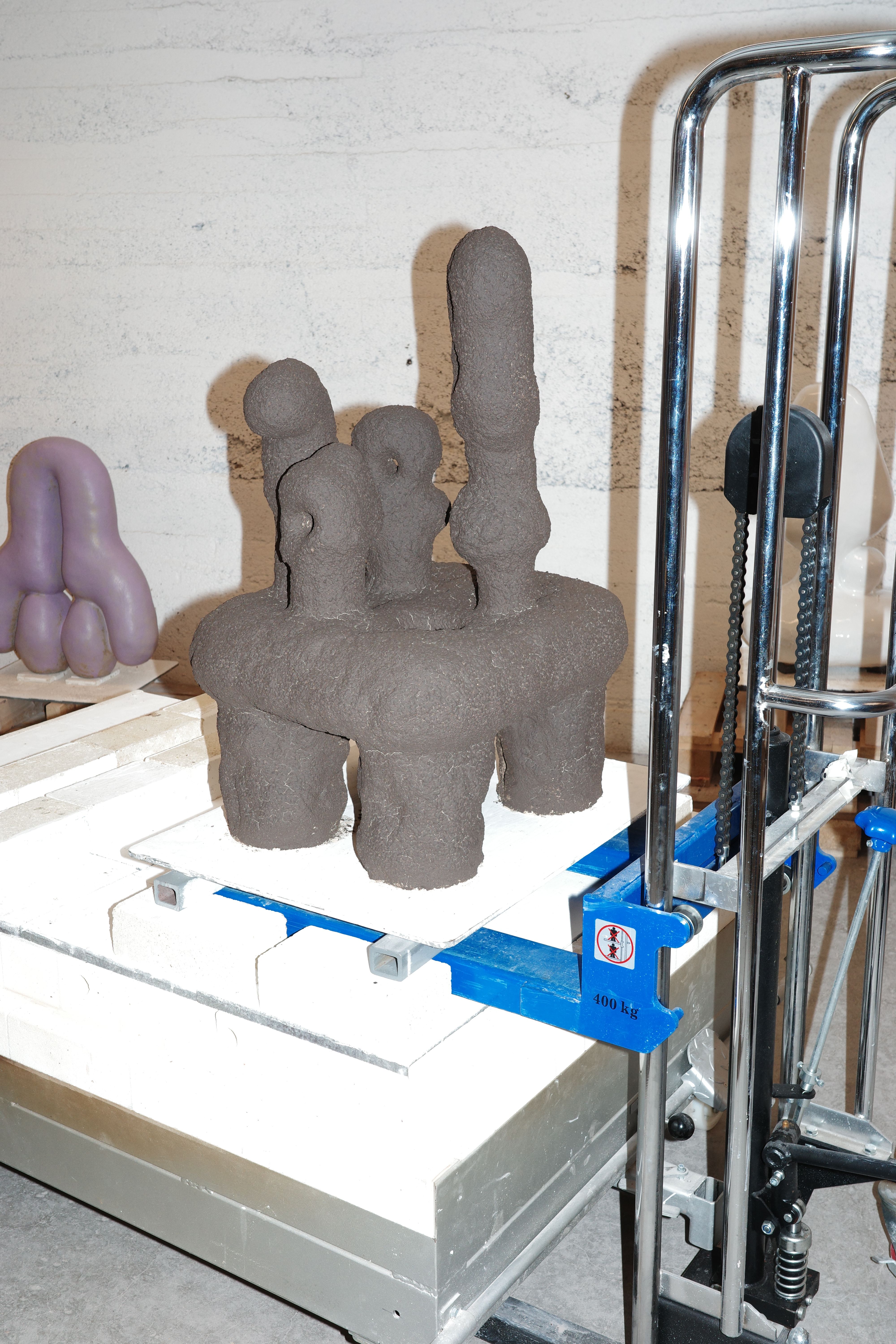
Lifting the ceramic sculptures off the oven plates that they were made and fired on. This can be a bit difficult, but with these manual pallet lifters it is quite easy. Many of my sculptures have holes in them. A functional hole.

Name: R0004053.JPG
Created: 27. january 2026 kl. 13:40
Size: 12,1 MB
Unit: RICOH GR IIIx

A full day of photographing the sculptures after they had all been placed on new half pallets. Stacking the last kiln firing.

Name: R0004115.JPG
Created: 28. january 2026 kl. 14:58
Size: 10,6 MB
Unit: RICOH GR IIIx


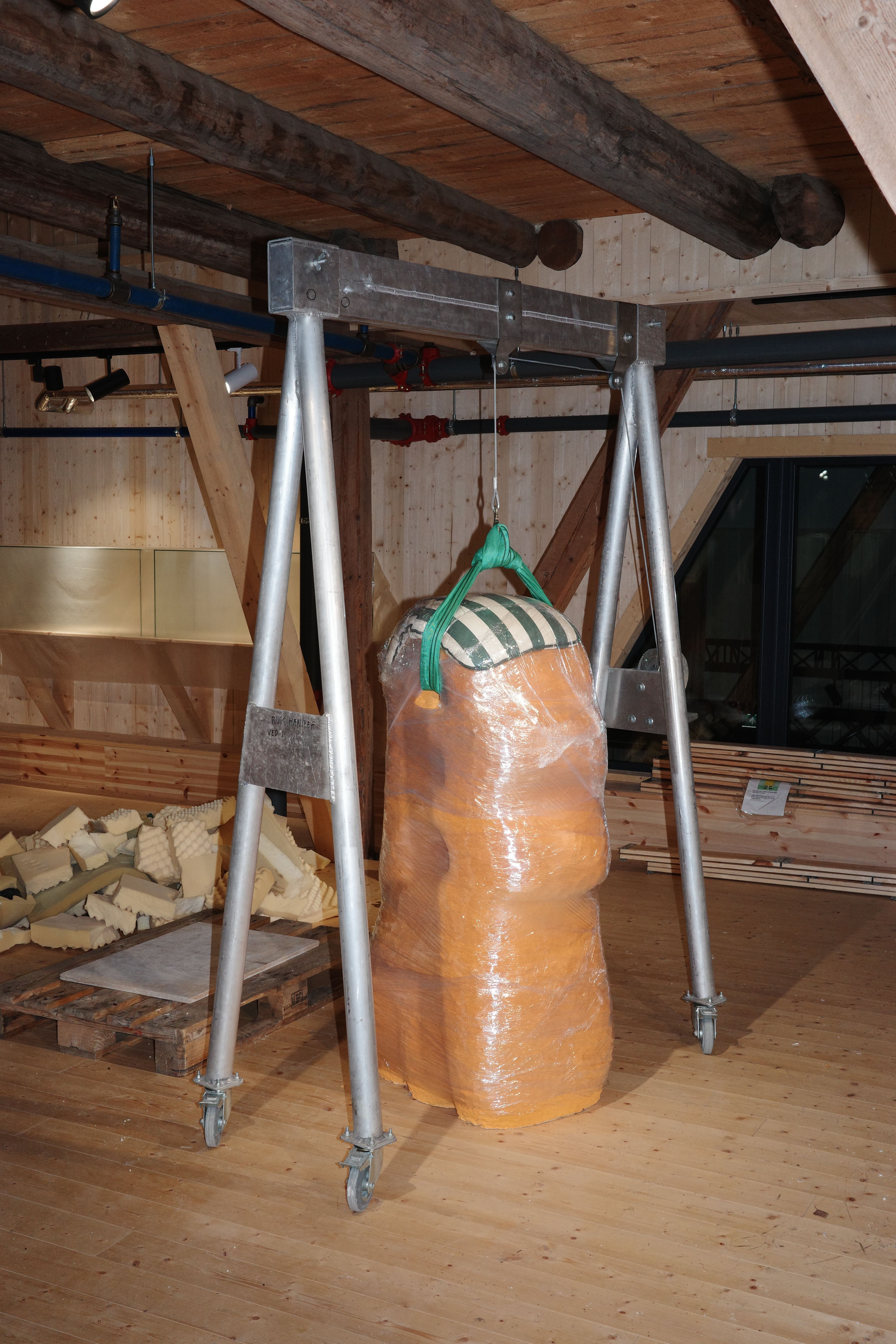
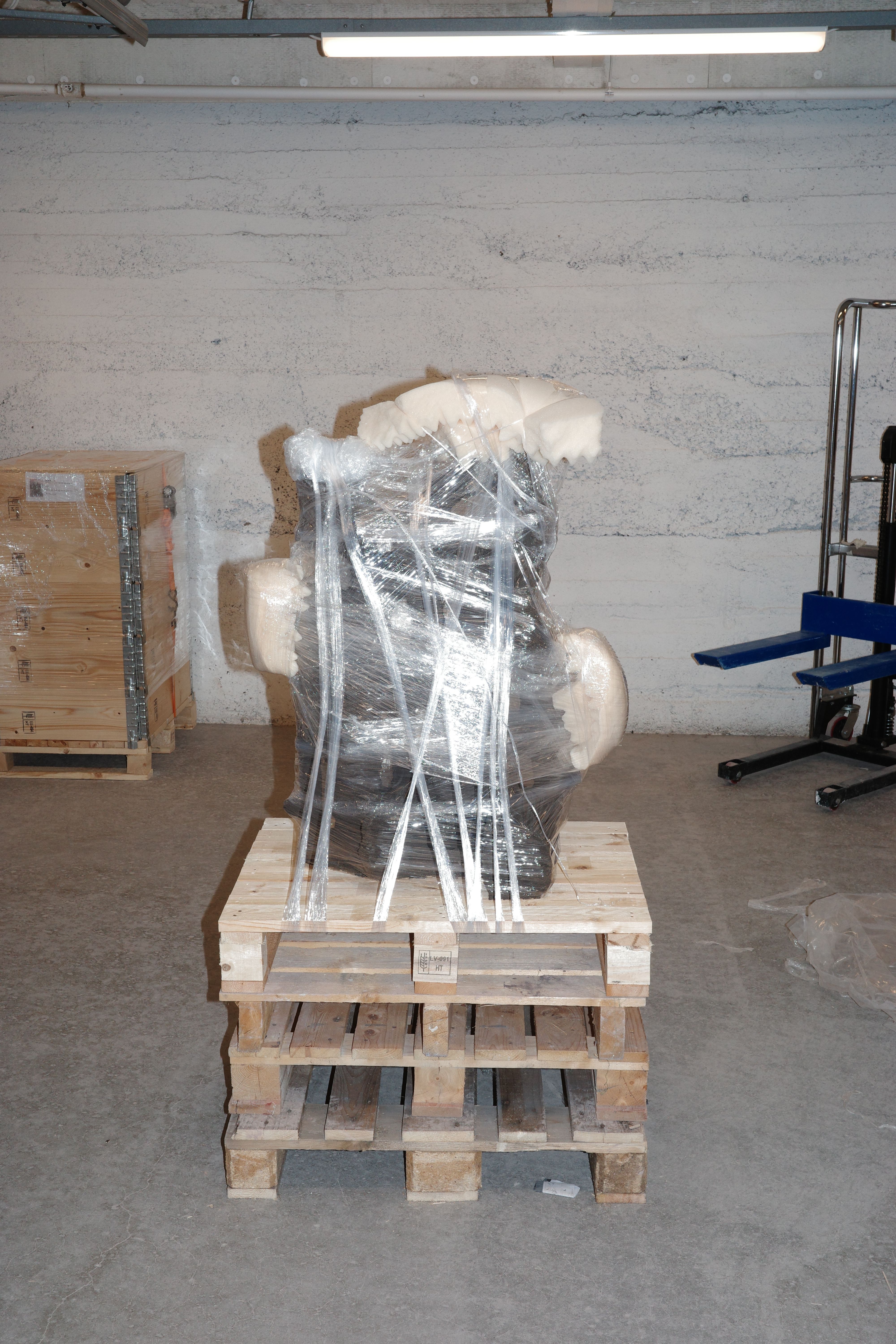
Packing. Foam and plastic wrap. I place pieces of foam on the points of the sculpture that are sticking out. By wrapping the sculpture and going several rounds underneath the pallet, the sculpture is held in place during transport. Pallet frames are then stacked to the right height before a lid and cargo straps secure the whole box structure together. It is important that a piece of foam presses the sculpture down, with the help of the strap over a plywood lid.

Name: R0004150.JPG
Created: 29. january 2026 kl. 16:55
Size: 12,2 MB
Unit: RICOH GR IIIx


Same as yesterday. Packing and getting dizzy from going around and around the sculptures with foil. Waiting for one last piece to come out of the kiln.

Name: IMG_0213.JPG
Created: 30. january 2026 kl. 15:12
Size: 3,3 MB
Unit: iPhone 12

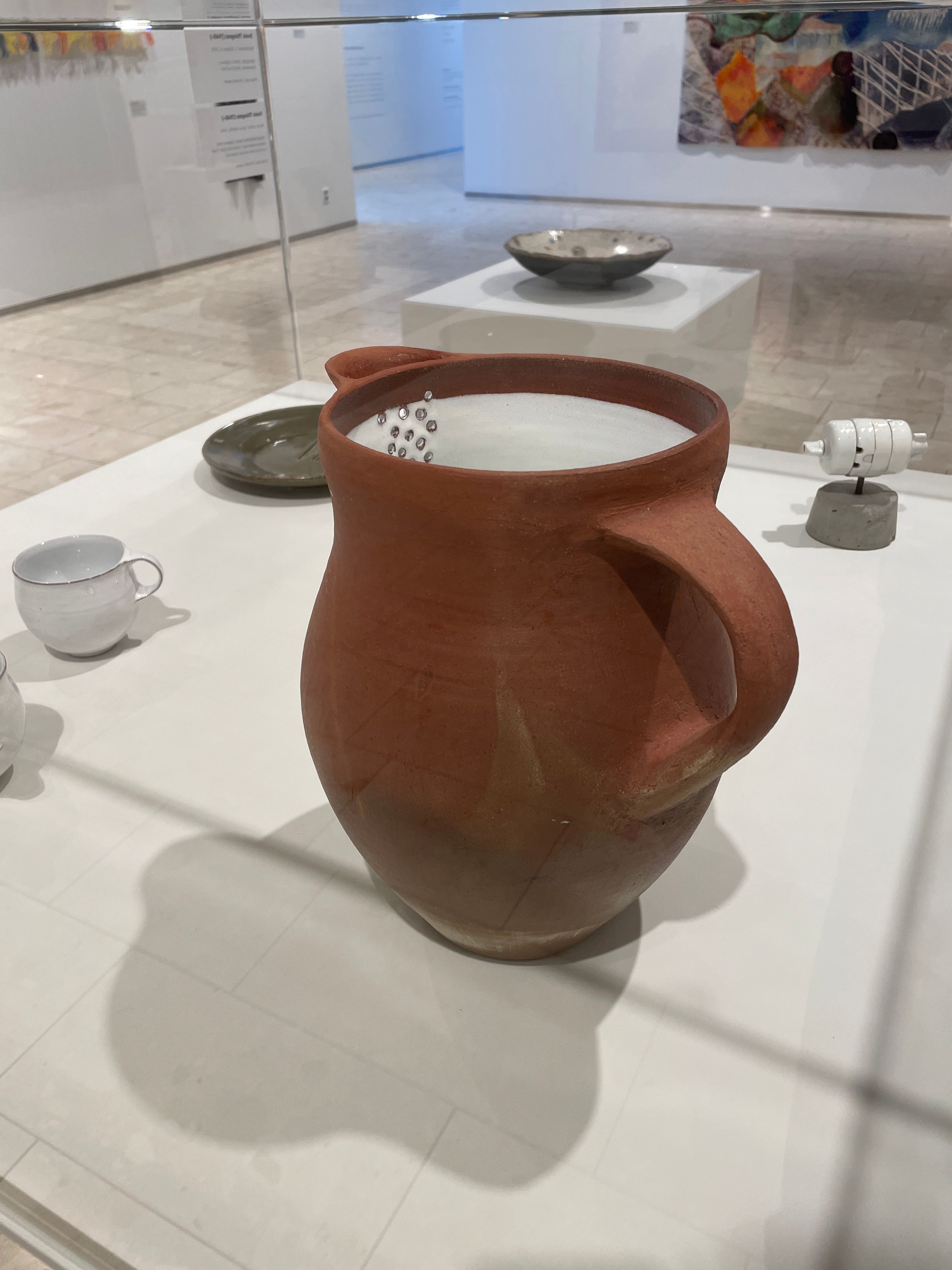
Work on the computer and a visit to the Lillehammer Kunstmuseum. I like the work of the late ceramicist Lisbet Dæhlin a lot, and this “mugge” and “3 kopper” were really strong pieces.

Lisbet Dæhlin (1922- 2012) was a ceramicist working in Norway during the important period when the term Kunsthåndverk began to be introduced. She is known for her distinctively Dæhlin-formed mugs with unglazed outer surfaces. I like how these mugs almost seem to want to be placed in a higher position in the home than an everyday mug. Perhaps the unglazed outside has something to do with this? Whenever I see them in people’s homes, they are usually placed as elevated objects, almost like a small sculpture on a shelf, rather than used as mugs.

Name: R0004177.JPG
Created: 31. january 2026 kl. 15:01
Size: 10,7 MB
Unit: RICOH GR IIIx


Now there are only a few last things to pack. This one was almost too big for the half-pallet frame box. The stoneware clay shrinks about 10 % after drying and firing. Luckily there were a few millimeters of space between the frame and the sculpture.

Name: R0004182.JPG
Created: 2. february 2026 kl. 12:08
Size: 11,5 MB
Unit: RICOH GR IIIx


Last firing done and unloading it. Overall, there was nothing unexpected in any of the firings, which in itself was unexpected. These pallet movers are the best for this kind of job.

Name: IMG_0239.JPG
Created: 3. february 2026 kl. 09:48
Size: 2,6 MB
Unit: iPhone 12


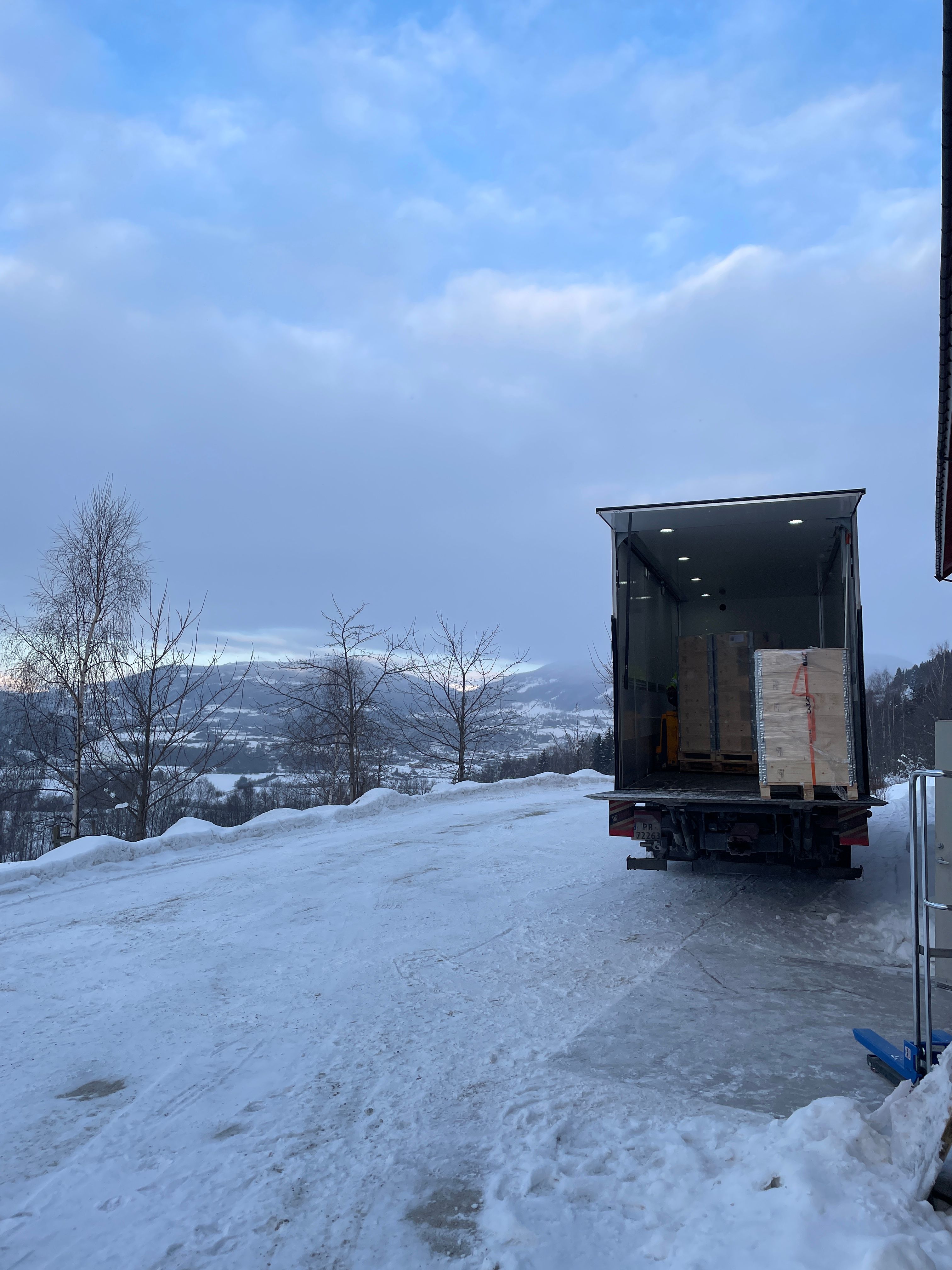
Last day. Loading the truck going to Stavanger and Galleri Opdahl with 17 half pallets and two regular euro pallets, all strapped up with pallet frames and plywood lids. Foiled as an extra safety, and for dust and water protection. Very tricky conditions for the truck, which had to put chains on to get up the icy hill with a U-turn in it. Thanks to Senter for Keramisk Kunst. Now driving back to the south.

About the author

Sigve Knutson is a Norwegian artist whose practice centers on the exploration of tools and materials, emphasizing intuition and spontaneity in his creative process. Knutson’s educational background includes an MA in Contextual Design from Design Academy Eindhoven (2016) and a BA in Design from The Oslo School of Architecture and Design (2014).

All articles by Sigve Knutson