Exploring the visual art scene of Norway's southwest coast ➜ Since 2015
An art world in search of its HR department
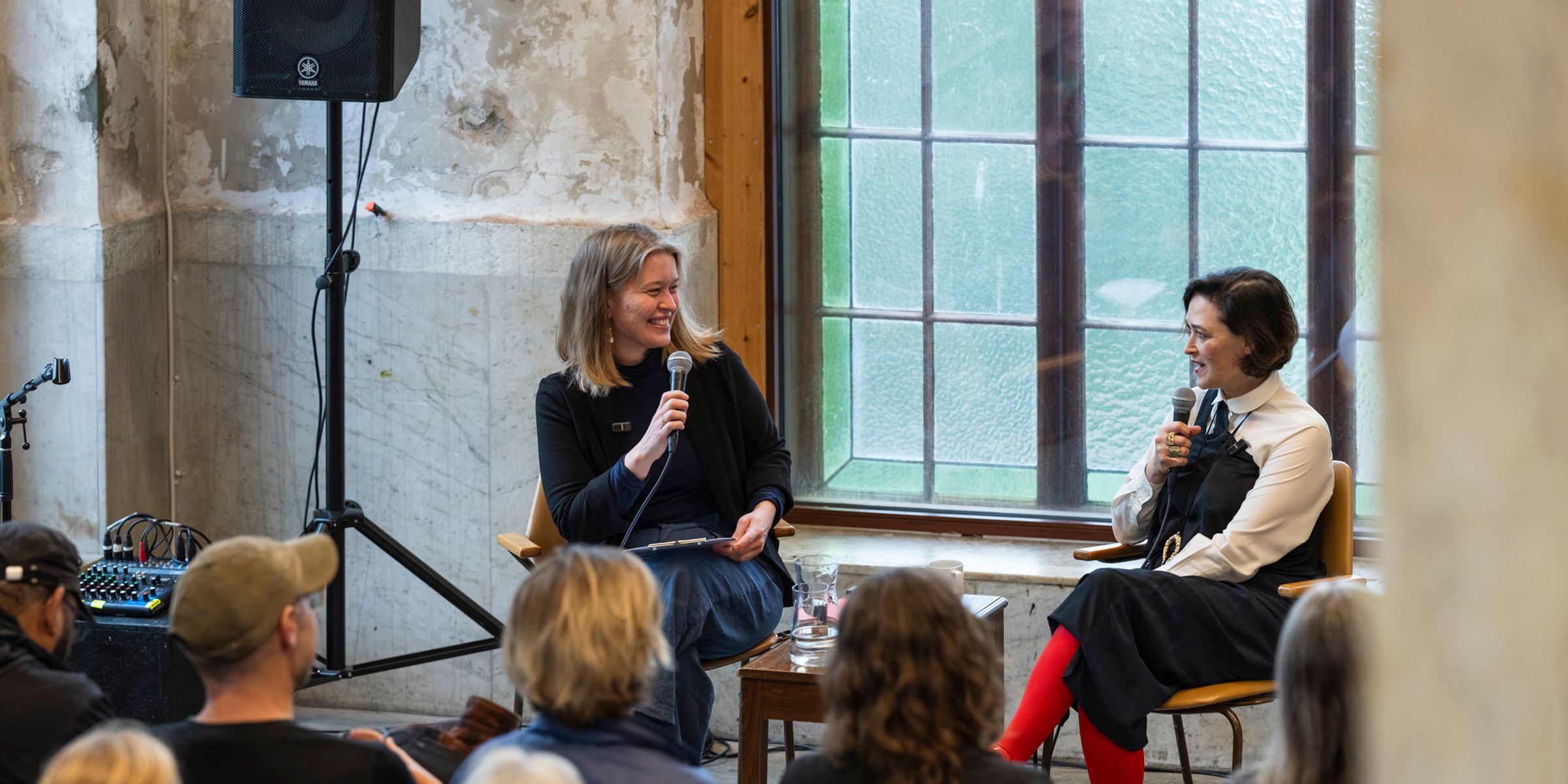
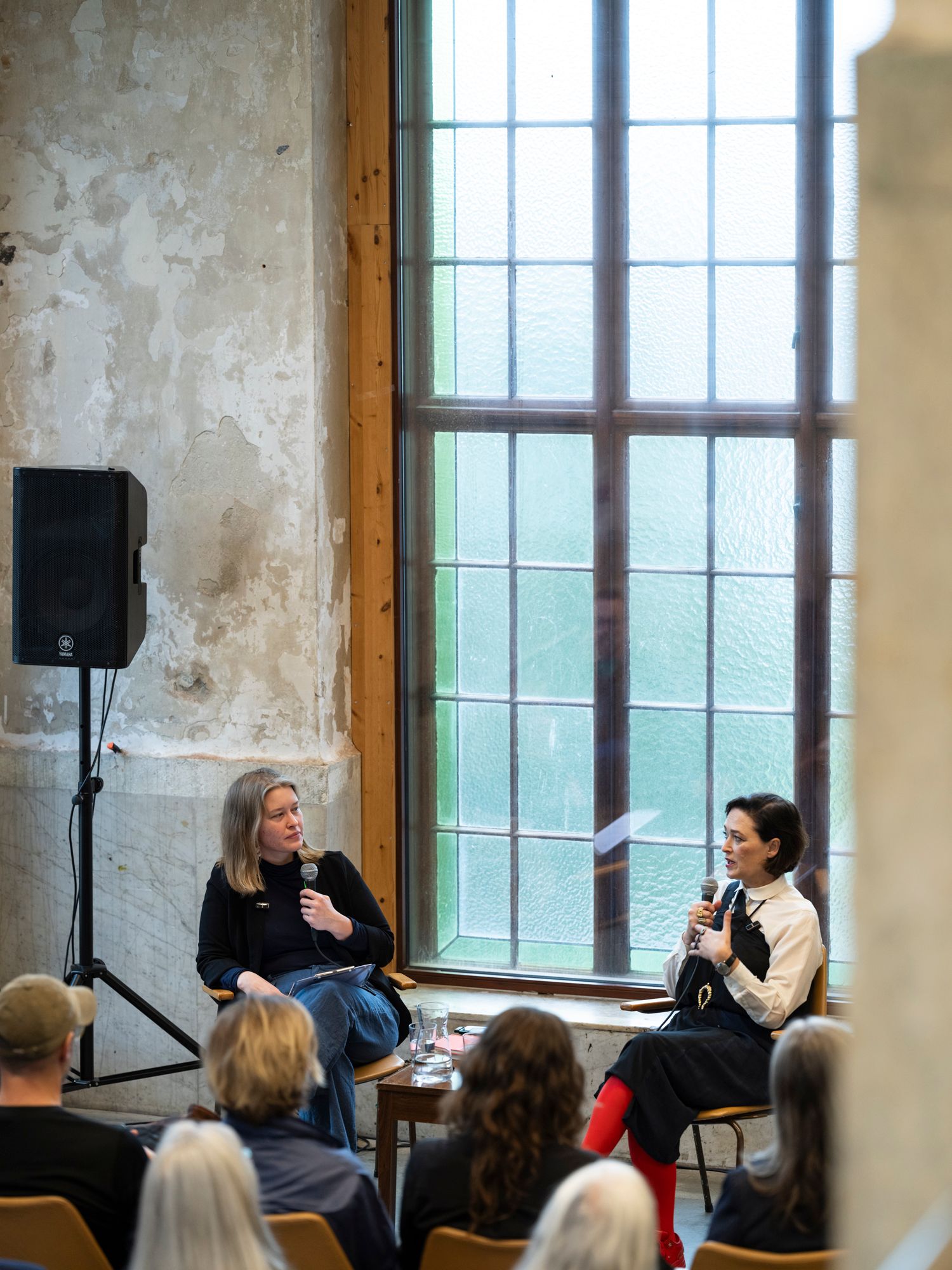
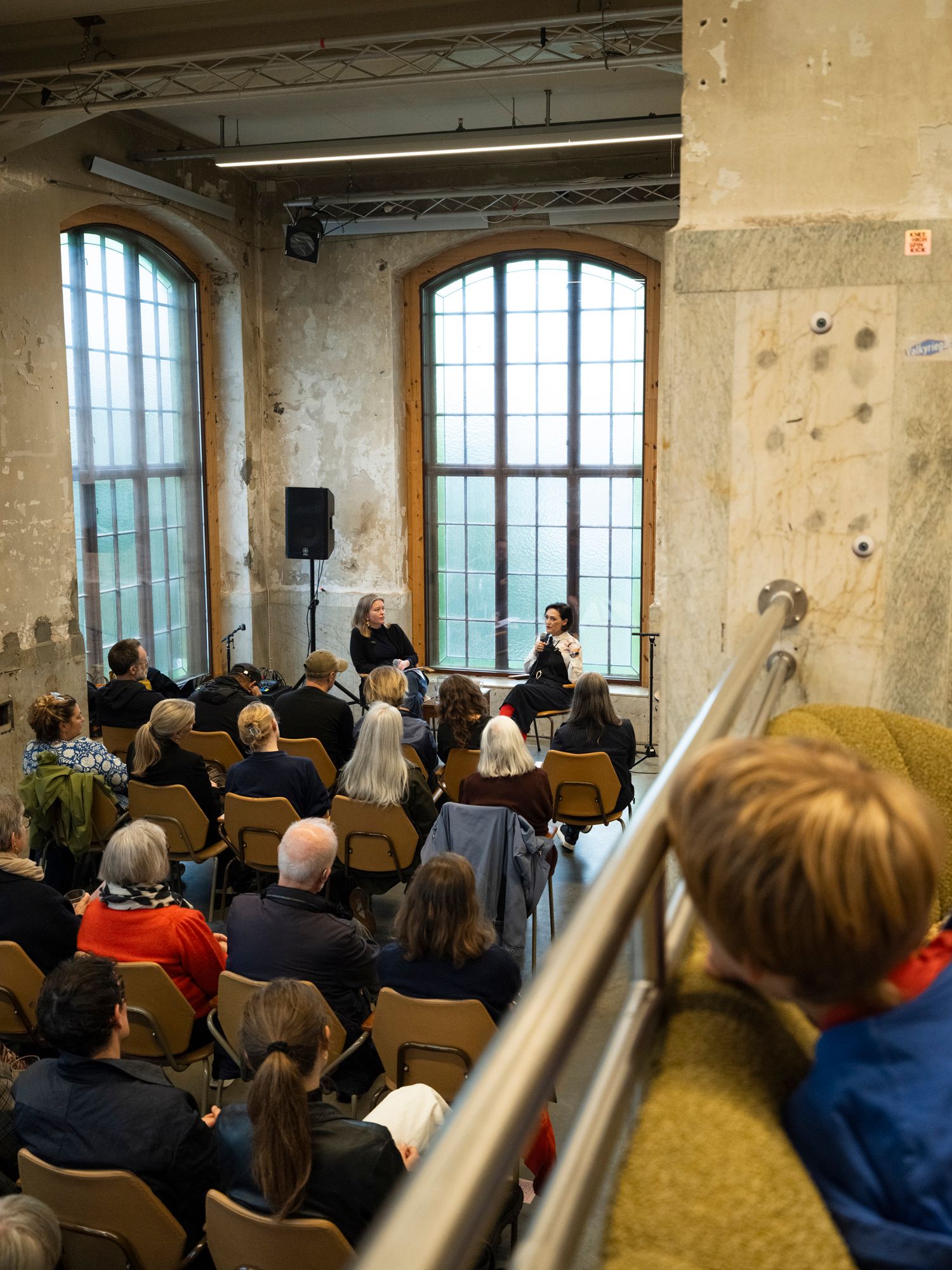
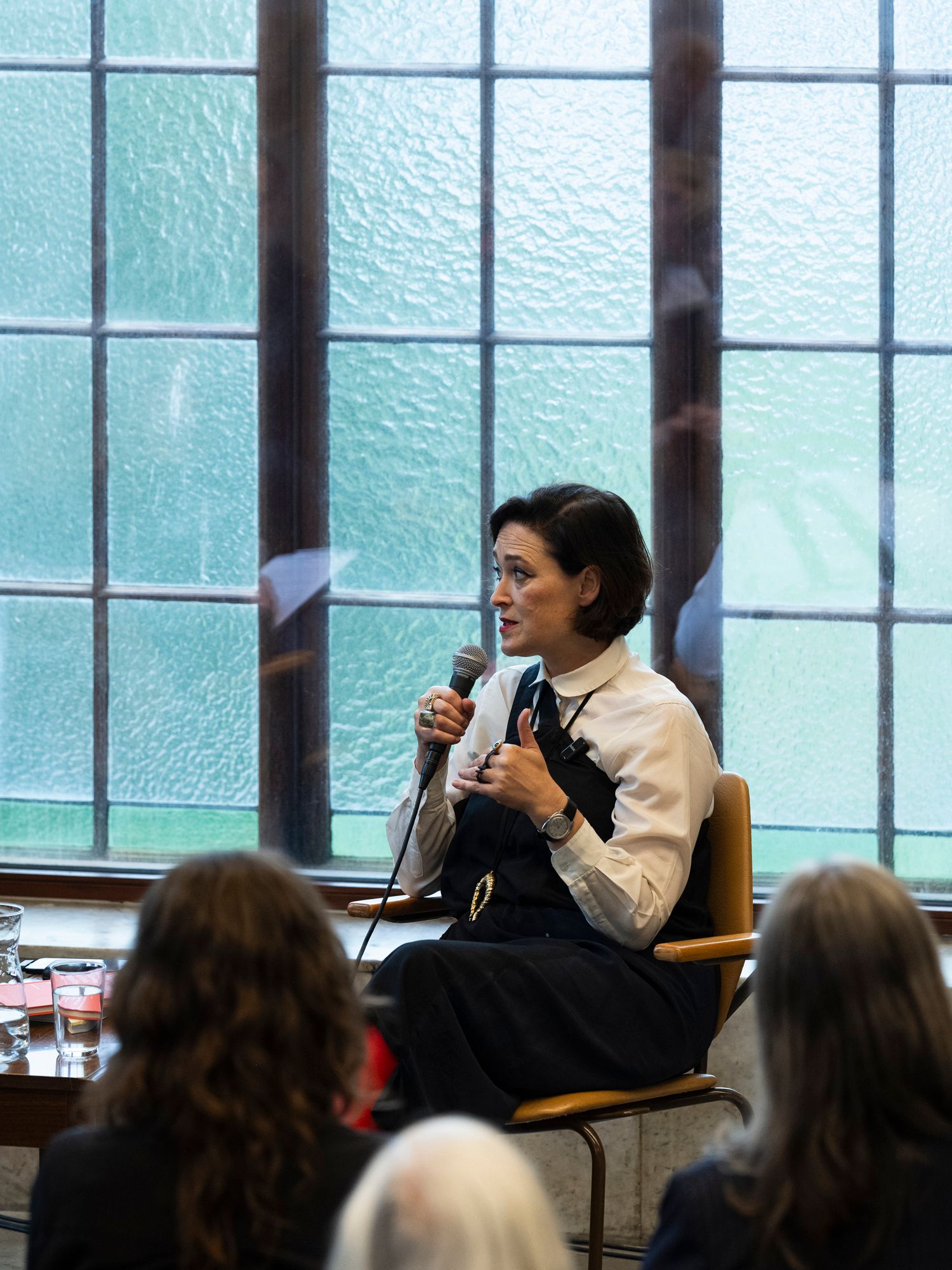
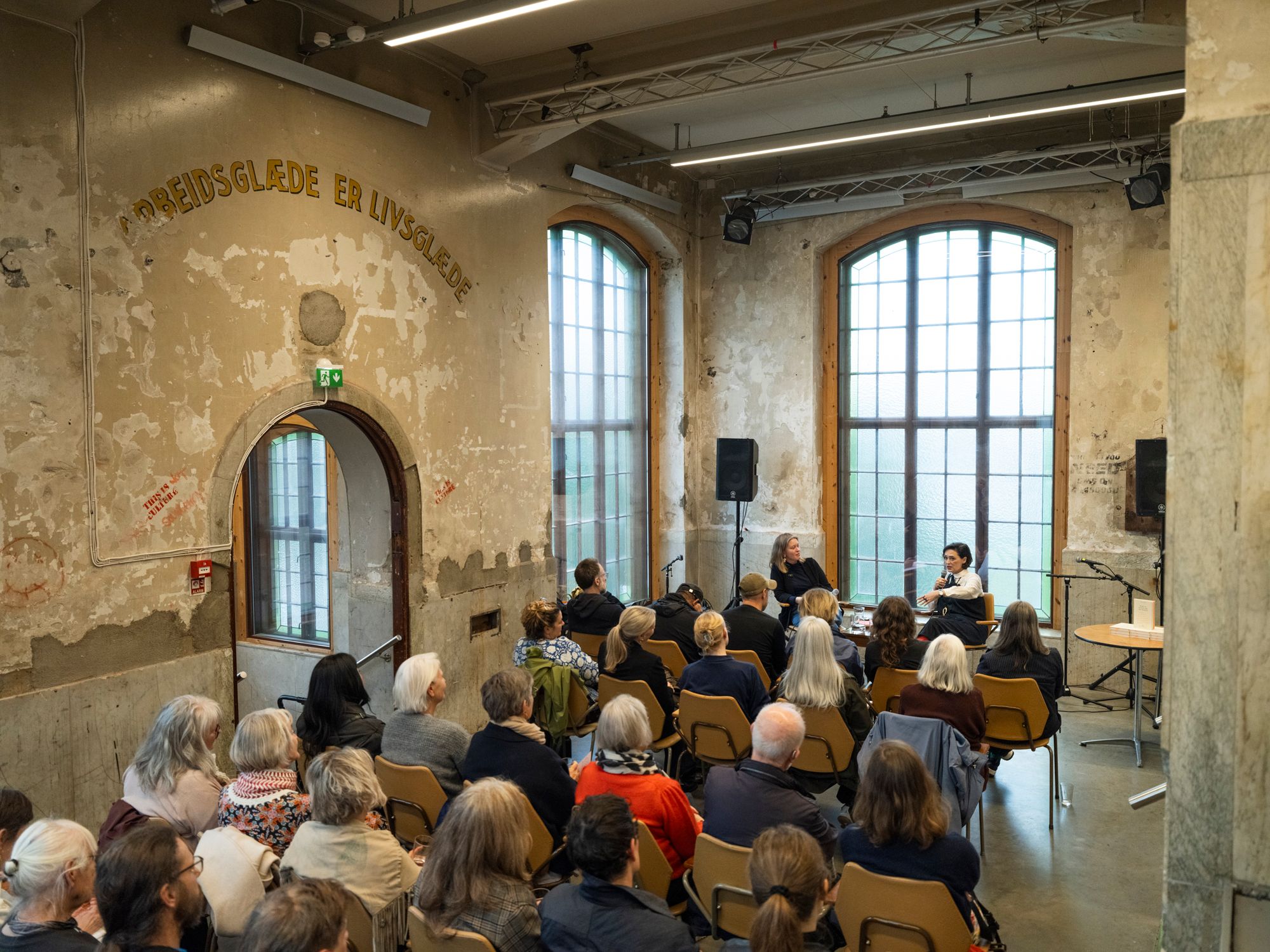
During Open Studios Stavanger & Sandnes, renowned writer and curator Hettie Judah shared her thoughts on the meeting point of artistic practice and life. The recorded conversation, hosted by CAS Director and Editor Sofie B. Ringstad, spans themes such as parenthood in the art world, flexibility traps and what success as an artist might look like, while drawing on Judah's years of research and writing on these topics.
Sofie B. Ringstad (left) and Hettie Judah. Photo: Helle Navratil
Listen to the conversation:
Recording of "Art Work / Care Work? Hettie Judah in Conversation", captured at TOU in Stavanger, Friday 27 September 2026.
Photo: Helle Navratil
Photo: Helle Navratil
Photo: Helle Navratil
Conversation quotes by Hettie Judah
As soon as you start applying a hard edged capitalistic vision to actual human experience, to human lives, to human creativity, there’s going to be some kind of violence that takes place.
They were told motherhood was not an appropriate subject for art – that it was subject that nobody wanted to see art about, that if you made work about motherhood, nobody would want to exhibit it, nobody would want to acquire it, nobody would want to have it on their walls, nobody would want to write about it and it would be the death of your career. (…) This was the intelligence that was handed down through art schools.
The important components of life are - I mean, unless you’re a quantum physicist - human relations, care, dependency, repetition… all of this is the fundamental stuff of life, and if you’re not going to make art about that, then what the fuck are you doing?
When we’re talking about motherhood not being an interesting subject [for art], part of the idea was that all experiences of motherhood are the same. That it's just one kind of experience. But we don’t only have one love song.
Honoring that everyday practice and recognizing that it’s important, and that it can lead you in to new places in what you’re doing… is worth not overlooking.
A useful definition of success is to have a life in which you are able to make art – that in itself is a phenomenal achievement.
I think we need to completely shift perspective, so that rather than centering the idea of an able-bodied, financially independent, constantly present, unattached person as being the normal - and then everybody else is the freak outside of that - actually to reimagine that a normal situation is somebody that’s a vulnerable person, that’s part of an interconnected network of care and dependency. Because that’s actually the truth, that’s how everybody lives. But until we accommodate that and paint that as being a normal situation, we end up treating everybody as if they’re failing in some way.
Photo: Helle Navratil
Artists mentioned (in sequence):
Tracey Emin
Sarah Lucas
Rachel Whiteread
Cornelia Parker
Camille Henrot
Tala Madani
Caroline Walker
Chantal Joffe
Katharina Bjelland
Penny Slinger
Lubaina Himid
Claudette Johnson
Ingrid Pollard
Artworks mentioned (in sequence):
Mary Kelly: Post-Partum Document (1973-79)
Rineke Dijkstra: New Mothers (1994)
Rugilė Barzdžiukaitė, Vaiva Grainytė and Lina Lapelytė: Sun and Sea: Marina / Lithuanian Pavilion, 58th Venice Biennale (2019)
Merike Estna: The House of Leaking Sky / Estonian Pavilion, 61st Venice Biennale (2026)
Lubna Chowdhary: Metropolis (1991–2019)
Sheila Hicks: Minimes (1956–present)
Hettie Judah books mentioned:
How Not to Exclude Artist Mothers (and other parents), Lund Humphries Publishers Ltd, 2022.
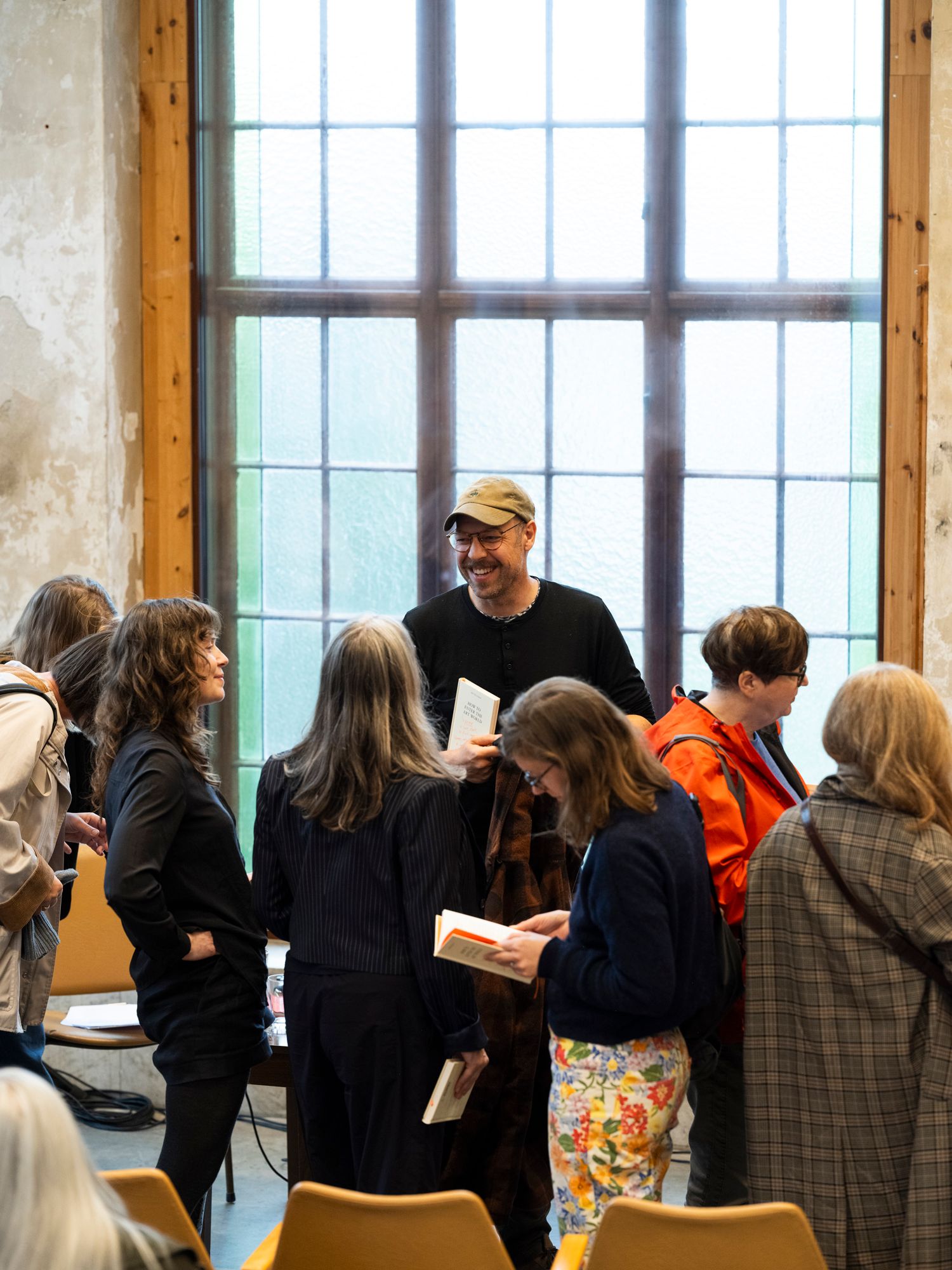
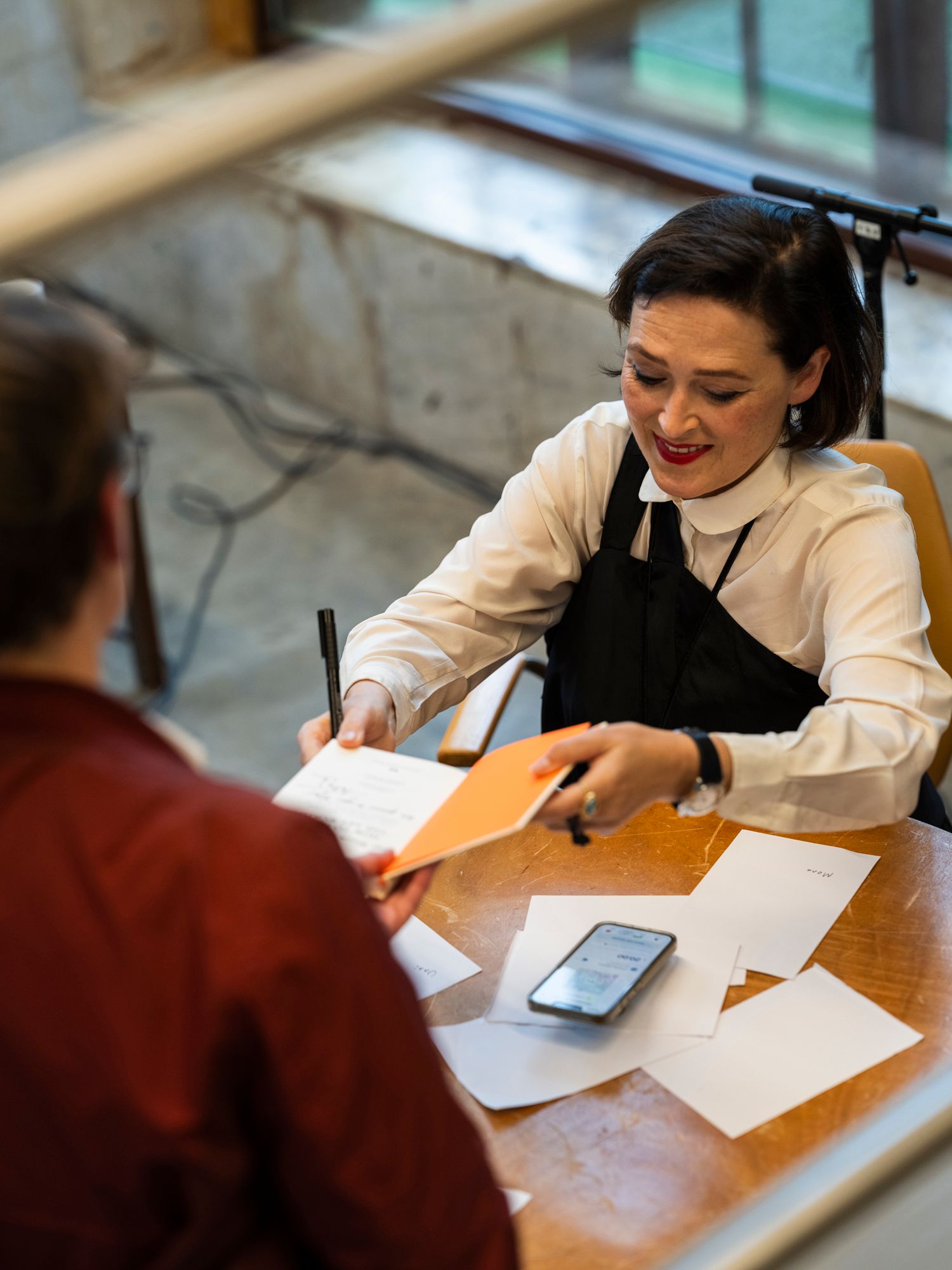
How to Enter the Art World: After a Late Start, a First Career, Illness, Raising Children, a Crisis of Confidence, or Leaving It in Disgust, Hoxton Mini Press, 2026.
Photo: Helle Navratil
Photo: Helle Navratil
More info
The conversation with Hettie Judah was supported by Fritt Ord and Norsk tidsskriftforening.