Art from Norway's south-west coast ➜ Since 2015

Architectures of Appetite

The main exhibition of the 2026 version of Stavanger Secession, titled To Live and Think like Pigs, was on view from April 10 – April 25, 2026 and featured notable artworks by artists such as Coop Himmelb(l)au, Carsten Höller, Steffen Jørgensen, Rosemarie Trockel, among many others. Writers and researchers Kristaps Ancāns and Roberts Jansons use the exhibition as a lens through which to see architecture not only as something humans make, but also something that makes humans.

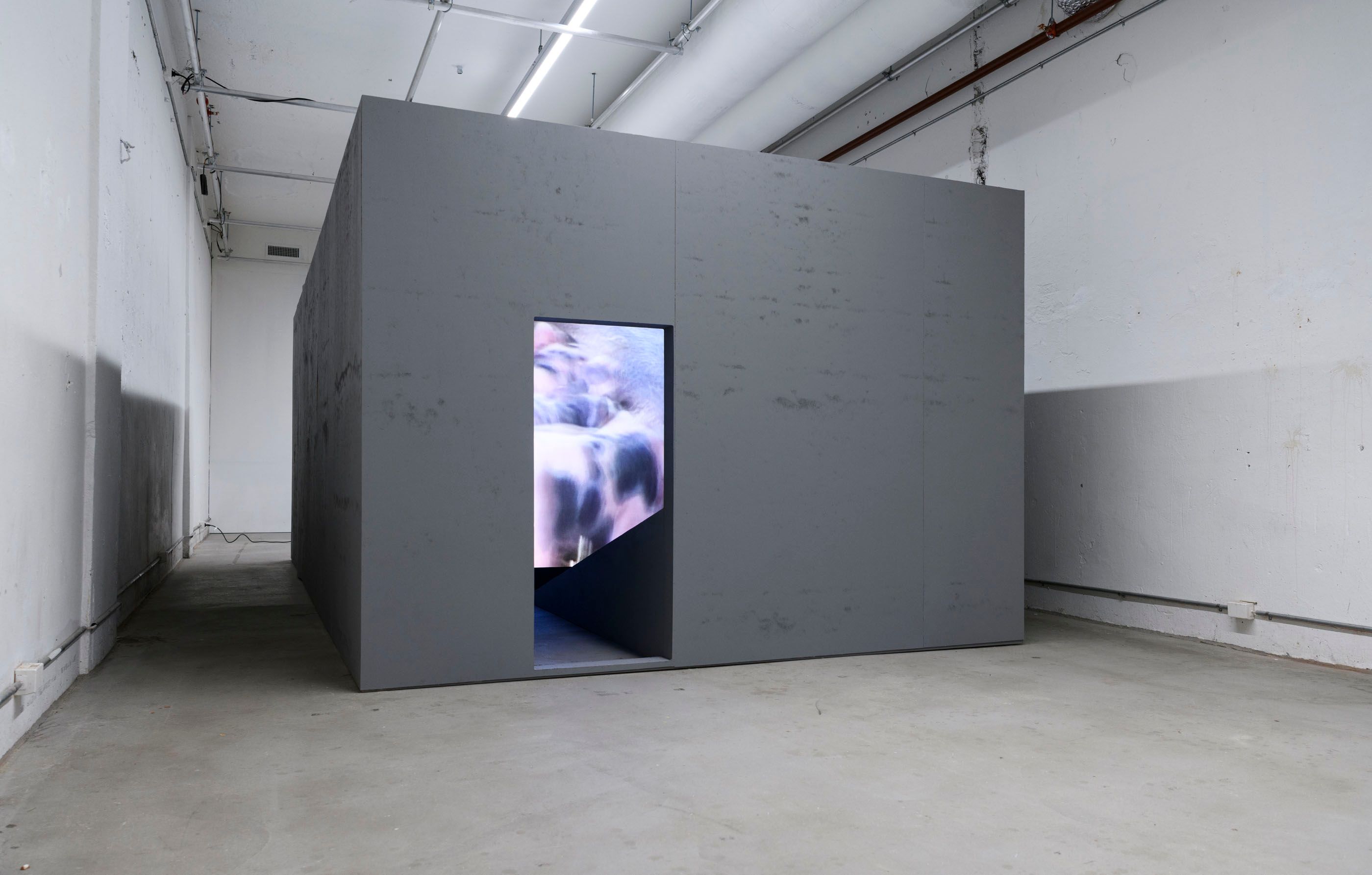
Carsten Höller & Rosemarie Trockel, House for Pigs and Children, 1999. Courtesy the artists and Sprüth Magers. Copyright the artists and ARS, 2026. Photo: Markus Johansson.

The Three Little Pigs, popularised in English through Joseph Jacobs' English Fairy Tales (1890), is usually remembered as a story about preparation. Three pigs, three houses and a wolf become a reassuring lesson: work hard, build well and you will survive. In Sergei Mikhalkov's Russian adaptation, the pigs acquire the names Nif-Nif, Nuf-Nuf and Naf-Naf. The names change, but the architecture remains the same. Like most fairy tales, the story shifts depending on where we choose to stand. It can be read through labour, class, technology, domesticity or architecture. Every change in perspective produces a different story.

In The Three Little Pigs, the wolf appears to test not only the pigs' courage but also the architecture they have built around themselves. Each encounter follows the same ritual. The wolf announces himself, the pigs retreat indoors, the house is tested. Architecture appears to promise certainty. The moral is equally reassuring: think ahead, build carefully, protect yourself.

The 2026 Stavanger Secession exhibition, titled To Live and Think Like Pigs, begins from a similar position. Rather than searching for a single interpretation, it asks what happens when familiar objects, materials and structures are viewed from somewhere else. Looking again becomes less of an act of analysis than one of recognition. Materials begin to carry histories they previously concealed. Buildings stop behaving as backgrounds and become active participants. Familiar narratives become unexpectedly unstable.

Xu Zhen, Rainbow, 1998. Courtesy of the artist. Photo: Markus Johansson.

Seen through To Live and Think Like Pigs, the familiar story begins to reverse itself. Architecture no longer guarantees protection. Instead, it becomes a technology for organising, containing and processing bodies. The wolf has not disappeared; he has simply moved inside the building. He no longer waits outside the door. He appears in ventilation systems, feeding schedules, circulation routes, insurance policies and optimisation models. The house is no longer merely a shelter. It has become infrastructure. This reversal quietly changes the fairy tale.

The pigs no longer build houses to protect themselves from the wolf. They inherit buildings already designed according to someone else's appetite.

Konrad Lorenz described what he called the Kindchenschema - the "baby schema" through which humans instinctively respond to rounded faces, large eyes, soft skin and relatively oversized heads. Piglets possess many of these characteristics. Their bodies appear playful, vulnerable and strangely familiar. Care spills easily across species.

Yet cuteness alone cannot explain our relationship with pigs. Wolves and wild boars appear just as often in our stories, but they are cast as a threat or a symbol of wilderness. The pig is given a different role entirely. Before most of us encounter a living pig, we have already met dozens of fictional ones. They build houses. Wear clothes. Fall in love. Tell jokes. They become friends, neighbours and protagonists. The Three Little Pigs, Piglet, Babe and Peppa Pig all transform the animal into a social character long before it ever becomes livestock. Somewhere along the way, the pig's pink skin stopped describing biology and became graphic design.

This produces a curious contradiction. Few animals occupy such a visible place within visual culture while remaining so absent from everyday experience. We recognise the pig immediately, yet rarely recognise the conditions under which it lives. It appears continuously on packaging, children's television, restaurant signs and supermarket shelves, while the infrastructures that produce it remain carefully out of sight. Behind the pig's synthetic pink image operates an extraordinary machinery of confinement, reproduction, logistics and disassembly. The old wolf threatened to blow the house down. The contemporary wolf is harder to locate because it has become indistinguishable from the house itself.

Carsten Höller & Rosemarie Trockel, House for Pigs and Children, 1999. Courtesy the artists and Sprüth Magers. Copyright the artists and ARS, 2026. Photo: Markus Johansson.
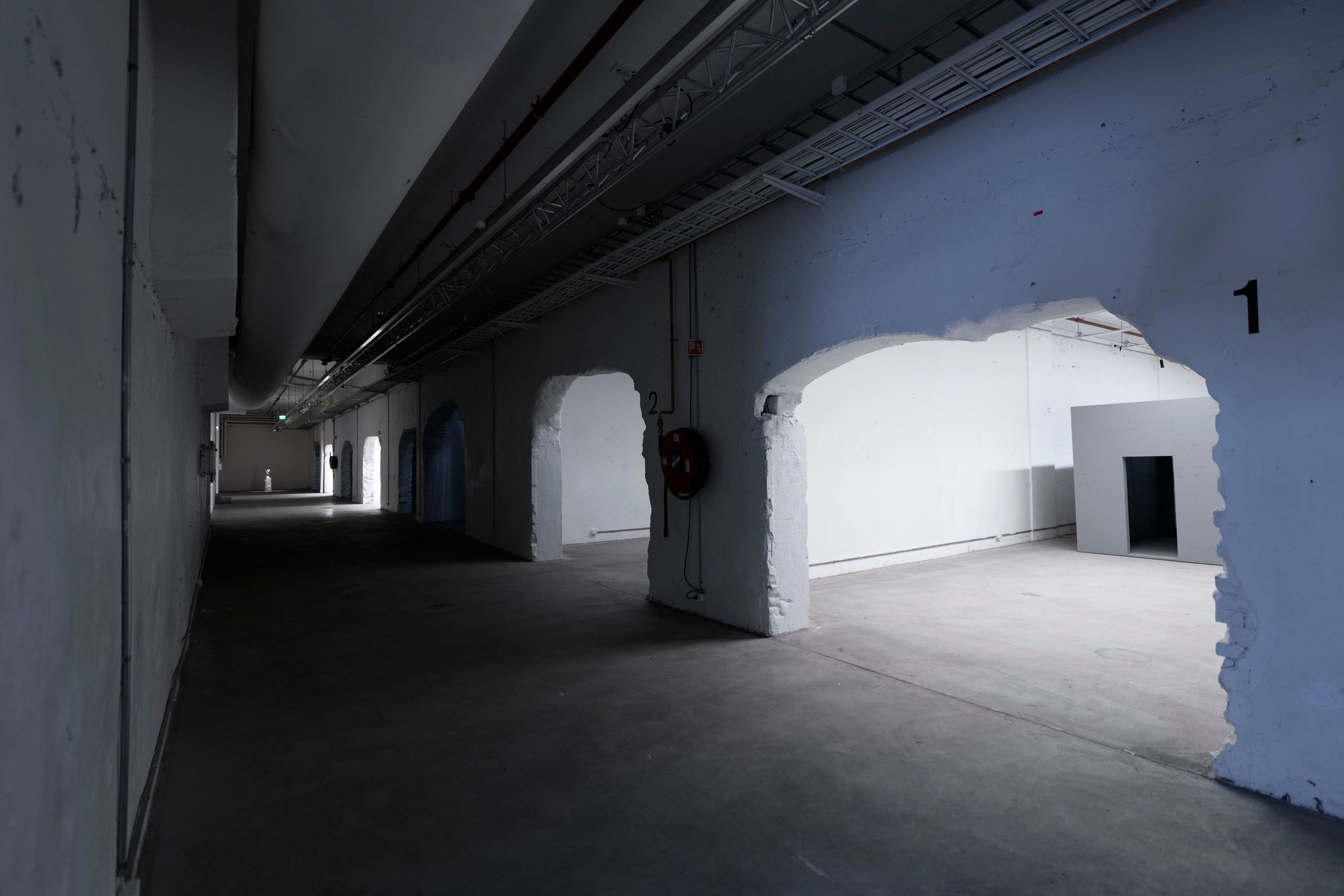
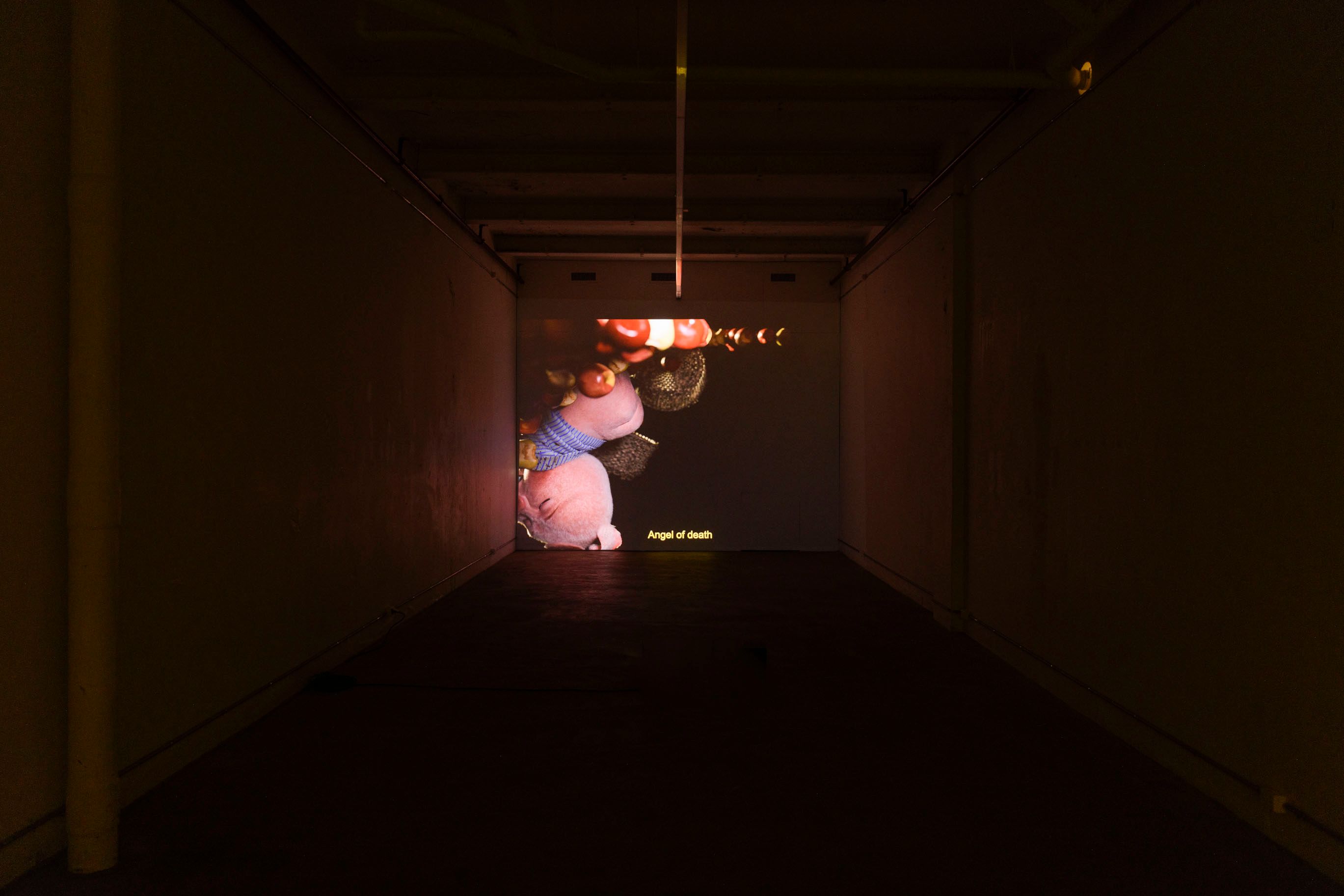
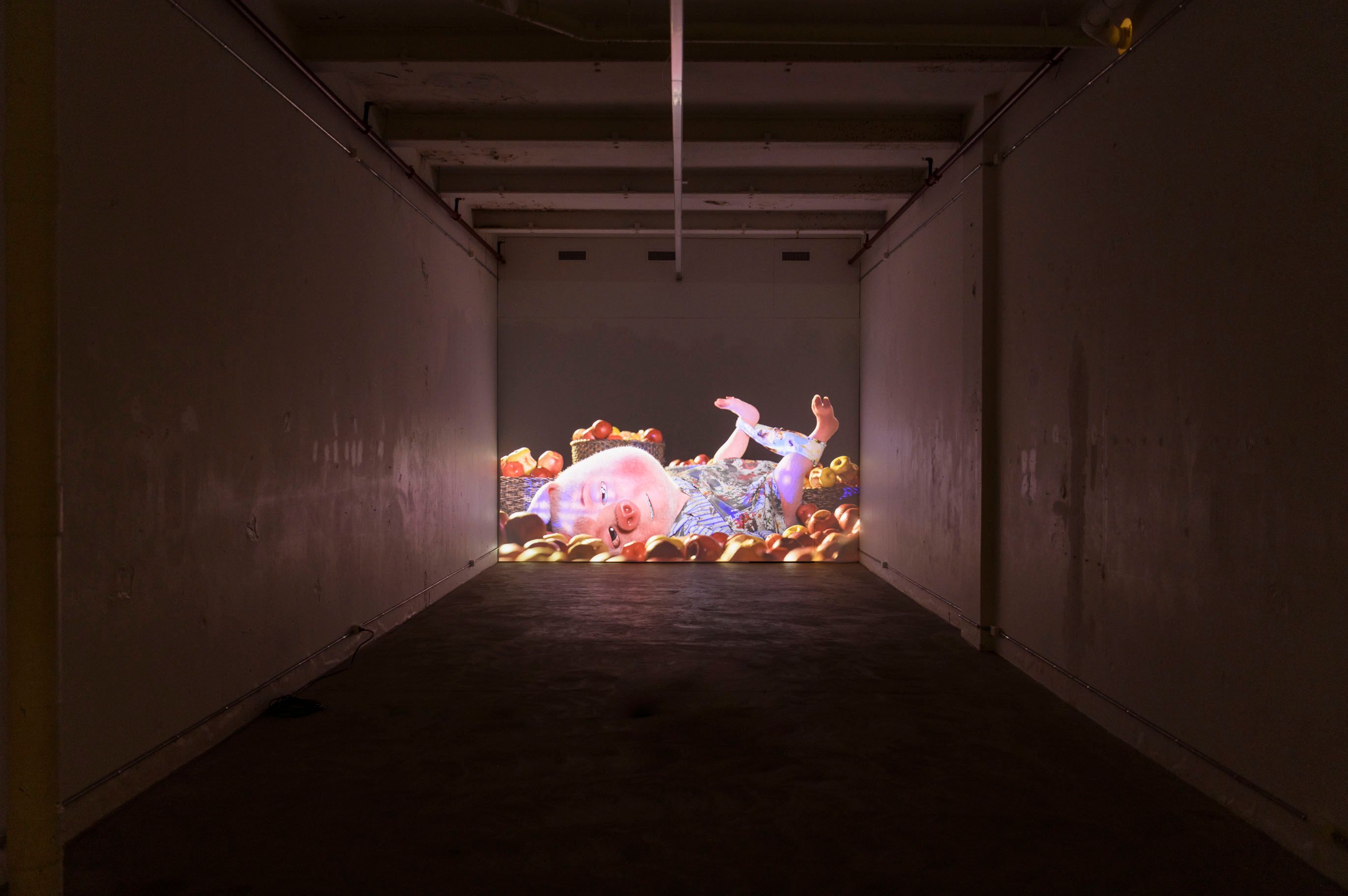
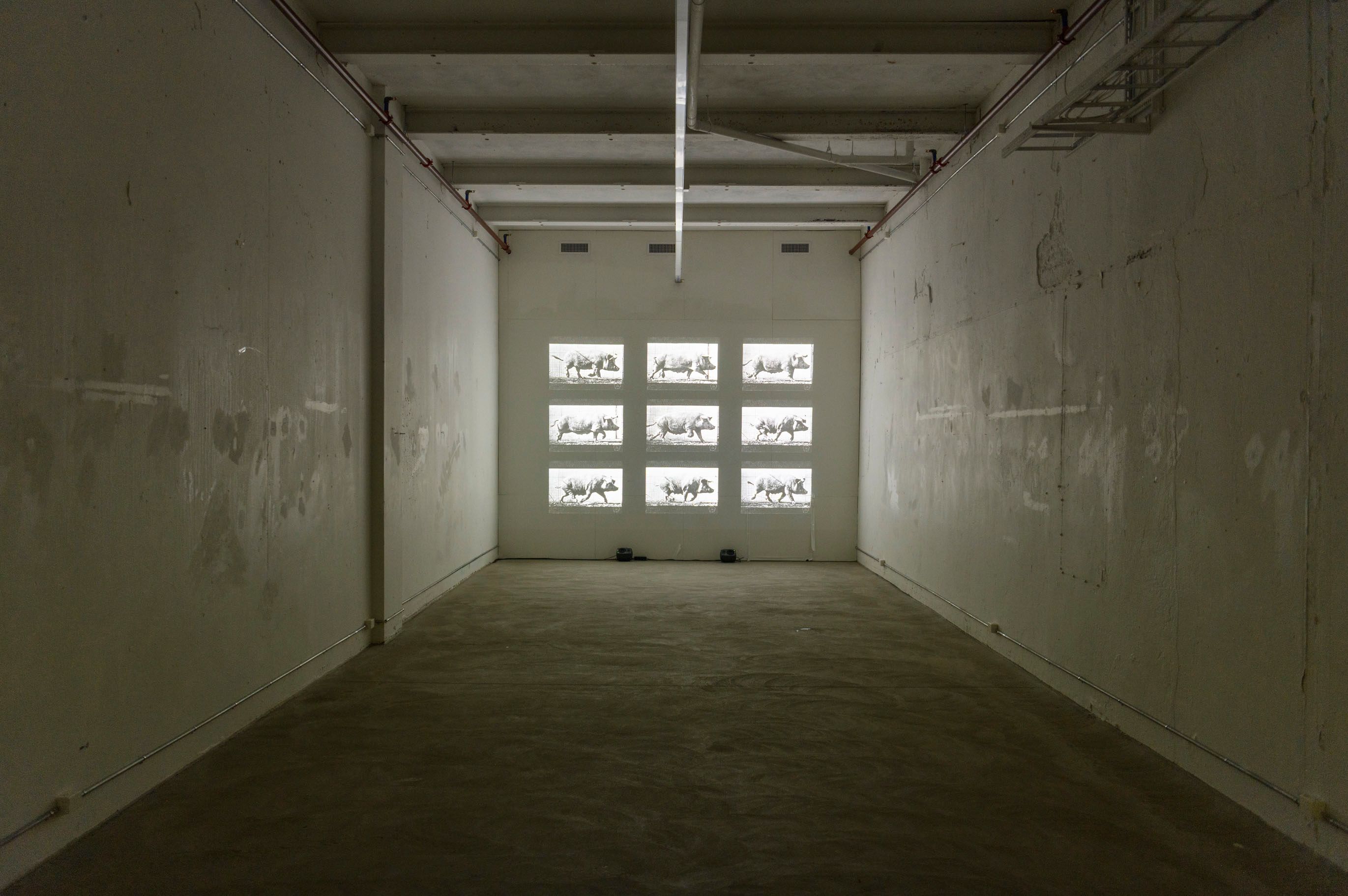
To Live and Think like Pigs, exhibition view. Photo: Markus Johansson

Carsten Höller and Rosemarie Trockel's House for Pigs and People, first presented at documenta X in 1997, made this contradiction almost impossible to ignore. Visitors sat and watched pigs through a glass wall. Sharing a structure with a pig became a spectacle. Yet why should proximity feel extraordinary when pigs are already deeply embedded within everyday life? They accompany us as food, pharmaceuticals, cosmetics, leather, gelatine and countless invisible ingredients. Their bodies circulate through daily life with remarkable intimacy while the living animal itself remains almost unimaginable. The discomfort begins precisely when the pig stops arriving as a product and begins occupying space beside us.

This could be referred to as the Chihuahua Phenomenon. The Chihuahua is the perfect example of the sanitised pet we have learned to welcome into our lives. It can accompany us into a café, sit next to us at the table while we drink matcha, wear a miniature jacket and appear repeatedly within the everlasting stream of our visual digital footprint. We give it a name, a personality, moods, preferences and a place within the family. Later that same day, we can order a medium-rare steak without experiencing these two encounters as contradictory. One animal sits beside us at the table, while another arrives on the same table. One is described through its breed, temperament and personality; the other through its preferred degree of cooking. The Chihuahua Phenomenon is therefore not really about Chihuahuas. It is about the strange hierarchy through which we decide which animals are allowed intimacy, individuality and visibility, and which are permitted to return only as food.

Steffen Jørgensen, Civilizasia (PIG), 2026. Courtesy of Bianca D’Alessandro and the artist. Photo: Markus Johansson.

Steffen Jørgensen's Civilizasia (PIG) points directly towards this displacement, mobilising the pig through John Berger's argument in Why Look at Animals? (1977) that modernity replaced lived proximity to animals with symbolic substitutes. The pig has not disappeared from visual culture. Quite the opposite. It has become so visible that the living animal itself has almost vanished. The smiling pig on a restaurant sign performs an important task. It reassures us that nothing uncomfortable has happened. It offers a pig without smell, weight, appetite, resistance or death.

Perhaps this sensitivity to reassurance stems from the authors' personal histories, which approach pigs from almost opposite directions. One author spent years working in the marketing departments of airlines and art institutions, learning how carefully constructed images persuade strangers to feel at home. Although the products may differ, the visual language remains remarkably consistent. Happy families, soft colours, domestic interiors, patriotism and friendly animals create reassuring feedback loops that encourage viewers to recognise both themselves and their values in what is being offered. The other author grew up on an organic farm where pigs were raised, slaughtered and butchered for the family's own table. There, reassurance was never part of the experience. Wanting to eat meat also meant confronting the animal directly, carrying its weight, removing its organs and understanding that consumption always begins with a body.

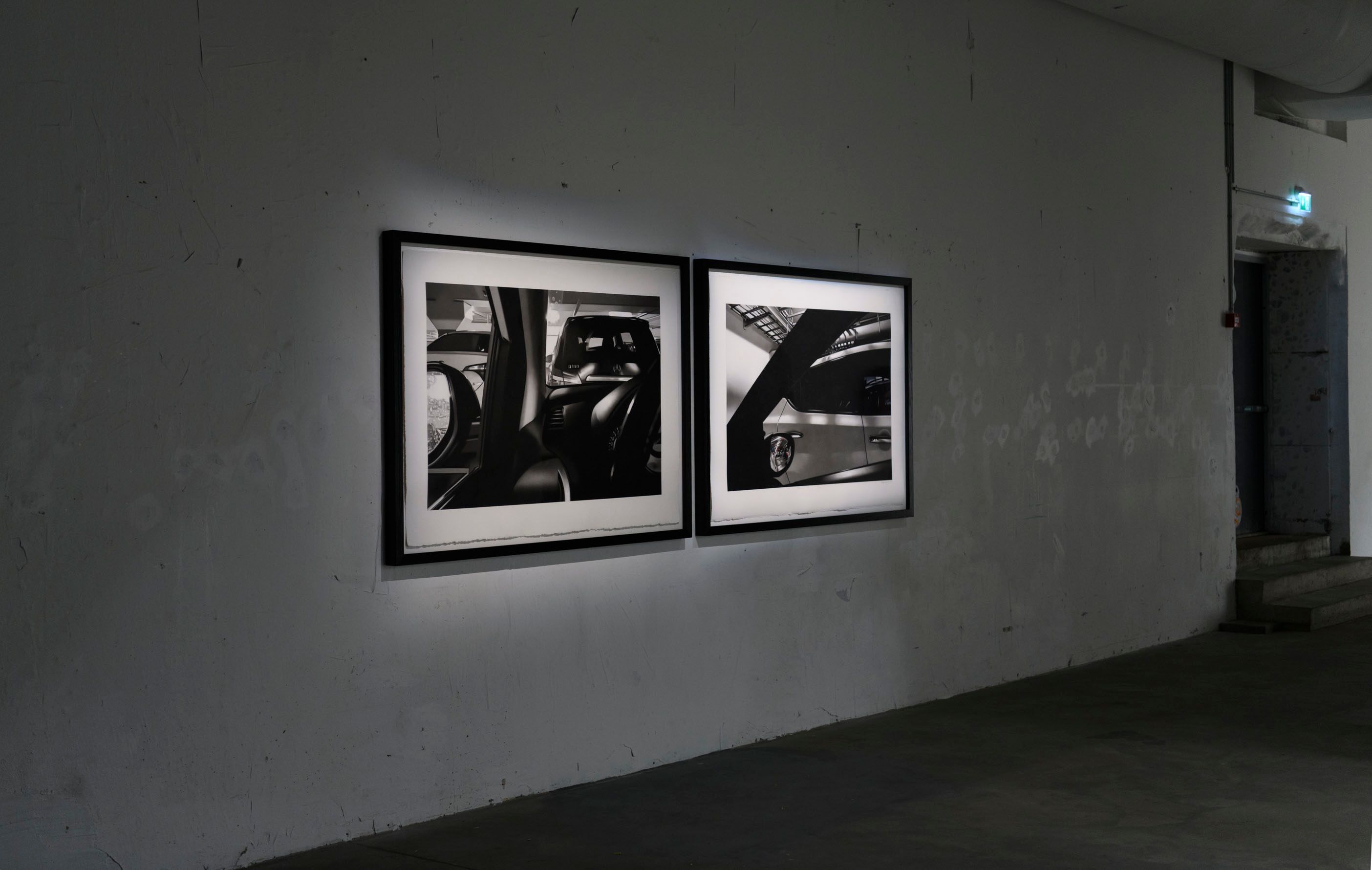
Roald Kyllingstad, Mercedes, 2021, and Diagonal, 2020. Courtesy of the artist and Galleri Opdahl. Photo: Markus Johansson.

Although these worlds appear far apart, they share an unexpected concern with recognition. Marketing produces images that make identification easy. Small-scale farming demanded another form of recognition altogether: it insisted that images were never enough. Every meal retained a memory of the animal from which it came. Perhaps this is where the exhibition begins. Recognition is never simply about seeing. It is about deciding what remains visible, what quietly disappears and which architectures make both possibilities appear perfectly natural.

Installed on the corridor wall opposite the pavilions, Roald Kyllingstad's pastel drawings return us to the comfort of surfaces. They depict a world where desire is carefully maintained rather than fulfilled. Everything appears close enough to touch but remains slightly out of reach. It is the logic of consumption itself: wanting becomes more valuable than having.

The pig belongs comfortably within this landscape. It can be cute, nostalgic or humorous, provided it never interrupts consumption. It is allowed a house, a family and a personality. It can speak, dance and become the protagonist of a bedtime story. Yet the industrial pig remains almost invisible. One performs emotional labour on behalf of the consumer; the other quietly becomes the material being consumed. This division feels increasingly architectural. Architecture has always been described as protection, but perhaps organisation is now its dominant function.

Airports organise passengers. Hospitals organise patients. Warehouses organise packages. Offices organise workers. Apartment blocks organise neighbours. Pig farms organise pigs.

Different programmes, different users, yet remarkably similar ambitions. They all transform irregular lives into manageable systems.

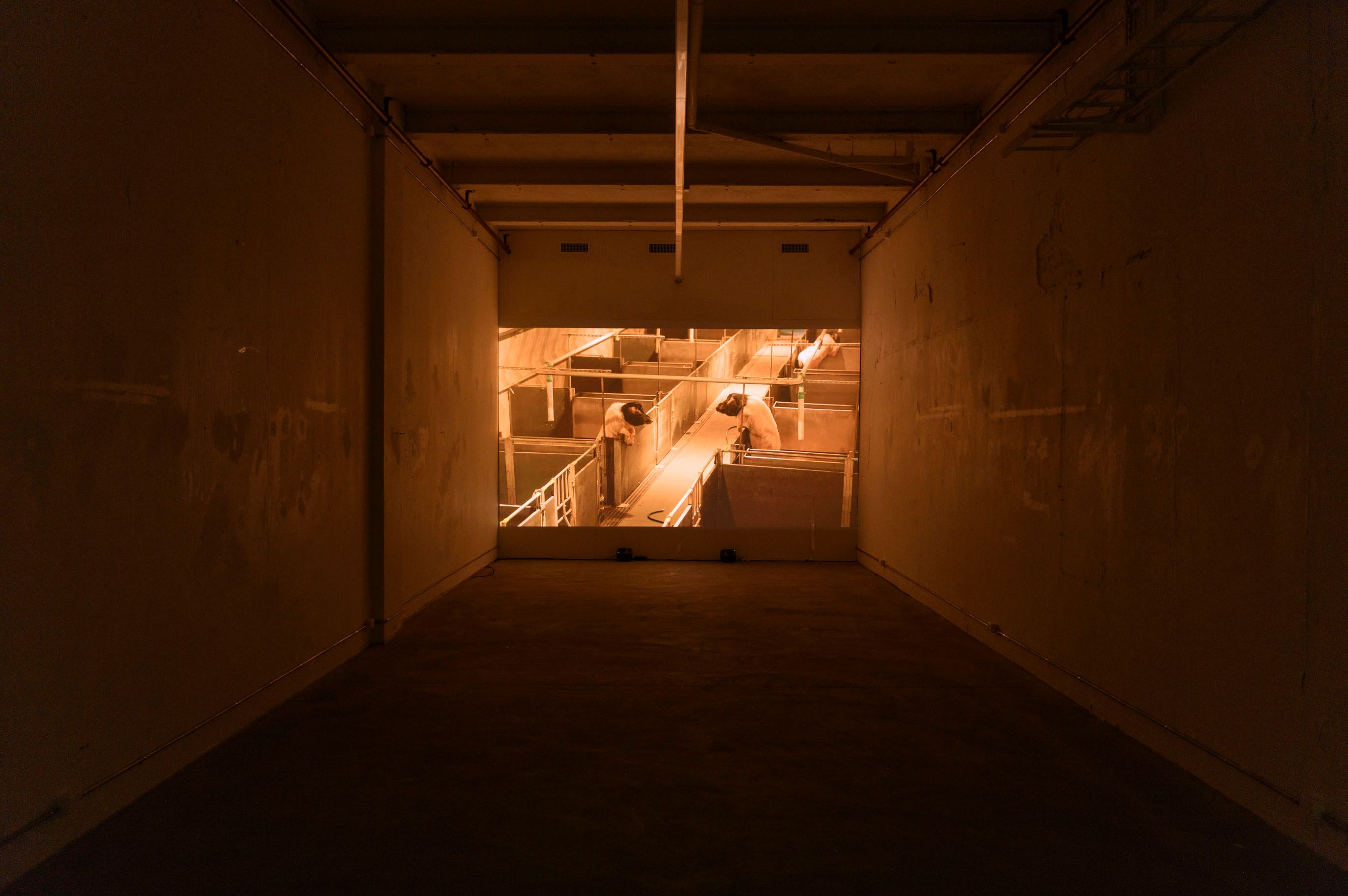
Ang Siew Ching's High-Rise Pigs extends this logic almost to the point of absurdity. Thousands of pigs occupy vertical farms where bodies are arranged according to efficiency, biosecurity and circulation. Looking at these structures, it becomes difficult not to think about other forms of vertical organisation. Multi-storey car parks. Distribution centres. Apartment towers. Storage facilities. Different contents, similar diagrams.

There is something strangely beautiful about these systems when viewed from a distance. Bodies become abstract units. Floors become repeating patterns. Logistics begins to resemble drawing. The structures appear as enormous Jenga towers filled with bodies and machines, each waiting for its respective turn to enter the world below. Only when scale returns do we remember that every unit breathes, hesitates, becomes ill, refuses or dies. The fairy tale quietly reverses itself once again.

Ang Siew Ching, High-Rise Pigs, 2025. Photo: Markus Johansson.

Naf-Naf's brick house survives because it is the strongest. The industrial pig house survives because it is the most efficient. Durability remains, but its purpose changes completely. The house no longer protects the pig from danger. It protects the continuity of production. Perhaps the wolf never really wanted to enter the house. Perhaps he wanted to design it.

This shift changes the role of architecture entirely. Buildings no longer simply contain events; they anticipate them. Walls, gates, ventilation systems, feeding mechanisms and circulation routes are not neutral pieces of construction. They predict behaviour before behaviour happens. Every corridor already assumes movement. Every enclosure anticipates occupation. Every optimisation model quietly imagines the body that will eventually inhabit it.

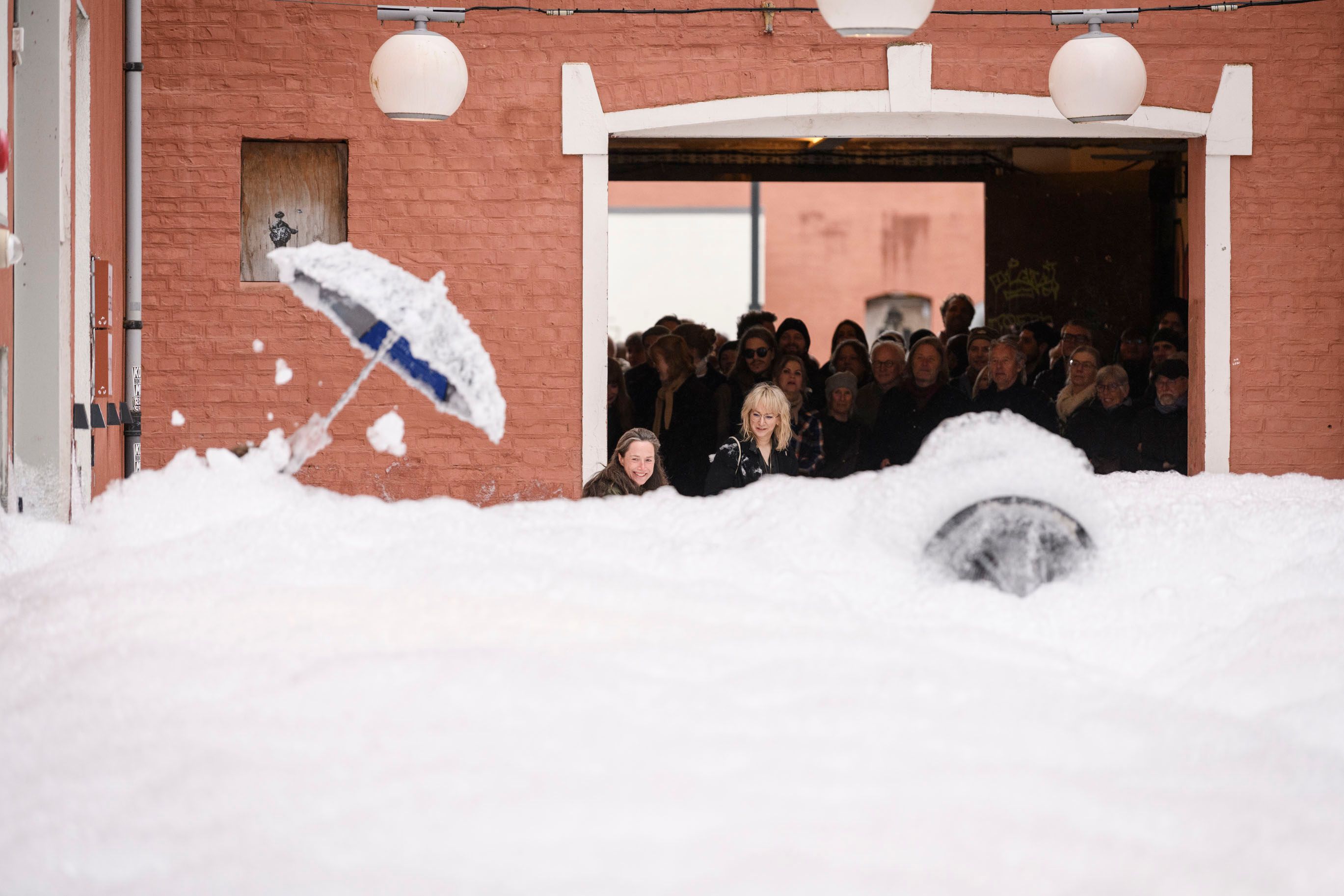
Coop Himmelb(l)au, Performance Soft Space, 1970 / 2026. Photo: Markus Johansson.

Architecture begins acting less like shelter and more like choreography. The same could be said of cities. Walking through a contemporary city often means passing from one organisational system into another. Streets direct pedestrians. Ticket barriers separate passengers. Elevators distribute bodies vertically. Supermarkets guide customers through carefully planned sequences of movement before quietly delivering them to the checkout. Even moments that appear accidental often emerge from invisible planning.The pig farm simply makes these mechanisms impossible to ignore. Its intentions remain unusually honest. Nothing is hidden behind the language of lifestyle or community. The building exists to maximise output while reducing unpredictability. Every square metre, every passage and every enclosure serves that objective.

Looking at High-Rise Pigs, it becomes difficult not to recognise fragments of our own built environment. The comparison is not moral but structural.

Human housing and industrial farming are obviously different in purpose and consequence, yet both reveal the same fascination with arranging living bodies into measurable systems.

Living beings have always complicated efficiency. They become tired. They hesitate. They panic. They fall ill. They resist. They develop habits the system never predicted. They form attachments. They refuse instructions. Every living body introduces friction into the fantasy of perfect organisation.

Perhaps this is why contemporary architecture increasingly attempts to design friction out of existence. Not because disorder is dangerous. But because it is expensive. The fairy tale promises that better architecture guarantees survival. The exhibition proposes something more unsettling. Architecture does not simply protect life. It decides how life will be organised, recognised, measured and, ultimately, consumed.

Hanne Tyrmi's Horses Die Standing, screened as part of the live programme, widens the conversation beyond the pig. Like pigs, horses have spent centuries carrying human expectations. They have been companions, workers, weapons and symbols of wealth and freedom, but also technologies long before we began using that word in its contemporary sense.

Hanne Tyrmi, The Inner Loneliness, 2022. Courtesy of the artist. Photo: Markus Johansson.

Thinking about the horse, it becomes difficult not to think specifically about AI agents. Not because horses resemble algorithms, but because both reveal a recurring human desire: to delegate labour while retaining control. Before algorithmic agents could be assigned goals, navigate sequences of tasks and act on our behalf, horses automated transport, agriculture and warfare. They extended human intention while remaining living, partially autonomous and fundamentally unpredictable. The comparison becomes strangely vivid in the contemporary term agent harness. A physical harness does not create the horse's strength. It attaches that strength to a plough, carriage or other predetermined task, converting movement into directed labour. The horse retains its own body, perception and capacity to respond, but the route and purpose of its movement have already been decided elsewhere.

An AI harness performs a structurally similar operation. It surrounds a model with instructions, tools, memory, permissions and checkpoints, giving its intelligence a controlled route through which to act. It decides what the agent can reach, which tools it can use, when it must ask permission and where its actions should end. In both cases, autonomy is not entirely removed. It is formatted. Agentic workflows extend the image further. Rather than harnessing a single horse, we increasingly attach groups of semi-autonomous algorithmic mini-horses to the same carriage. One searches, another plans, another acts and another evaluates the result. They pass work between one another while pulling the larger system towards a goal established elsewhere. The reins have not disappeared. They have become interfaces.

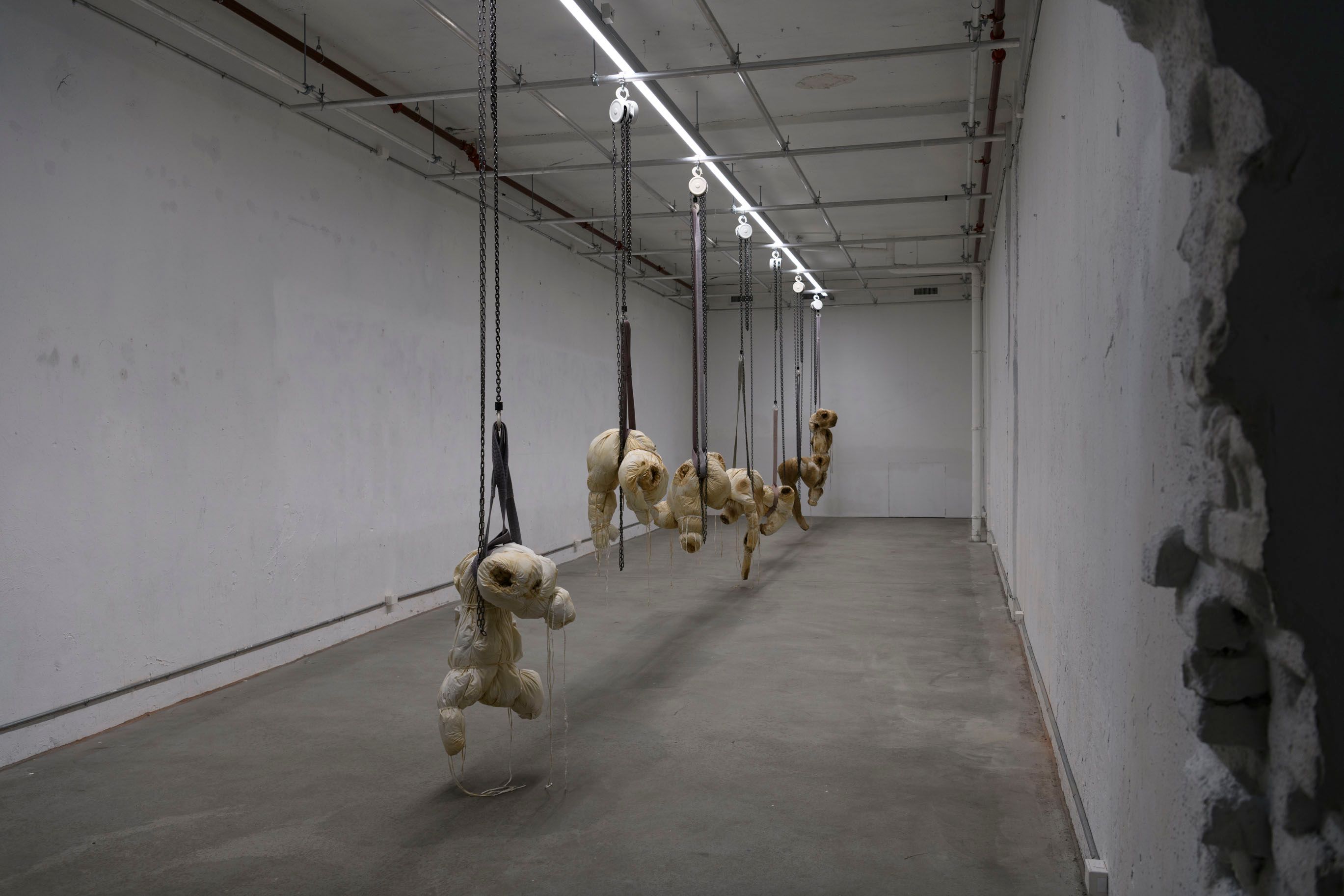
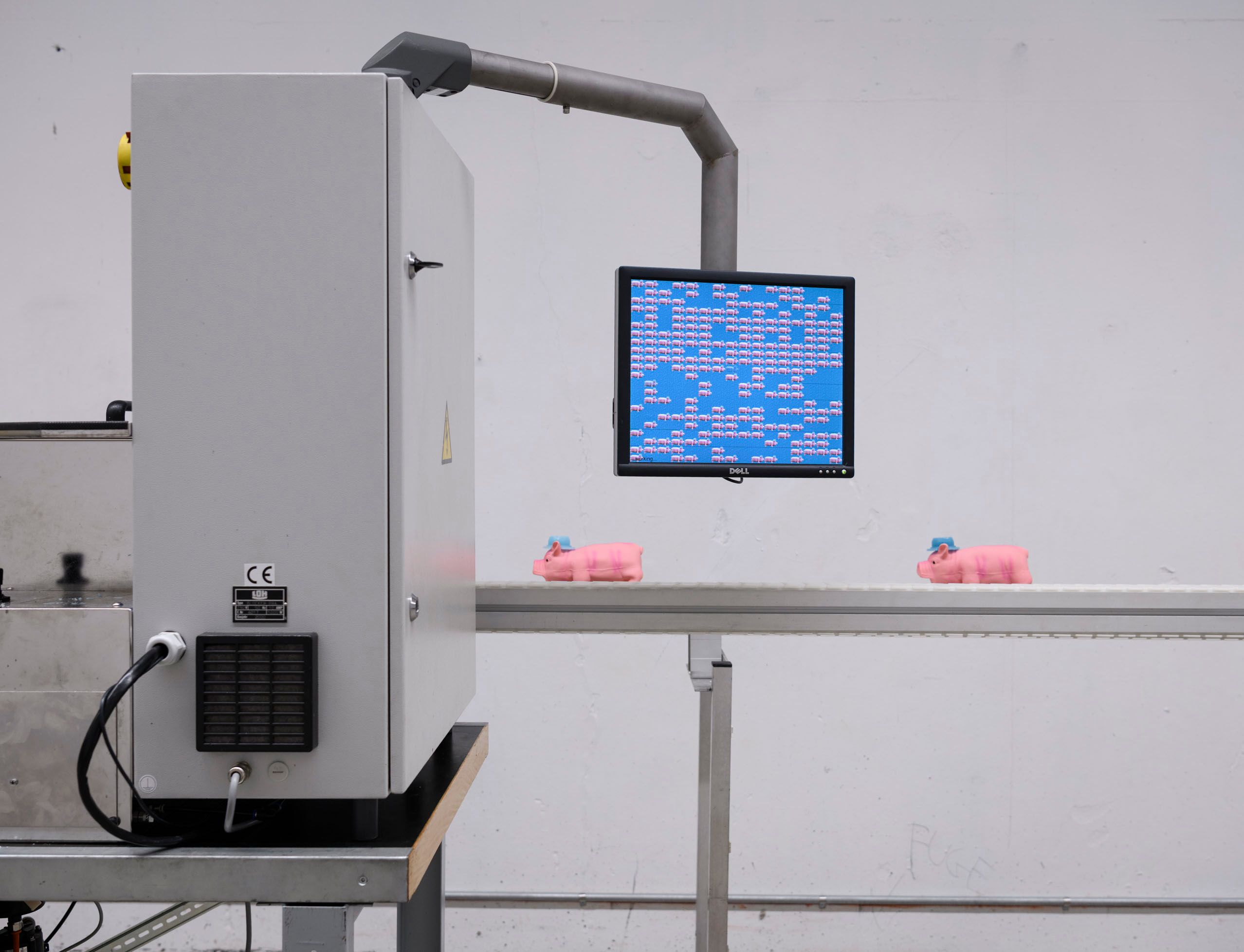
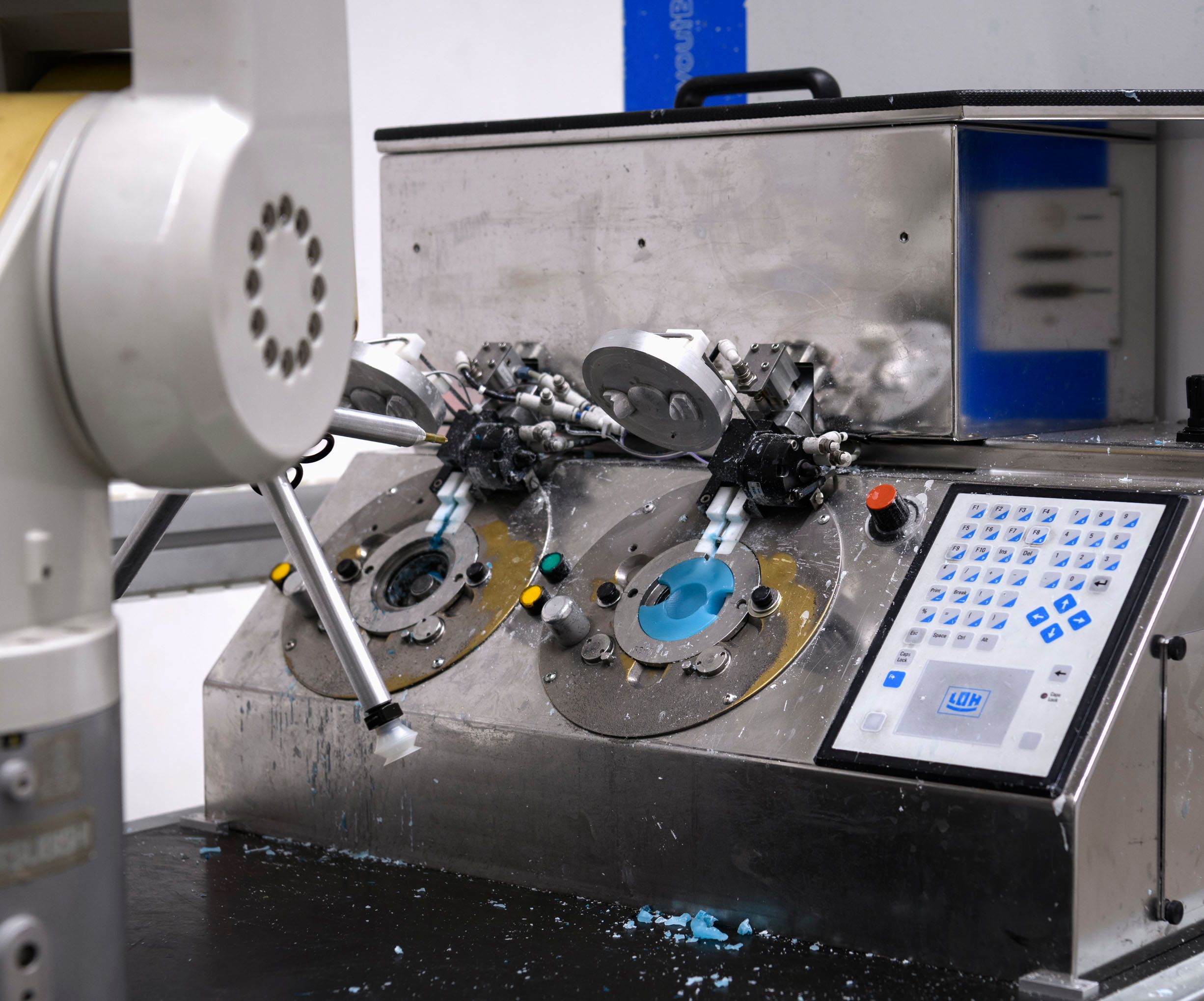
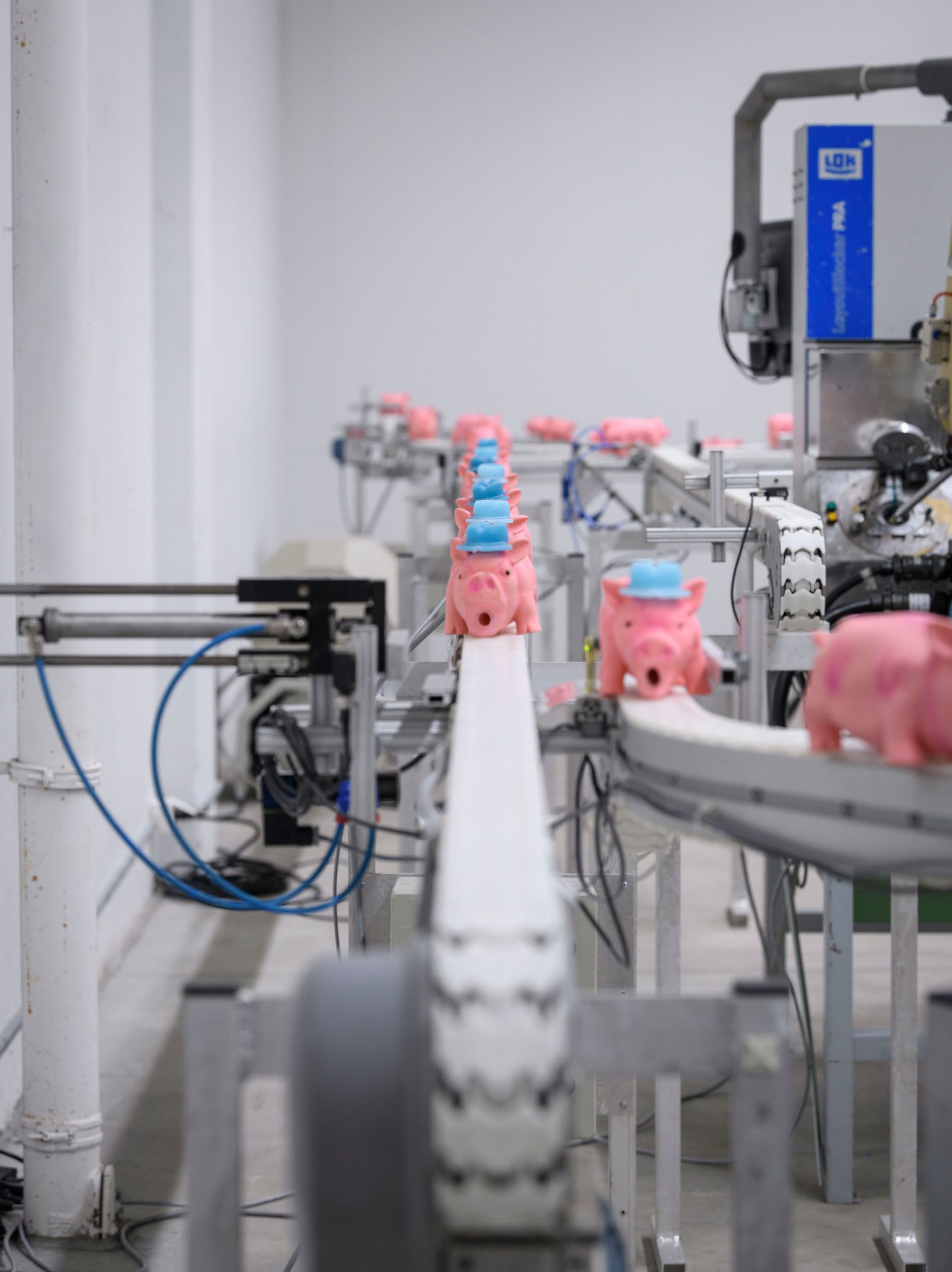
Kristoffer Myskja, Failures in Automation 1.3, 2021. Courtesy of the artist. Photo: Markus Johansson.
1 / 3

The comparison does not collapse an animal into a machine, nor suggest that an algorithm is alive. It reveals how old the desire to delegate agency really is. The horse, the worker, the pig and the AI agent meet at an uncomfortable point: each is expected to reduce friction while remaining partly unpredictable. The horse becomes too slow, the worker too expensive and the pig too irregular. AI briefly promises a cleaner solution. Yet its exhaustion returns in another form. As the context window fills with instructions, observations, tool outputs and accumulated mistakes, the agent does not collapse at the knees; it loses the thread. Earlier conditions fade, repetitions appear and the system must compress its memory, discard parts of its experience or begin again. Fatigue has simply moved from muscle into context. Even the algorithmic horse must eventually be stopped, reoriented and harnessed again. Agentic systems therefore inherit the fantasy that shaped factories, farms and cities, alongside the recurring discovery that no system can continue indefinitely without friction. The exhibition does not argue against technology. It asks what kind of life every technology quietly assumes, and what it consigns to waste, inefficiency or noise.

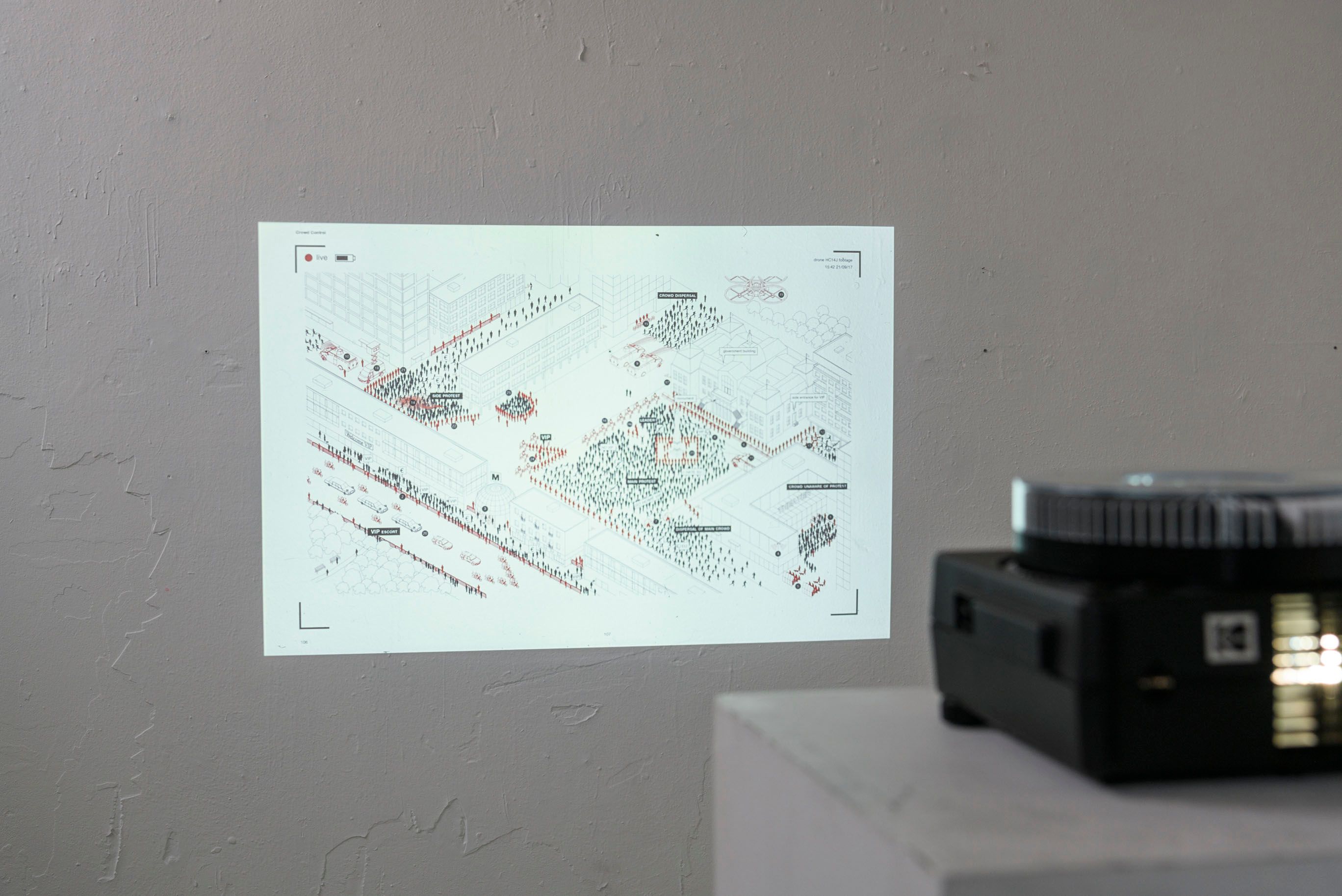
Theo Deutinger, Handbook of Tyranny, 2018. Courtesy of the artist. Photo: Markus Johansson.

We often imagine appetite as something biological; a desire to eat, consume or survive. Yet institutions also have appetites. Markets have appetites. Logistics has an appetite. Supply chains consume land, labour, energy and bodies with remarkable efficiency while remaining largely invisible to those who benefit from them. Architecture gives these appetites form. Walls, floors, corridors and fences appear neutral until we ask what they have been designed to optimise. Every building privileges certain movements while preventing others. Every threshold decides who enters, who waits and who remains outside. Buildings never simply occupy space; they distribute possibility. The pig house therefore becomes much more than a place where pigs live. It becomes a diagram of human priorities.

By the end, the wolf has not disappeared. He has simply become difficult to recognise. In one of the earliest printed versions of the story, he was not even a wolf, but a fox. The predator has always been interchangeable. What matters is not the animal but the system it represents. Today, it is less likely to arrive scratching at the door than to be found quietly designing the building itself. The exhibition is less concerned with finding the wolf than with recognising how familiar it has become. Perhaps that is the real lesson hidden inside The Three Little Pigs. The greatest danger was never the creature outside the house. It was believing the house itself could ever be innocent.

More info

Stavanger Secession is a cross-disciplinary platform connecting art, cinema, and architecture. Founded in 2023, it returns each year to examine secessionism, the founding act of every avant-garde.

About the author

Roberts Jansons (b. 2000) is a sculptor, painter and multimedia artist whose practice explores operational aesthetics and the industrial poetics of transport, infrastructure and the systems that organise contemporary life. He holds a BA in Fashion Photography from London College of Fashion, University of the Arts London, and an MA in Contemporary Art Practice from the Royal College of Art.

Kristaps Ancāns (b. 1990) is an artist working across sculpture, text and public art, exploring connections between art and science. He holds an MA in Fine Art from Central Saint Martins, University of the Arts London. Alongside his artistic practice, he develops postgraduate art programmes and new models for artist education and exchange. He is the initiator and co-founder of POST at the Art Academy of Latvia and has taught at Central Saint Martins and the Estonian Academy of Arts. His projects have been presented with Times Square Arts and domobaal, and as part of Beyond Matter (ZKM, Centre Pompidou, Tallinn Art Hall, Aalto University and Ludwig Museum).

Both Ancāns and Jansons are currently undertaking practice-based doctoral research within the Joint Professional PhD Study Programme in Arts, a collaboration between the Art Academy of Latvia, Jāzeps Vītols Latvian Academy of Music and the Latvian Academy of Culture.

All articles by Roberts Jansons and Kristaps Ancāns