Exploring the visual arts scene of Norway’s southwest coast ➜ Since 2015

Art books as reinventors of technology

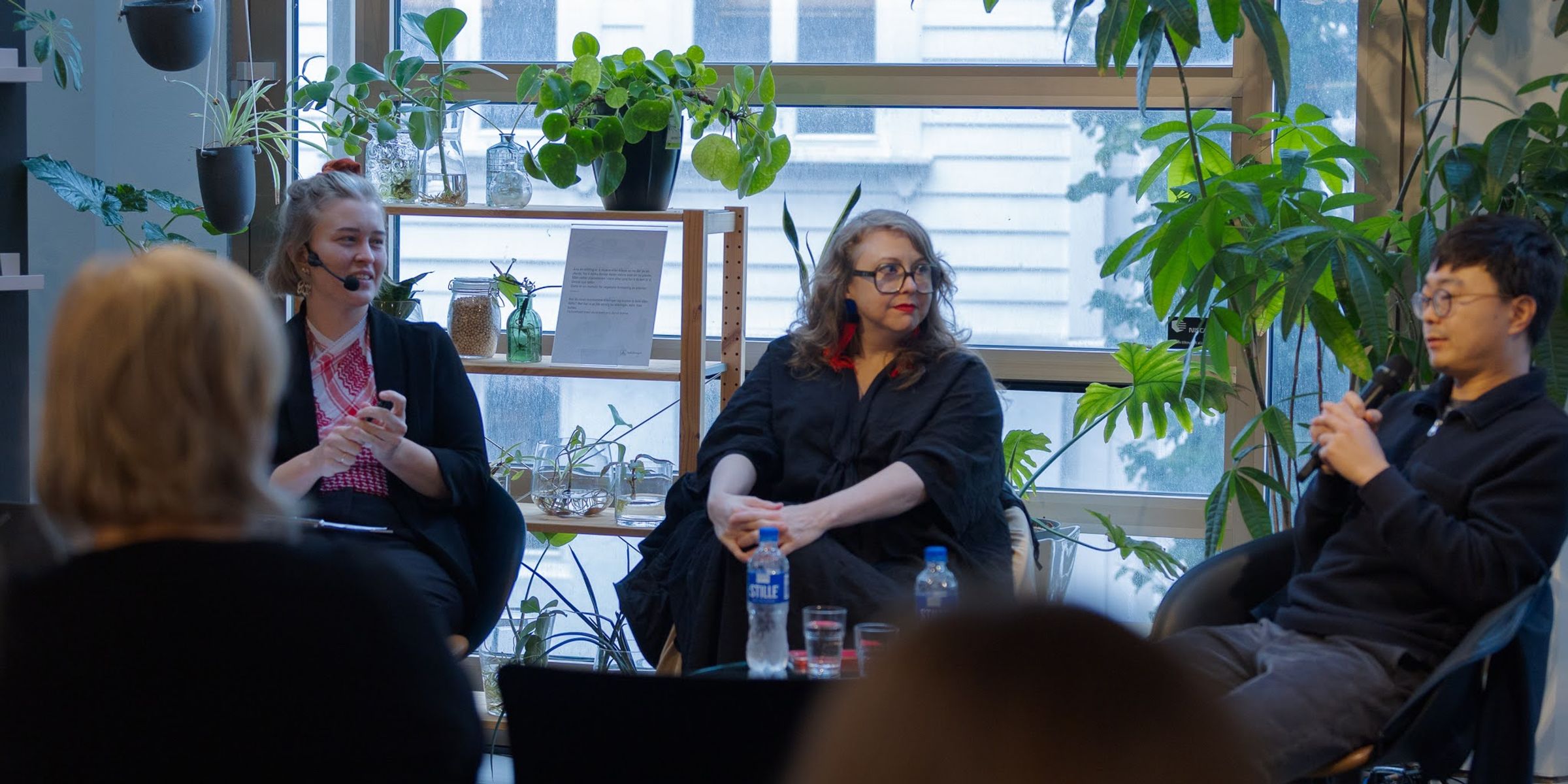
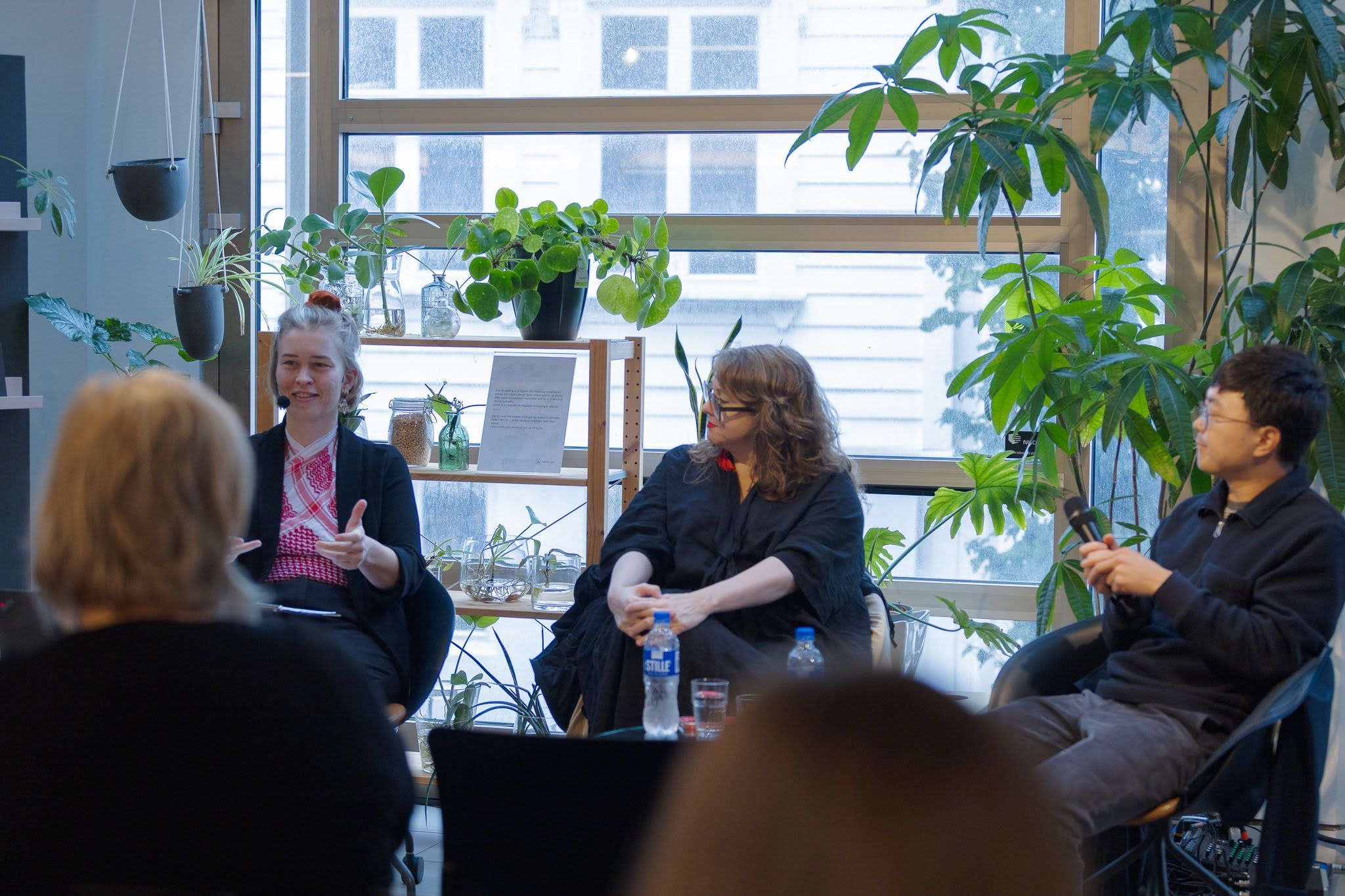
What do a teabag, a semi-fictional investigative file and a collection of jokes and riddles have in common? They all belong to the ambiguous category of art books. This panel, recorded during Kapittel – Stavanger International Festival of Literature and Freedom of Speech, explores how art books shape and sometimes “infect” the cultures they inhabit. The discussion features Itchy Fingers resident artist Cristiana Tejo alongside writer Audun Mortensen, and is moderated by CAS co-editor Sofie B. Ringstad.

Participants during panel. From left: Sofie B. Ringstad, Christiana Tejo and Audun Mortensen. Photo: Andrea Rocha / Kapittelfestivalen.
Sofie B. Ringstad

Audun, you’ve done many experiments in book form. But before we get into that, can you talk a bit about the different elements that make an art book? What makes a book an art book?

Audun Mortensen

First, maybe we should distinguish between art books and artist's books?

Sofie B. Ringstad

Here we go already!

Audun Mortensen

It’s a very typical question. When people talk about artist books, they usually mean books as art, whereas art books are usually books about art. And of course, there are variations of each.

I got the impression that we’re mostly discussing books as art. That’s a very compelling topic for obvious reasons. There are quite strict conventions for books in general: certain expectations and institutional frameworks for what a book should look like, how it should be written, read, handled, distributed, sold, and consumed, and so on. What I find fascinating about the genre or expression called artist's books – a form which may trace back to the early 1900s, with a peak in the 1960s around Fluxus and conceptual art, and then maybe another peak in the early 2000s with many artist's book fairs in Berlin, New York, Paris, etc. – is that it offers another way of experiencing both art and literature.

The essence is that you can handle, touch, and encounter art in a more everyday fashion. Visual art is often seen as something exclusive, but by making art through the medium of a book, you open up a whole new potential not only for creating art, but for experiencing it.

By making art through the medium of a book, you open up a whole new potential not only for creating art, but for experiencing it.
Audun Mortensen
Sofie B. Ringstad

So, you might say that an art book is a book you encounter that challenges how you usually interact with the set format of a classic book. Perhaps with an artist book – not always, but often – you meet it and think, “Where do I start?” Do you share this definition of an art book, Cristiana?

Cristiana Tejo

Totally. While you were talking, I was thinking that contemporary art is not only art from the period we’re living in, it’s also a way of flowing. What I love most about contemporary artists is how they contaminate all kinds of formats. For instance, when a visual artist works with photography, more traditional photographers might say, “Ah, this isn’t well done.” But it doesn’t matter, it’s not about technique. It’s about expression. And books, I believe, are one of those areas where there’s so much built-in knowledge and structure. When an artist grabs this format, it’s to explode it and reinvent it. I really believe that’s what happens.

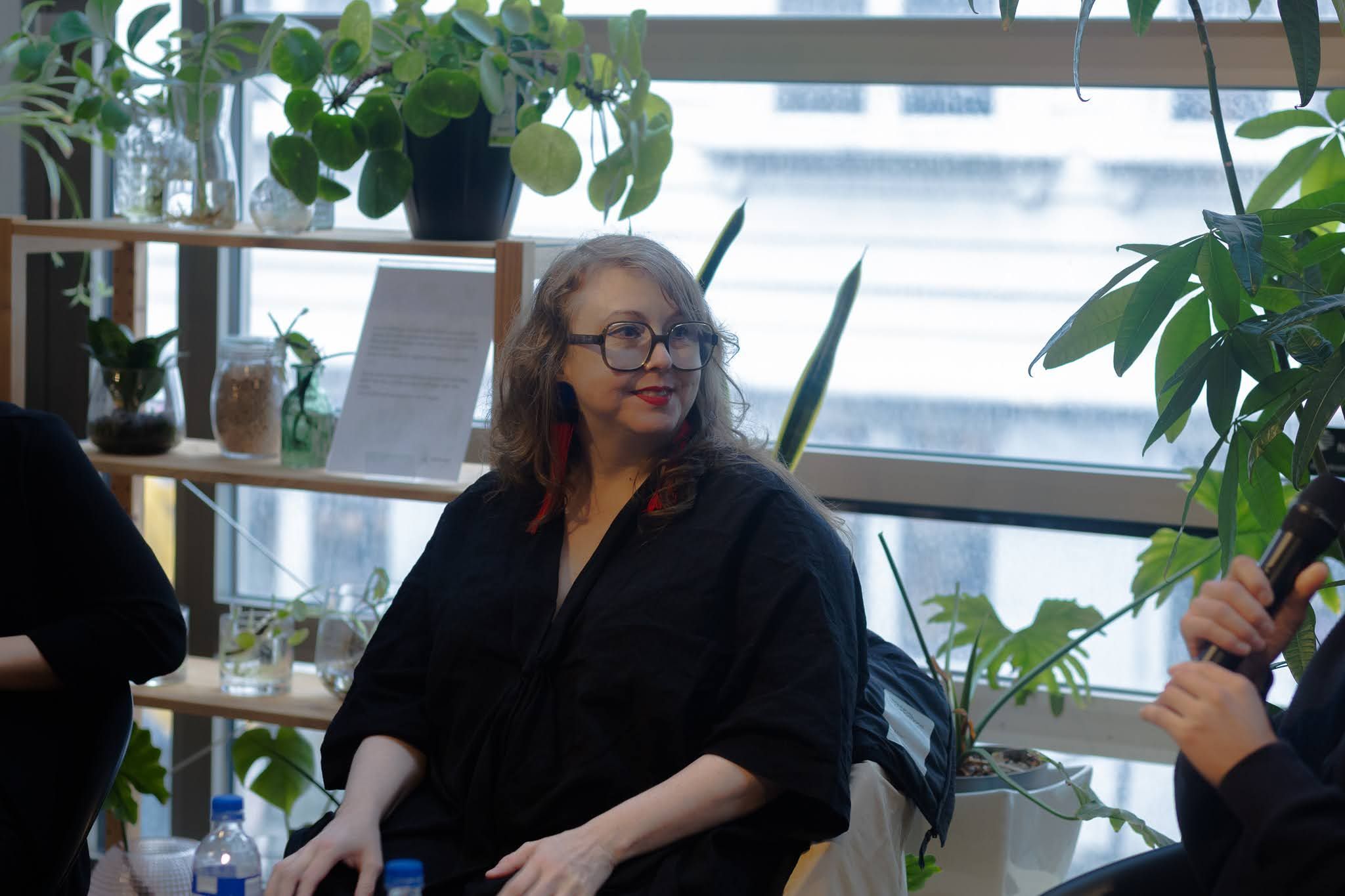
Cristiana Tejo. Photo: Andrea Rocha / Kapittelfestivalen
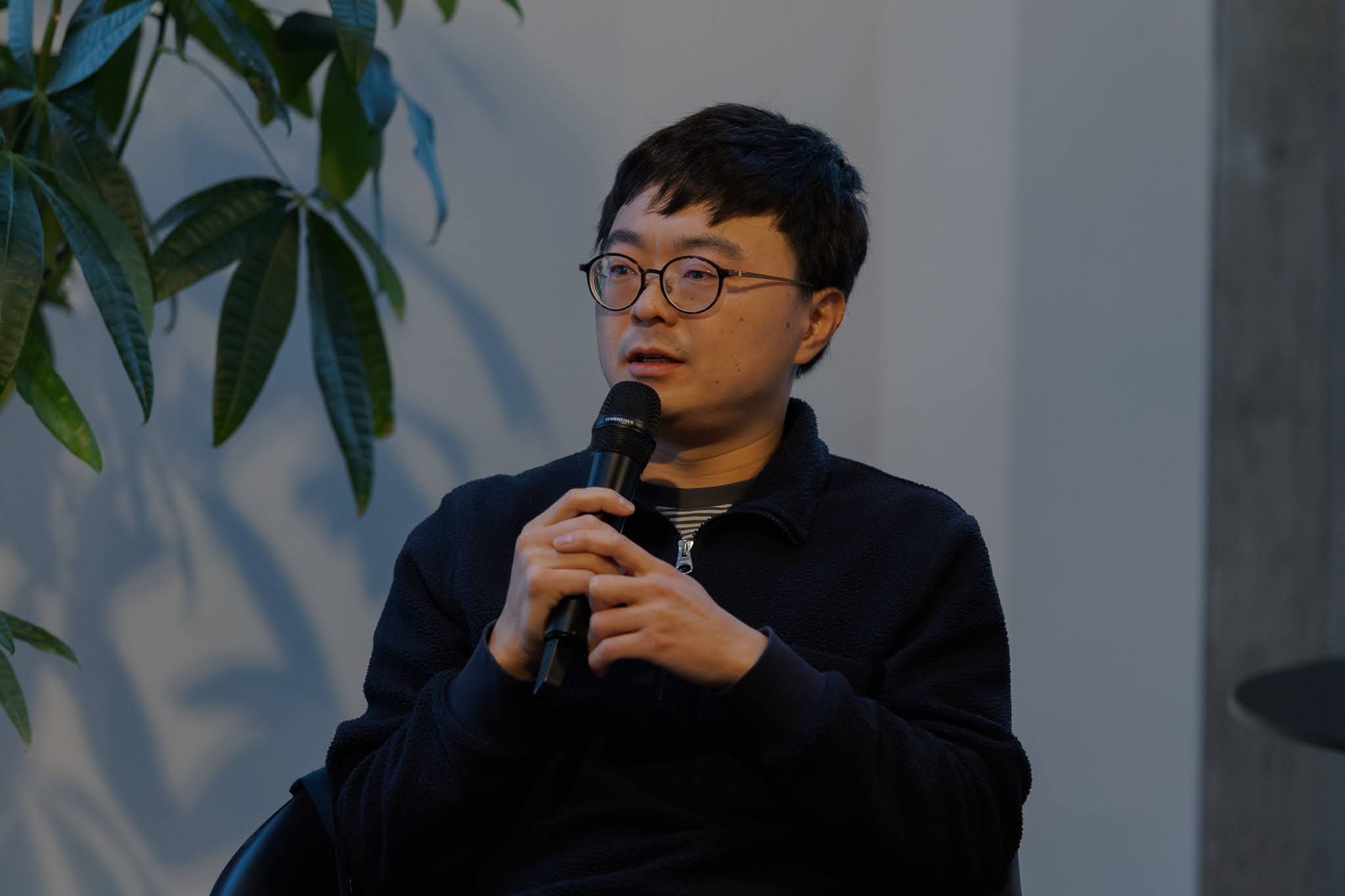
Audun Mortensen. Photo: Andrea Rocha / Kapittelfestivalen
Sofie B. Ringstad

So you’d say that visual artists are almost like a virus?

Cristiana Tejo

Itchy bodies! Not only itchy fingersEmerging from the residency Itchy Fingers, inspired by Alexander Kielland’s 1880 quote: “My fingers are itching to move the world.” Cristiana Tejo was the 2025 recipient of the residency, and this panel was realised as a part of the residency project. , but itchy bodies wanting to change the world.

Sofie B. Ringstad

They’re itching to move the world. It’s like that saying: if an animal has four legs and a tail, is it a cat or a dog? You just kind of know. And a book is the same. It has two covers and an inside, and you immediately understand that it’s a book. But with an art book, you start questioning: Is it a dog, or a cat… or perhaps a parrot?

Christiana Tejo

Yes, or both of them, a hybrid?

Sofie B. Ringstad

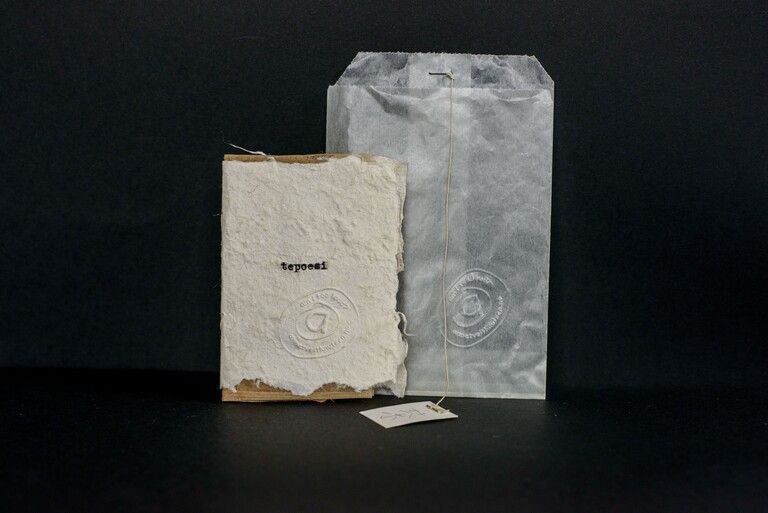
This is actually an example of one of the books you can borrow here at the library. It’s called Tepoesi or Teabag Poetry in English.

Cristiana Tejo

Yes! I spent some days with that book at home. It was an amazing experience. I had some cups of tea with it, interacting with it. It was beautiful.

Anne Tveit Knutsen: Tepoesi. Photo: Sølvberget
Sofie B. Ringstad

Cristiana, you’ve worked since the late 1990s with the archive of Brazilian artist Paulo Bruscky. He’s even called you his personal curator. Your proposal for coming to Stavanger was to make connections between his practice, Kielland, and the art book section here at the library – which, in case anyone doesn’t know, is quite unique. There are only two places in Norway where you can borrow art books. It’s very rare. In a previous interview with CAS, you mentioned that Bruscky’s archive and the Kiellandsenter collection represent two very different ecosystems of knowledge. What did you mean by that?

Cristiana Tejo

That’s a very good question. When I tried to picture this place, I was thinking that there are some points where the two can be compared, but there’s also a huge gap between the collections. I call it an ecosystem because these places are alive. They’re always changing. Archives are like that too. Usually, we think of them as static, but they’re not. When someone interacts with an art book a lot changes.

I call it an ecosystem because these places are alive. They’re always changing. Archives are like that too.
Cristiana Tejo
Cristiana Tejo

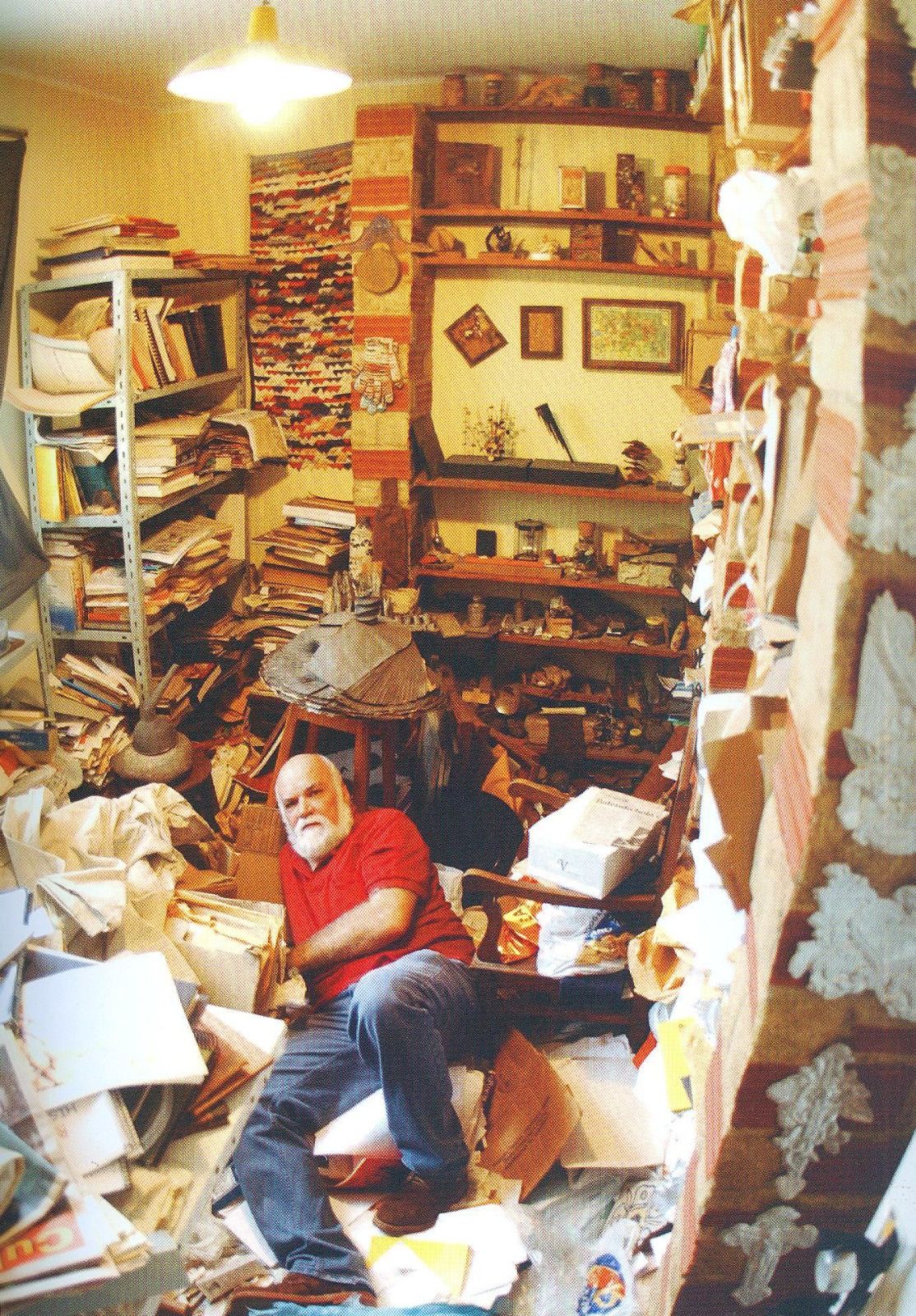
Here, you have public access. It’s fair, it’s democratic. Anyone can borrow an artwork and take it home. And what can happen after that? So many things. In my interaction with Bruscky’s archive, it’s the opposite because it’s his private studio. His collection isn’t in a separate place; it is his studio. So when he’s making an art book, he’s interacting with all the other books around him.

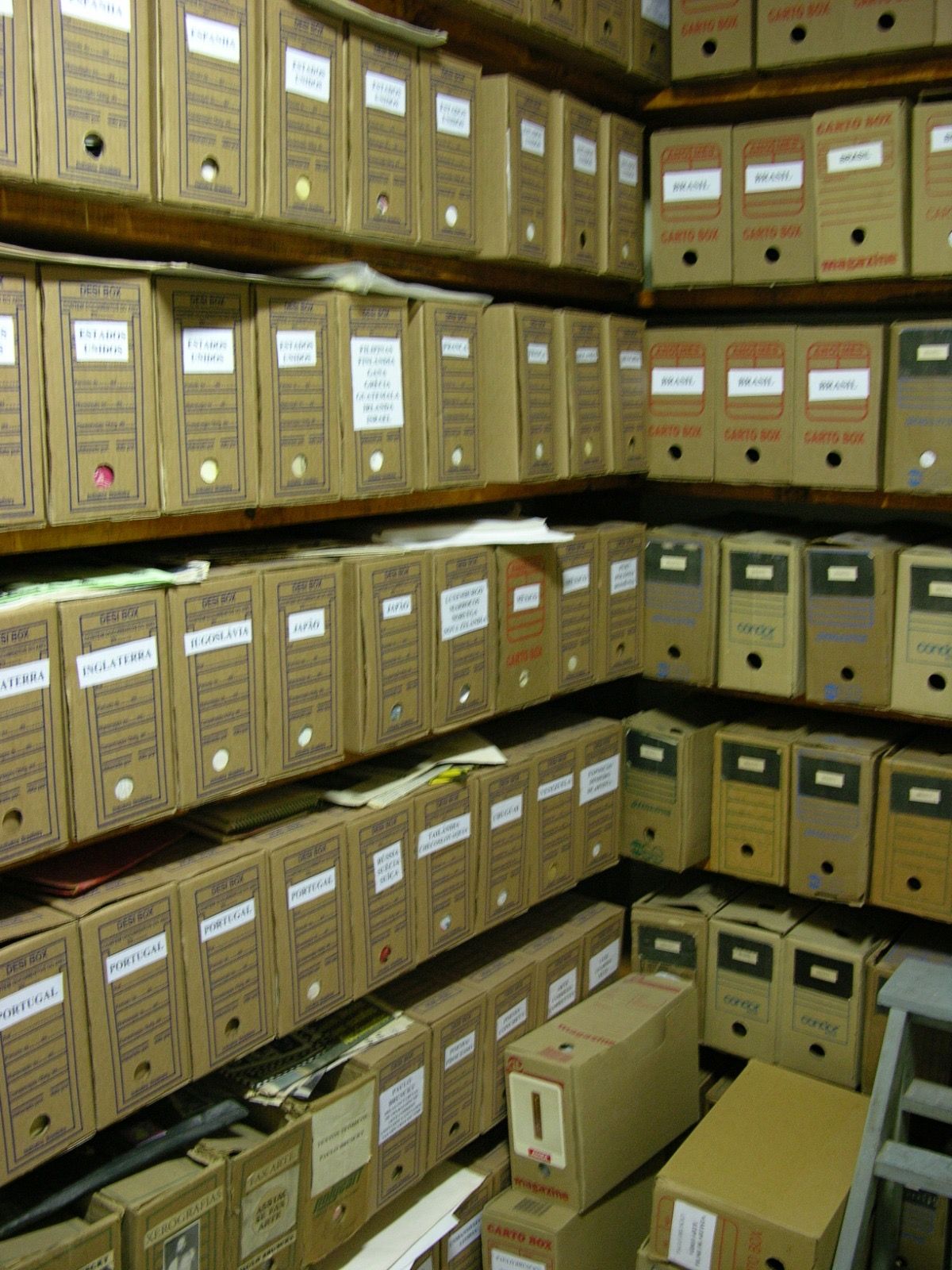
And when you visit the collection, he has to guide you through it. So I was thinking about the contrast: here, you have a systematized, organized structure, following international standards for how to catalogue and classify things, while he creates his own rules. Interacting with both collections feels like entering two very different ecosystems of knowledge, two different ways of knowing and understanding. Both are very moving in their own way.

Sofie B. Ringstad

Anyone can go there and interact with the archive. In that way, it’s like a library. But you have to go through Bruscky.

Speaking of different ways one can interact with artist books, Audun, you mentioned to me earlier about seeing art books in Oslo, which was yet another approach to managing a collection. How was that?

Bruscky in his archive.
Bruscky's archive.
Audun Mortensen

Yes, that was actually a few years ago at the National Museum, where they also have a collection of artist’s books. I had to make an appointment, order the book, and then they’d bring it up from some deep cellar. I could look at it for an hour, and then hand it back. It’s a very exclusive experience which reflects the exclusivity of visual art as we know it. But here in Stavanger, access is much more democratic. Still, even though the original impulse behind the artist's book movement in the 1960s was to make art more democratic, it didn’t exactly turn out that way, did it? Now, you can probably pay thousands of dollars for one of those early pamphlets. It’s just become another way of trading art.

But anyway, here you can access it. The artist's book emphasized the question: Where does the reading start and end? Like the Teabag Poetry book; it’s probably not even meant to be read in a traditional way. It’s another kind of encounter with the book as an object. Artist's books reinvent the technology of the book itself. Because the book, as we know it, is a 500-year-old technology and it still works perfectly well. It's solid and durable. But I really like how artist books don’t try to subvert or negate that. They try to develop it further.

Artist's books reinvent the technology of the book itself.
Audun Mortensen
Sofie B. Ringstad

Your story reflects the logic of the visual art museum on one side, which preserves and conserves, and the library on the other, which has the mandate to make things publicly accessible. Of course, that means you risk the itchy fingers of people interacting with the books. I know the library here has a clear strategy: if a book gets worn or broken, that’s simply part of how it’s meant to function. Is this a symptom of how most places treat art books – with the fragility of artworks, rather than as books?

Cristiana Tejo

Yesterday we were talking about how amazing it would be if museums could lend artworks for people to live with at home. What Audun said is very important; that something which began as a very democratic, unpretentious form of experimentation eventually became, like most experimental artworks, a fetish. You can’t touch it anymore. It becomes too valuable and in a way, the artwork dies. It becomes just an image.

Sofie B. Ringstad

Bruscky was selected to participate in the São Paulo Biennale, which is a very prestigious event. The curator decided to reproduce his entire archive and bring everything to São Paulo, to the other side of the country. But people couldn’t go inside. They couldn’t touch the books; they could only look into the reconstructed studio. Cristiana, you said it made him sick?

Cristiana Tejo

Yes, because he said, “My archive is my creative space — it’s where I spend most of my day.” I remember when the architects came, they took photos of all the details and then reproduced the apartment for the Biennale. They rebuilt it at the same scale, trying to recreate the atmosphere of a messy, living environment. But of course, it became just a staged version of something that was alive.

It struck me as a very Western way of dealing with things. Because when we talk about ecosystems of knowledge, outside the Western art world, in Brazil, we have a very strong oral tradition. We like to touch things, to interact with them. We reproduce knowledge through living, vivid interaction. I was very disturbed when I saw the Biennale version. They had killed the whole thing. It wasn’t supposed to be something to look at. It was something to engage with. Even though his archive is somewhat exclusive because you have to make an appointment with him, it’s still alive. But once they turned it into an exhibition object, it became dead.

We like to touch things, to interact with them. We reproduce knowledge through living, vivid interaction.
Cristiana Tejo
Sofie B. Ringstad

It’s a bit like if no one ever came here to the library.

Cristiana Tejo

Yes, exactly. You’d have all these books, but you couldn’t touch them. What would be the point? Saying, “Oh, they’re fragile and beautiful, so we have to keep them safe.” No, that’s not the point.

Sofie B. Ringstad

Is there something that art books can do that regular artworks can’t? This kind of tactility, the ability to take them home with you?

Audun Mortensen

Well, I would like to start with what artist's books can do that normal books cannot. As far as I know, normal books are conventional in the sense that they demand very specific handling by the reader, not only in terms of production and distribution, but also in how they direct your engagement with the content, from the front cover to the last page, page by page, from number one to the last page. In that sense, they are very restrictive.

Take Lene Berg's book Gentlemen & Arseholes (2006) as an example. It's presented like a kind of investigative file, with various printed materials inserted between the pages of a reprinted journal, all contained in a ziplock bag. This gesture isn't brilliant in itself, but it makes you read differently, and the fragments work like pieces of evidence that relate closely to her subject matter. That kind of interplay between form and content is what I find fascinating, and that’s why a lot of artist's books have a strong connection to a DIY tradition. Because in order to make these kinds of texts and books, you usually have to work outside the big publishing houses.

There are a few major publishers, and they shape how a book should look and how it should be read. If you want to present or produce something that doesn’t fit that standard idea of how a book should work, it’s up to you to find a way around it.

Photo: Andrea Rocha / Kapittelfestivalen
Cristiana Tejo

I cannot usually afford to go to art fairs and buy artworks, but I can afford to buy artist books. So I started to make my own collection. When I was suddenly invited to go to art fairs in Bogotá, Peru, and São Paulo, I discovered the section of printed matter and thought, “Okay, this I can buy.” Depending on the artist book, you can have something very rare and unique. But in general, you can say that it’s more accessible. And also, you don’t need a huge house to maintain a nice collection of artist books.

Sofie B. Ringstad

So it’s more accessible and cheaper, but is it also harder to preserve for history? Do we need more places like this library to maintain and store them, or are we just back to this Western idea of preservation?

Cristiana Tejo

I see this more as a place for propagation and dissemination for those who are not yet initiated. When you go to an art fair, the visitors already like art. Here, we are in the art book section, but it’s inside a huge library, so again, an artist book is like a virus. It can spread curiosity about all forms of art.

An artist book is like a virus. It can spread curiosity about all forms of art.
Cristiana Tejo
Sofie B. Ringstad

Audun, you told me that you’ve made artist's books that you call poetry because then people will understand how to promote them, sell them, deal with them in general. Can you expand a bit on that? Is it dangerous to call something an art book?

Audun Mortensen

It’s difficult and scary to call it poetry, actually. Both poetry and artist's books have the same reputation for being hard to understand, so it’s not the most popular thing to deal with. But it’s not really possible to publish artist's books in the traditional way. You can publish books about art, but to make true artist's books is almost impossible. It’s too expensive, and it disrupts the whole system of printing, selling, distributing, and handling them. For me, it’s easiest to just call all my books poetry. There’s a sense that it can be experimental and free in its expression, more so than a novel, for example.

Sofie B. Ringstad

I would like to use a book you made as a concrete example of an artist's book interacting with this larger system. Because you do call it an artist's book, right?

Audun Mortensen

Yeah…?

Sofie B. Ringstad

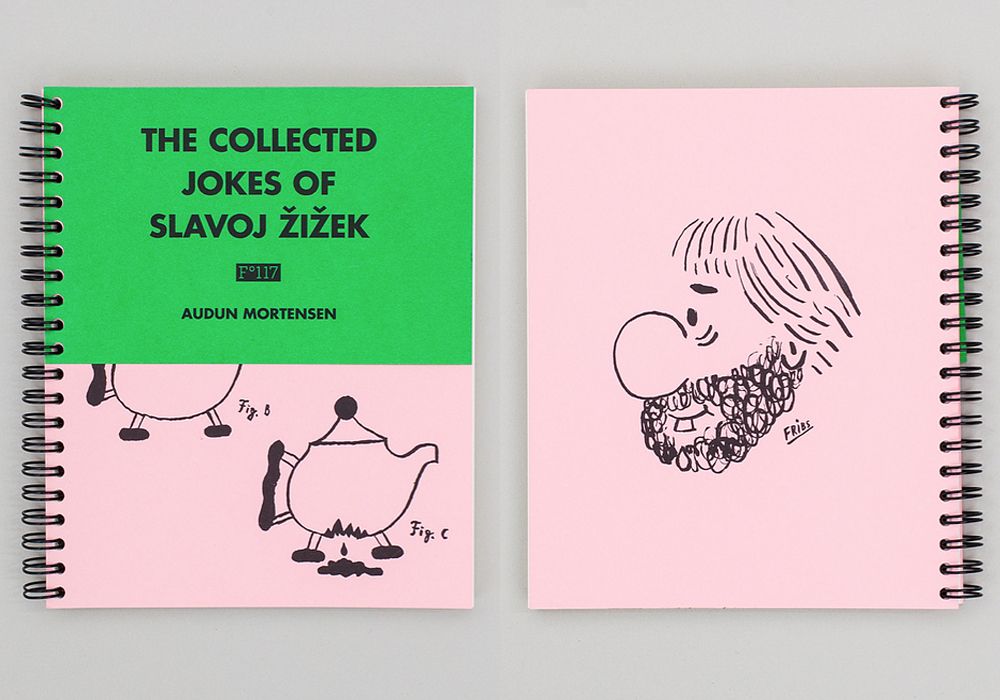
For the sake of the panel! So this is our book, The Collected Jokes of Slavoj Žižek. For those of you who don’t know, he is a Slovenian philosopher, known for being quite interesting to listen to, with a lot of jokes. Please tell us how this project came about.

Audun Mortensen

It started kind of as a joke. I was in Berlin at the time, and I had been reading a lot of his books. Now he’s quite well known but this was in 2010. And yes, it’s an interesting example of how the life of an artist's book can evolve. It is simply a collection of all the jokes from the books of this Slovenian philosopher. He’s well known for his jokes, which appear frequently in his philosophy books and social critique. He uses jokes to reveal the logic of ideology, and makes abstract ideas visible through humor.

Sofie B. Ringstad

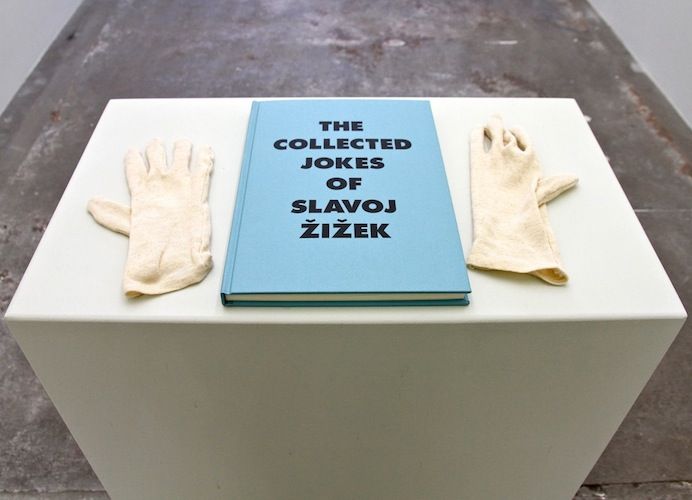
Then it was exhibited very interestingly, with a pair of white gloves.

Audun Mortensen

That was in an exhibition in Copenhagen about jokes. This is a more conventional way of presenting an artist's book in a gallery setting.

Sofie B. Ringstad

So it wasn’t your choice to put the gloves there?

Audun Mortensen

No. That was the curator’s decision.

Sofie B. Ringstad

Very interesting! So even in this tiny gallery, they insisted on gloves to touch the book.

The book exhibited in Copenhagen.
Audun Mortensen

Of course, the title and the book as an object already communicate a lot, but it can also be read, and I would like people to actually read it. It’s an unconventional book because it’s hard to tell how it should be understood – is it my work, Žižek’s work, or the editor’s work?

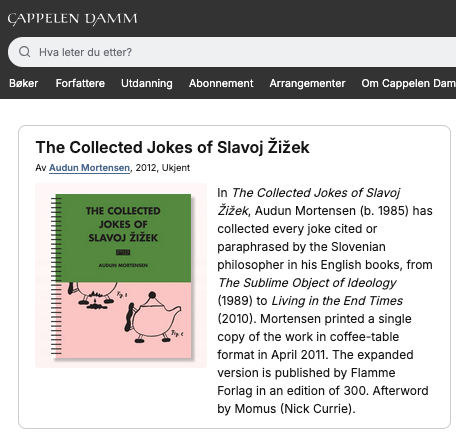
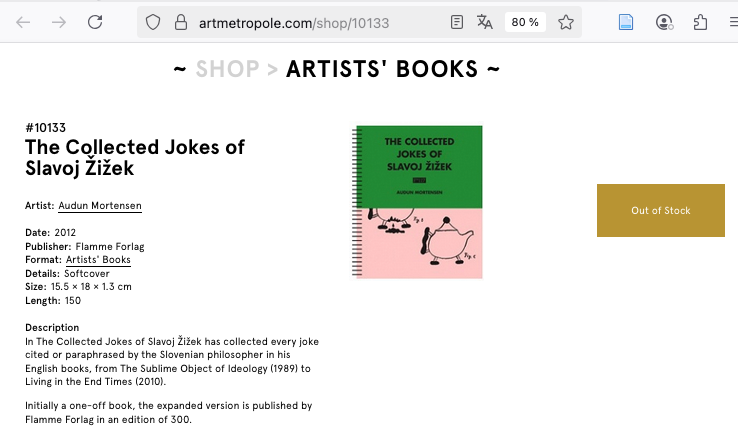
Another image shows the same work, but my Norwegian publisher, Flamme Forlag, wanted to remake the book for a broader audience, not just a single edition. It was republished with the same title and content, but a different package. You can see how they presented it on their website. It was published one year after the single-edition version. So it’s difficult to label it.

Sofie B. Ringstad

It says “format unknown.” It’s interesting because it moves from your idea, then to the gallery, then to a big publishing house’s homepage, trying to make it fit into their system.

Audun Mortensen

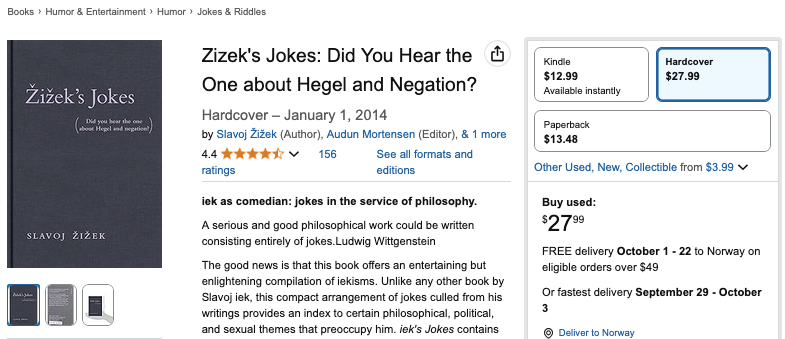
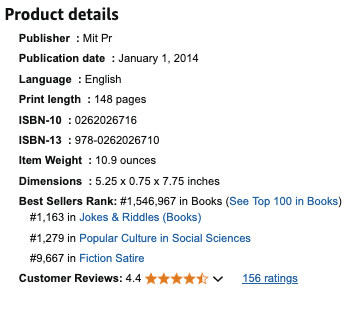
Yes. It’s kind of transported from this low-key, DIY thing in my bedroom with my friend, where we had a laugh about the idea, to a gallery, and then to a publishing context in Norway. There, you have a sort of defined label. Then in this German bookshop, they presented it as an artist's book, finally. And now it’s out of stock, of course… The next step was when my publisher and I decided to sell the book to the U.S., and MIT Press heard about the project and wanted to republish it for an even bigger audience. We decided to sell the rights which included the right to change the title, which they did, to Žižek’s Jokes. And they listed me as the editor, not the author. So now Žižek is listed as the author, which makes sense from a copyright perspective, since he wrote the jokes.

I reappropriated his appropriated jokes, so it becomes part of a shared, collective way of writing.
Audun Mortensen

But here’s another twist: Žižek is also appropriating jokes, because he didn’t really create them, they come from a shared tradition of Eastern European humor. So I reappropriated his appropriated jokes, so it becomes part of a shared, collective way of writing. At this point, the book reached a kind of peak. It’s now commercially viable. I get royalties every year. MIT is a major press, and they translated it into fifteen or more languages. So now you can find Žižek’s jokes in Spanish, Chinese, Italian, and more. And if you look at the presentation of the book on Amazon, it’s categorized as jokes and riddles, as well as social sciences, popular culture, and satire. So the life of the book is still evolving. It’s interesting to see how this kind of object, which is very unusual in a literary context, develops its own life.

Cristiana Tejo

Did Žižek ever talk to you?

Audun Mortensen

Yes, he emailed me, and he was very happy.

Cristiana Tejo

I’m in love with this story! It’s such an amazing example of the power of artist books. There was an artist in Brazil in the 1960s called Cildo Meireles who made a work called Insertion into the Ideological Circuits. He explored how you can use a circulation system to insert a transgressive message – a virus! This was during a dictatorship. His first project involved Coca-Cola bottles, placing the words “Yankees Go Home” alongside the logo. It was about colonialism and American interference in Brazil. When the bottle was empty, nobody could see it, so he returned the bottles to the system. But when they were filled with liquid again, the message appeared. It was a nearly anonymous gesture. He also did this with banknotes, posing questions about people who had been murdered by the government. The banknotes circulated, untraceable. It’s genius.

Sofie B. Ringstad

This example of infiltrating the existing system is exactly what these art books are doing in the library: parasiting and infiltrating the existing system of knowledge circulation. A virus infecting the system.

"The Collected Jokes of Slavoj Žižek" presented in various categories and contexts.
1 / 4
Audun Mortensen

I also want to mention how children’s books are similar to artist's books, in the sense that they are very tactile and open up different ways of reading. It’s a very different way of navigating both the text and the object. You tend to lose this as you grow older, but artist's books bring it back – they're playful too.

Cristiana Tejo

This is so important, maintaining the curiosity of a child. A modern artist might wish to be a child again, to see the world anew. I think artist books do this. They are playful, intuitive, and open to interpretation. The world places seriousness at odds with playfulness. If you are serious, you cannot be playful – and that is not true!

Audun Mortensen

I think we all can agree that books are important as containers of stories and knowledge. That’s been a premise of Western culture since Gutenberg. But artist's books remind us that these containers can be far more playful than you might first think.

Sofie B. Ringstad

Cristiana, you’ve been here for two weeks, immersed in the art book section. Are there any art books you would recommend?

Cristiana Tejo

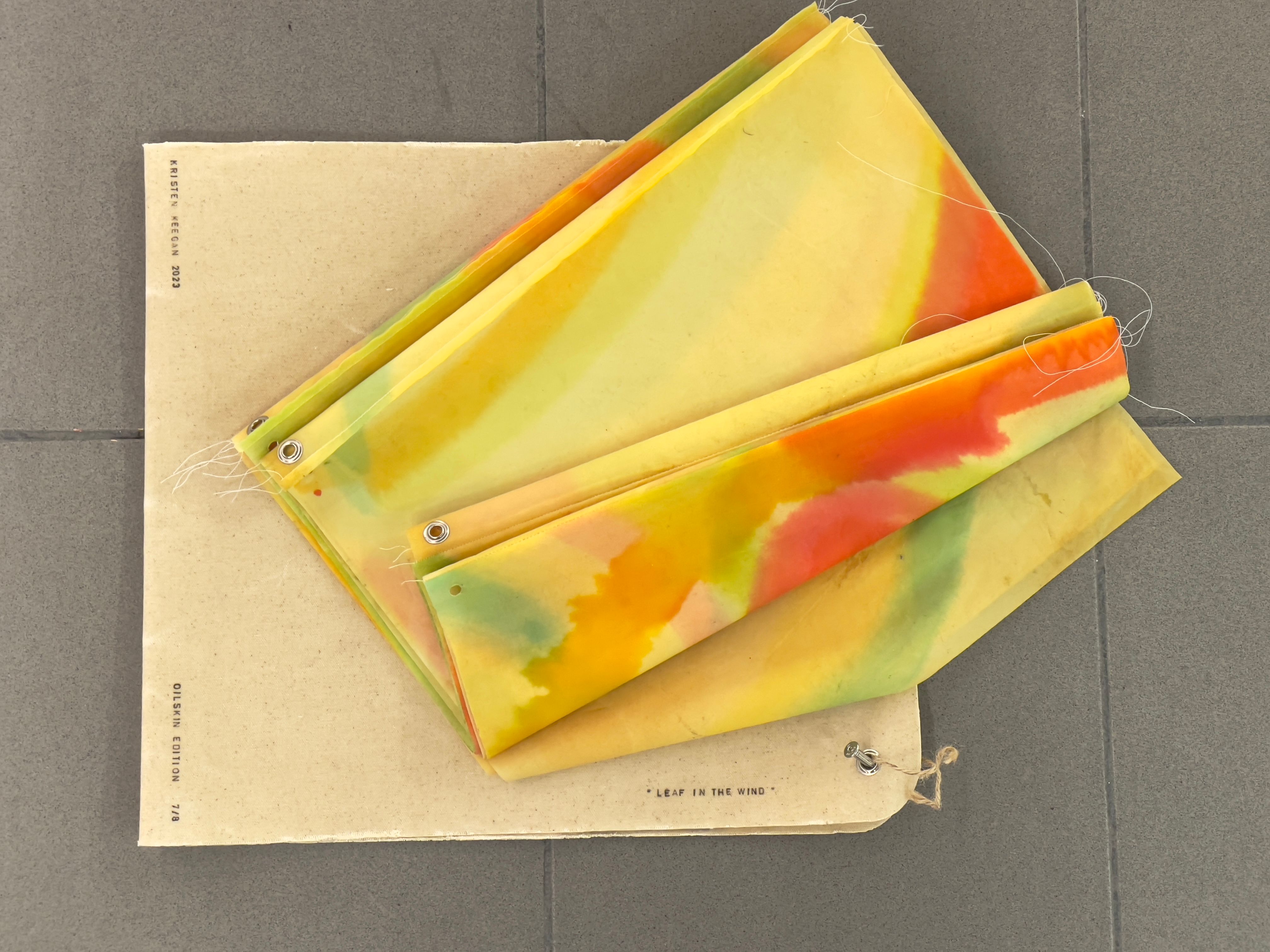
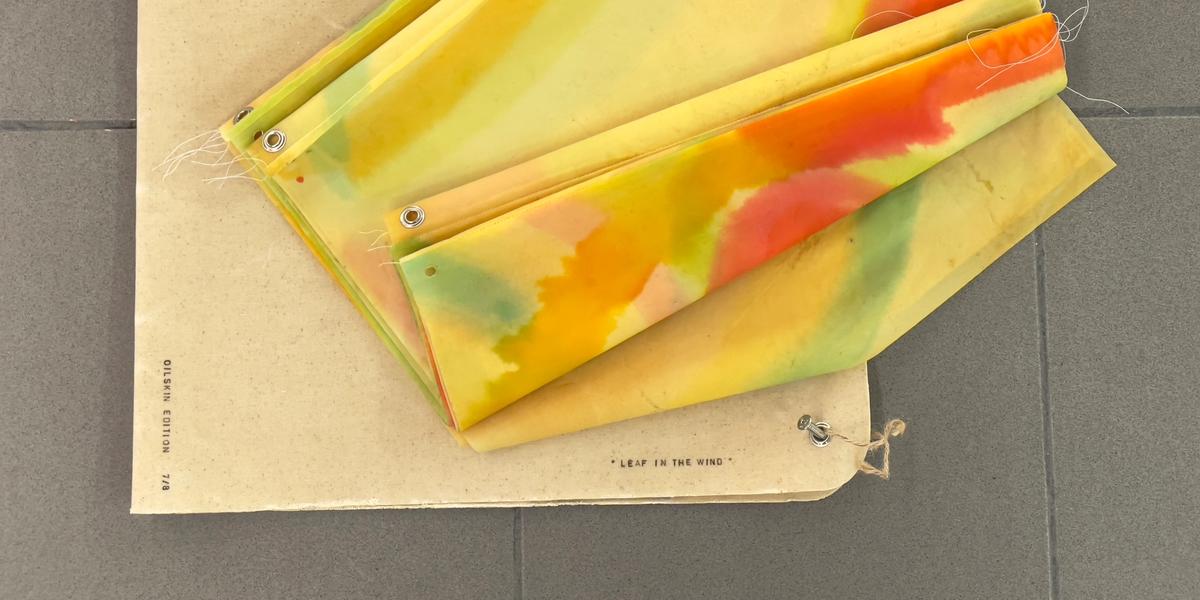
There is a very interesting diversity of art books here. That said, I wouldn’t recommend a single book; I would recommend browsing and choosing the one that intrigues you, and living with it for a while.I spent an afternoon interacting with them, and intuitively chose three artist books to take home, thinking I would return the next day. But then I realized I wanted to live with these books longer. One of them is very colorful and bright, interacting with the weather outside titled Leaf in the Wind by Kristen Keegan. It was like having sunshine in my living room every day.

I’d also like to highlight the importance of the library in the digital age. So many young people think everything is online – it’s not.
Cristiana Tejo

I’d also like to highlight the importance of the library in the digital age. So many young people think everything is online – it’s not. Life isn’t only lived on an iPhone. In the library, no algorithms decide what you see. You move your body, browse, feel, and pick up books. Be alone with yourself and the environment for a while. People in Stavanger are lucky that they can come here anytime!

"Leaf in the Wind" by Kristen Keegan. Photo: Ann Helen Robberstad

More info

Audun Mortensen is the author of twelve books of fiction and poetry and is currently a PhD candidate at the University of Oslo.

Cristiana Tejo is a Brazilian born curator, writer, and researcher based in Lisbon.

Sofie Bakke Ringstad is the daily manager and co-editor of CAS.

This panel took place as a collaboration between CAS, Kiellandsenteret and Kapittelfestivalen in September 2025.