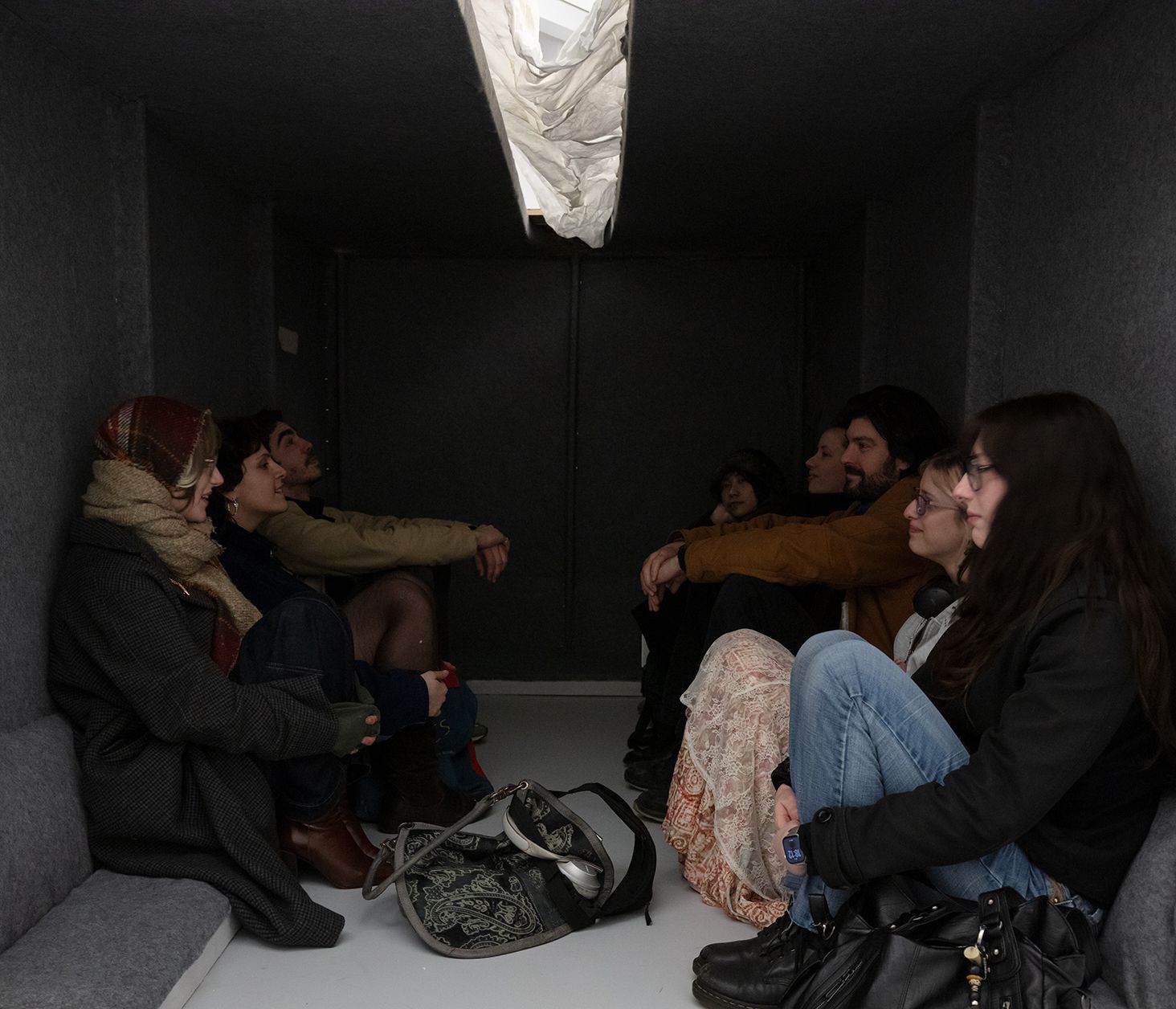
Participants
Psychotherapist Medina:
Medina works in private practice with individual clients, couples, triads, and other consensual relationship dynamics. She has not met with the partners before. She has a curious, calm and friendly approach.
“Thank you for letting me be a bit strict”.
Business developer Sheila:
Sheila works to boost the synergies in the collaboration, and believes in the benefit of physical meetings. She is tired of translating between the partners to ensure a common understanding.
“It’s incredibly demanding to get the ball rolling in one direction when everyone is pushing it in 90 different directions. It takes time. We need to agree on how we’re rolling the ball”.
“Creating a sense of safety, a space where we can be honest in meetings, requires that we actually see each other as human beings. That requires physical presence. Just working in the same room, even when it’s not a meeting, reminds you that you have a body, emotions, that you’re a whole person. I really hope that in the future, more emphasis will be put on people. We need relationships and trust to create collaborations that last”.
Municipality Representative Oda:
Oda has a strong sense of ownership of the collaboration, and is disheartened that not everyone feels the same way.
“Instead of being frustrated with each other, we could have leaned on each other and strengthened the whole project. But it’s like we haven’t managed to collaborate or follow up on what’s needed for the project to really deliver on its full potential”.
“On a micro level, there’s also the issue that not everyone in the project actually wants to be there”.
Architect Marit:
Marit expresses frustration that she doesn’t have the capacity to contribute to the project the way the others seem to expect.
“I agree that my company has been pretty peripheral in the project. There are several people in the project who have an incredible overview and understand all the mechanisms at play, while the rest of us, especially me, don’t really see the whole picture. We have to figure out for ourselves what we can contribute”.
“What we can do is turn information into physical form, something that happens physically in a place. A physical, aesthetic manifestation of what we’re working on”.
Researcher Espen:
Espen is working on his PhD on city development at the local university, while contributing to the collaboration. He is disappointed in the structure of the partners' collaboration.
“Institutionally, we’re not organized to do these kinds of things. If we’re told to collaborate more with another partner, we’re not given additional time or money for it. The people who actually want to collaborate with external partners constantly have to fight the system. You get worn down, and eventually you just change jobs”.
Developer’s sustainability consultant Eirik:
Eirik has been excited about the collaboration for a long time, but acknowledges an array of challenges.
“There’s a lot of talk about cross-sector collaboration, breaking down silos, matrix organization. But reporting and metrics still work the same way, so it’s actually rewarded to protect your own resources. It takes a lot of energy to be in this internal turf war when the system doesn’t actively support its stated intentions. We operate within established structures, so shouldn’t we mature structurally enough to provoke changes in those structures?”
Real estate developer Silje:
Silje is proud of her company’s dedication to sustainability within the development and construction industries. Her company is the main financial stakeholder in the project apart from the municipality and the EU. Silje was absent from the relationship therapy session.