Exploring the visual art scene of Norway's southwest coast ➜ Since 2015

Survivalist Pussy

2026 Itchy Fingers resident Nadia Marcus traces the tensions between the city’s cultural heritage, oil-driven development, and the ecological and political crises shaping our present. Moving between artist books, local histories, queer kinship, mythology, and personal reflections on transition, the text considers survivalist strategies within political, social, and environmental collapse. Through encounters with artists, archives, landscapes, and the restless forces of nature, Stavanger becomes a site for reflecting on survival.

In August, between tabs of French biologist Olivier Hamant speaking on robust systems, another with Google Gemini’s summary on how to ferment lovage, and adjacent to that an environmental activist reviewing the recent UNEP Limiting Overshoot reportLimiting Overshoot - Navigating exceedance of 1.5°C and pathways towards return - United Nations Environment Programme (https://www.unep.org/en/publications/report/limiting-overshoot-navigating-exceedance-15degc-and-pathways-towards-return)., the notion of survivalist pussy resurfaces. Namely, with system collapse racing towards us faster than we think, our medical infrastructure will be jostled, and, as usual, the disenfranchised groups reliant on subsidised treatment e.g. trannies, for one, will be some of the first to get thrown under the bus.

That morning I had worked an opening shift in the bakery I started at not so long ago so I can have payslips to show the German government so I can appeal for citizenship and a passport that attests to my transformed body and adopted name. After being awake for 17 hours, something akin to mania inflects the following chain of thoughts: We need to learn how to synthesise our own estrogen and develop more resilient distribution networks; can we order powder bulk from China; will the Rosa Luxembourg Foundation fund my research; the dolls are not prepared; the dolls need less mephedrone and more acupuncture; we need a synthesised approach to healthcare, wedding modern tech to indigenous and herbal traditions, as the former fails us continuously; I need to get this pussy on lock before everything goes to pieces, because I will not be forcibly detransitioning in the apocalypse.

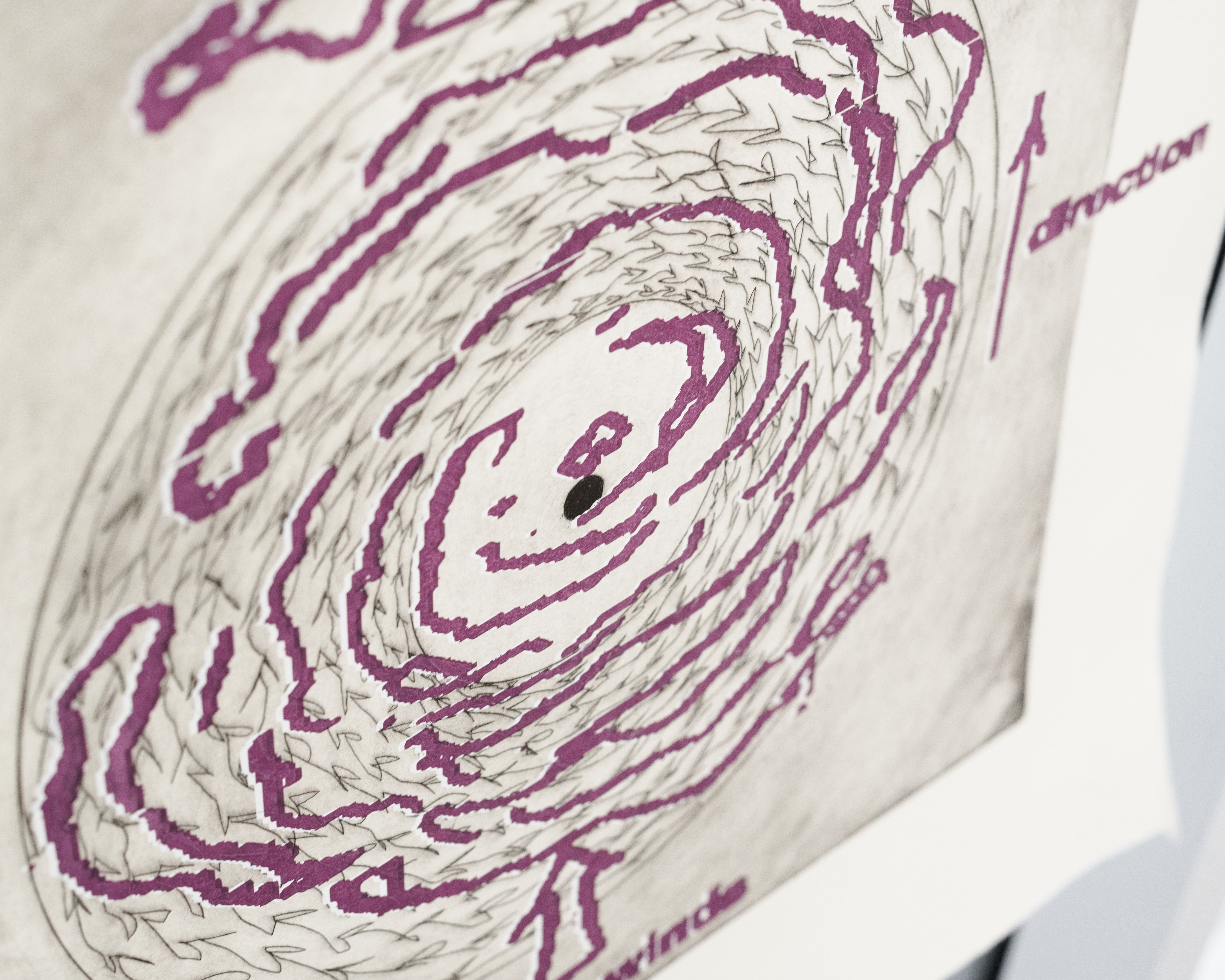
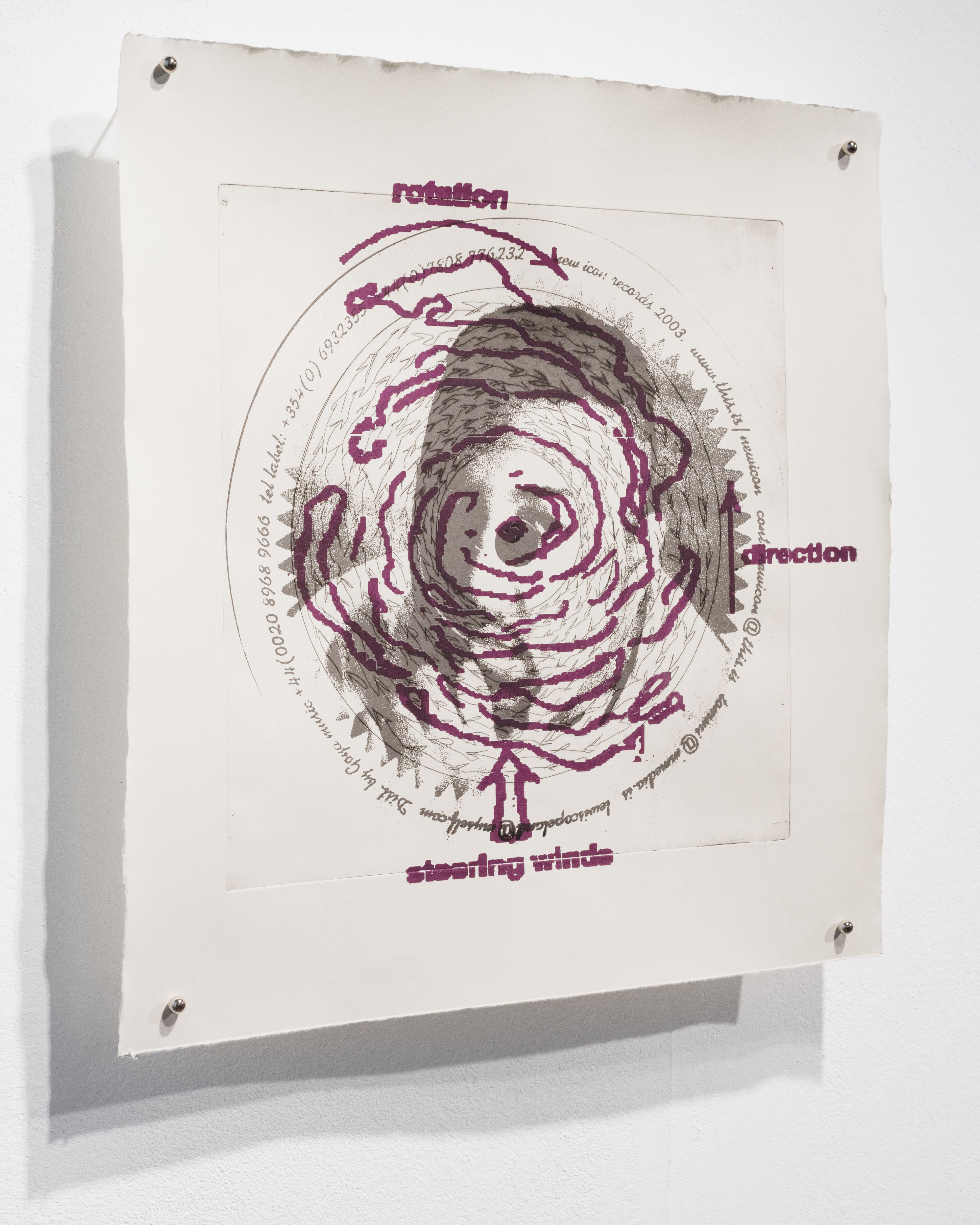
Rotation (Aaron Carl), 2026. Etching and silkscreen on cotton rag paper. Photo: Sam de Buysere.

The apocalypse is, of course, already underway. It doesn’t need to be raining comets – cataclysm already speaks through the violent fluctuations of climate. However the thought of trying to till land and my sweat-smell changing back to this boy shallot-vibe, the coarseness of whatever hair had not been obliterated by laser returning, the grand et cetera of nocturnal emissions actually I wouldn’t mind but – all in all, it’s a nah. I also have no idea how to farm.

I had spoken with Jim about survivalist pussy about a year ago when I visited him in Copenhagen. We were walking down Istegade, both depressed – me because I had attained the level of white womanhood in which she just has intensive and opaque chronic gastrointestinal issues, and him because a skate film he had shot in various locations across Europe, droughts providing extended access to some irrigation and drainage structures to send some skaterboys gliding across, had been wrested twice from his hands by the brand sponsoring the project. I bring it up to him again in a voice note a few days after the multi-tab epiphany, and said I need this survivalist pussy because in preparation for the new paradigm I should remove my organic generator of testosterone so as to be able to spread hormones out over time more capably as supplies cut off, and also so I can pump some really cunt Mad Max kinda fits. He wrote back “Babe your gonna look so fucking fierce in the apocalypse I promise” “T or no T this bitch will pump” – and this is why I love him.

Love is a resource richer than oil. Also burnable, capable of undergoing multiple refinement processes releasing highly toxic runoff. I’ve been pretty good with this one. We live in separate countries though, and I should get my back doors blown in. As much as love is an integral pillar of survivalist pussy, so is pragmatism, and backend integration. The apps are apping; the Berlin trade are as per immensely subpar.

Then I’m suddenly in the oil capital of Norway, Stavanger, and my back doors have not been blown in. A few days before my departure, the far-right Alternative für Deutschland party wins by a landslide in the state elections of Saxony-Anhalt. I get a big blood clot on my left arm; I get some perioral dermatitis; my gut is inflamed; I feel like I’m rotting from the inside out. I’ve come to understand alienation like this is one basis of the margin through which spiritual capacity rises; it comes from absence, void an air bubble between life and I. It’s spans of time and space between me and the people I love, it’s isolation, it’s the crack through which grace shines; it’s the particles of paper and ink now scattered as grains of sand or thread of mineral splayed across a creek in Bronxville or the Puget Sound but once comprising folders of files on my body in paediatric clinics in New York and Seattle. I have missed the saltwater.

The first night is warmer; a bright, humid drone sweeps in from across Byparken and I’m drawn to the old trees flanking the Domkirke. They are filled with innumerable birds, crying and chirping and folded into the eaves so as to be completely invisible. The sound is deafening, and I’m salty I didn’t take my TASCAM. Every night following I’m armed with my recorder, but the birds (I don’t even know what kind) and their curtain of thick-knit solid song are gone.

Stavanger-born Alexander Kielland writes in the compact, poignant essay from 1890, “Autumn”, “I have had thoughts of applying for a post as inspector of birds in the Westland. I should travel round and teach people about the birds, exhibit the common ones, so that all might have the pleasure of recognising them in Nature; accustom people to listen to their song and cry, and to take an interest in their life, their nests, eggs, and young…Perhaps some day, when not a single bird is left, my idea of an inspector may come to be honoured and valued.”“Autumn” from Norse Tales and Sketches, translated by Robert Lawson.

A few days before the AfD wins its landslide, I’m in Evangelische Elisabeth Klinik for my third consultation for some silicone in my tits, and they are prodding and humming and ha-ing and “Er erm sie meinte ich”-ing. I’m reminded of being inspected by a few doctors similarly when I was 8 because of my Klippel-Trenauny Syndrome mutation, which causes blood clots, hemihypertrophy, venous malformations, and the deformed sternum bone causing this German surgeon a lot of distress when considering what form and diameter of tit to place in this memory card of a person. Then they took a ton of blood from my little boy’s body, and I was woozy, but both my parents were there, and we walked out of the NYU Langone hospital building somewhere in the east-30’s, estuary-salt on the breeze, and I’m a child meeting a world just as complex and simple as the one meeting my fervent mind, facecard and snatched waist today.

Image: Nadia Marcus.

These days I don’t feel like a woman, barely a human, more a bundle of discourse, schedules, timesheets, dreams of bureaucratic recognition. A proposal, basically, or a plague. I don’t exist femme in Stavanger; I don’t want attention; I feel so alien to myself already that I don’t need gazes loaded with any intention. Obviously getting jackhammered with cock would help with the tuning, but I don’t even want that. I’m a liminal thing. And what is a woman but a bundle of discourse mapped to a body? Psycho-social schema mosaics? Anatomy? An internal conviction or identification? They are not so meaningful without relational cues, but surely do shine through. Someone throw a match in this well, let the light up, get me lit, I think, looking at the gunmetal water.

The residency through which this text was created is called “Itchy Fingers”, drawing from a sentence in a letter written by Kielland: “My fingers itch to move the world” – a sentiment I relate to. Kielland turned away from the comforts of his wealthy merchant family to write acute social criticism during the latter half of the 19th century, and their estate called Ledaal gives some associative insight as to what exactly he may have been turning from. Touring the structure, two things stick out to me: first, the aristocracy tend to leave ghosts thickly coiled in the still air of their rooms — every imported walnut-veneered chest of drawers is both beautiful and somehow suggests a history of violence; second, the intensive deployment of spatial illusion, especially to maintain a formal principle of symmetry. From a tightly wound staircase coiling up the centre of the house, whose banisters ran straight into the 3rd-floor ceiling to create a sense of extended verticality; to etchings of Greek and Roman philosophers pasted to the walls of the second floor salons, tromp l’oeil frames painted around them; to doors in these salon rooms opening onto brick walls, but built in nonetheless to maintain a symmetric order across the middle axis of the house. After the years of hormones and facial surgery and tracheal shave and laser and yearning, am I still just a fluted door hinged over brick?

One strain of traditional Western garden design honours the ancient Greek philosophical ideals of formal beauty, control over nature, mathematical rigour highlighting bird’s-eye-view geometry.Succinctly summed up in Han Jia and Huijun Wang’s paper A Comparative Study of Chinese and Western Garden Culture: From the Perspective of Garden Elements (Journal of Education, Humanities and Social Sciences, Volume 27 (2024)). Versailles is emblematic of this principle in action, and aristocratic estates like Ledaal were modeled after its palatial symmetry. As we exit via the rectangular backyard, wind strums the foliage of columns of elms, and the song narrates a tension: on one side of the chaotic order of nature, there are the aesthetics, cosmologies, social and technical practices of indigenous and folk cultural practices, on the other, the homogenising wash of hegemony.

The first book I pick up in Sølvberget library is Identity Pitches by Stine Janvin and Cory Arcangel. They adapt weaving patterns of traditional Norwegian kofte sweaters, whose motifs pull from a hybridised “pagan” and Christian symbolic vocabulary, into musical scores. A printed dialogue also touches on traditional Norwegian hardanger fiddle music, whose chromaticism and polyrhythmic structures markedly diverge from Western tonal counterpoint and composition. Hardanger was played at weddings and barn parties for days on end, with some players claiming they had made deals with the Nixie – a nature spirit – to gain such skill and stamina. This brokered-deal archetype is prevalent across time and space, from Robert Johnson’s 1936 “Cross Road Blues”, to Lorca’s duende to Faust. And when Norway became intensively Christianised in the 1850s, Janvin describes piles of fiddles being burned in bonfires, a classic technique of attempting to cut connections to what the burner has deemed devilish.

At the time the fiddles were burning, Stavanger was not an oil city. Maritime trade (the likes of which built Ledaal), sardine-canning, fishing and shipbuilding were its main industries, and many of the compact wooden houses from this era still wrap the hills and coast today. (A storm hammers the eaves over my head on the first night, and I’m woken up by the percussion.) The existence of these structures speaks to a decisive move made in 1956 by the municipal council to protect an architectural heritage; it also provides a stark visual contrast of pre- and post-1971 Stavanger, with concrete high-rise hotels and office buildings clustered in the city centre to house and host corporate travellers engaged in the oil industry. They have become not only an emblem of the Scandinavian old-city scale and aesthetic, drawing tourists disembarking behemoth cruise ships, but also a fissure of tension in Stavanger’s urban development.

Gentrification is Collective Trauma sounds kind of like an AI-generated title, as each noun in this phrase has come to bear a cultural skew leaning towards fervent online debate and concrete inaction. However, the Seoul-based visual art and urbanism collective Listen to the City fleshes it out in the wonderfully large-format newsprint publication also housed at Sølvberget. Printed in 2024, the work is deft and exacting: scores of interviews with Stavanger residents, photos and infographics, and even a dialogue with the director of Pedersgata Utvikling, the major development company driving a mass retrofitting of homes and businesses on the Pedersgata street.

Funded by the London-based investment firm Smedvig, the developer has aggressively bought up 65% of the residential spaces and 75% of commercial realty along the road. Not only that, but contracts with business owners are redesigned to give a greater portion of control to the developers. Former flower shop owner Mare Elise Fredtun reports: “The requirement was that we had to switch to their system…I just bought a new cash register and bank terminal. Pedersgata Utvikling demanded that we had to buy a newer system so that they would be updated daily on our turnover. In what was supposed to be a rental contract, we also had to commit to a marketing and profiling package. The landlord wants to have a common expression for the companies on the street.”Gentrification is Collective Trauma, page 9. Basically the wash, no deals with Nixies, data aggregated, robustnessAgain, Olivier Hamant. His concept is that our systems have prioritised performance over robustness since the Neolithic agricultural revolution; the former is defined by results-based efficiency, the latter, a capacity to remain stable through fluctuations precisely because of the presence of redundant, heterogenous and suboptimal structures. See: “Why Too Much Efficiency Makes Us Fragile with Olivier Hamant | TGS 230” (https://www.youtube.com/watch?v=Kzzr15cEg3o). drained and the brutal geometry of capitalism held rigid.

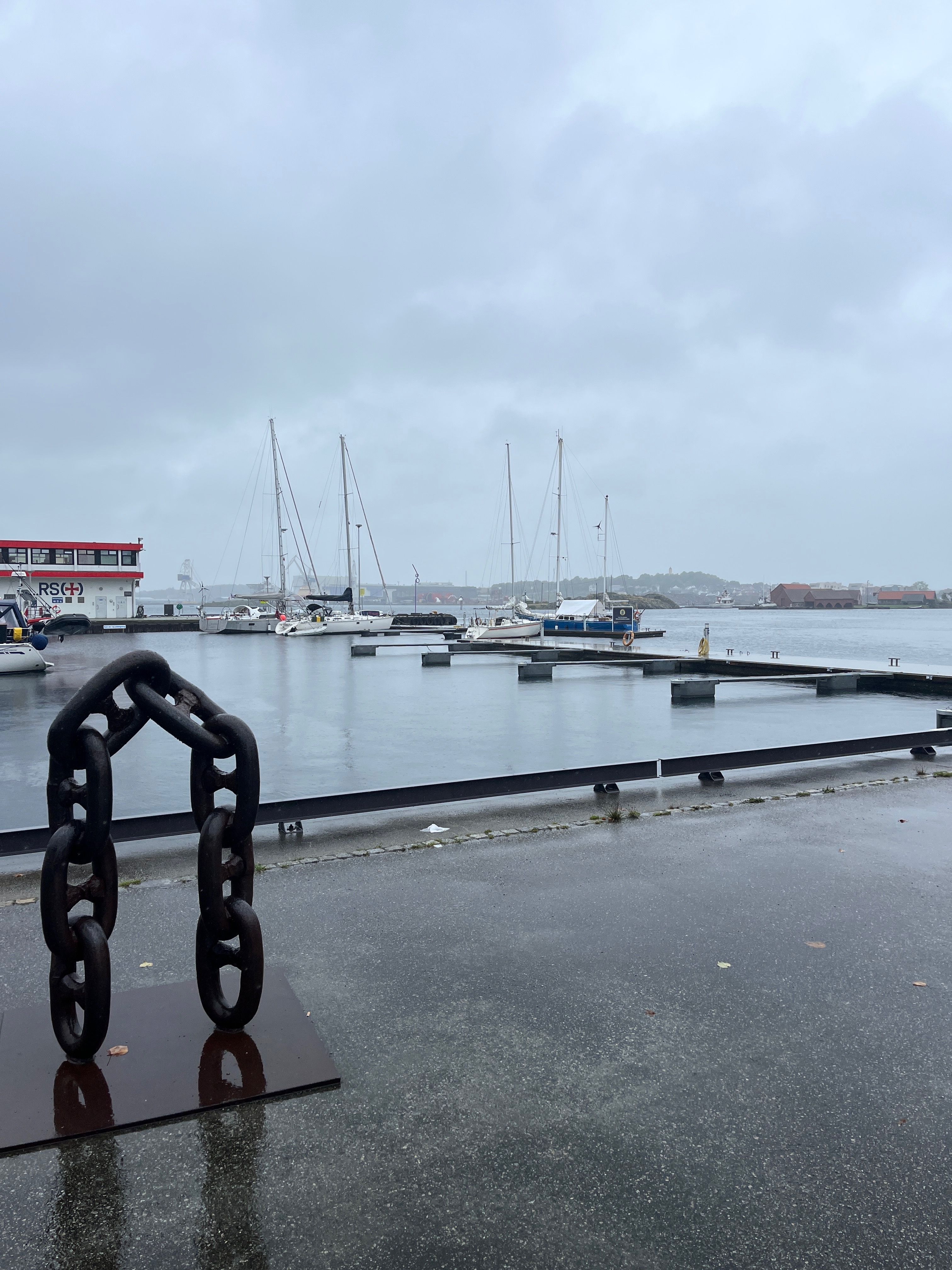
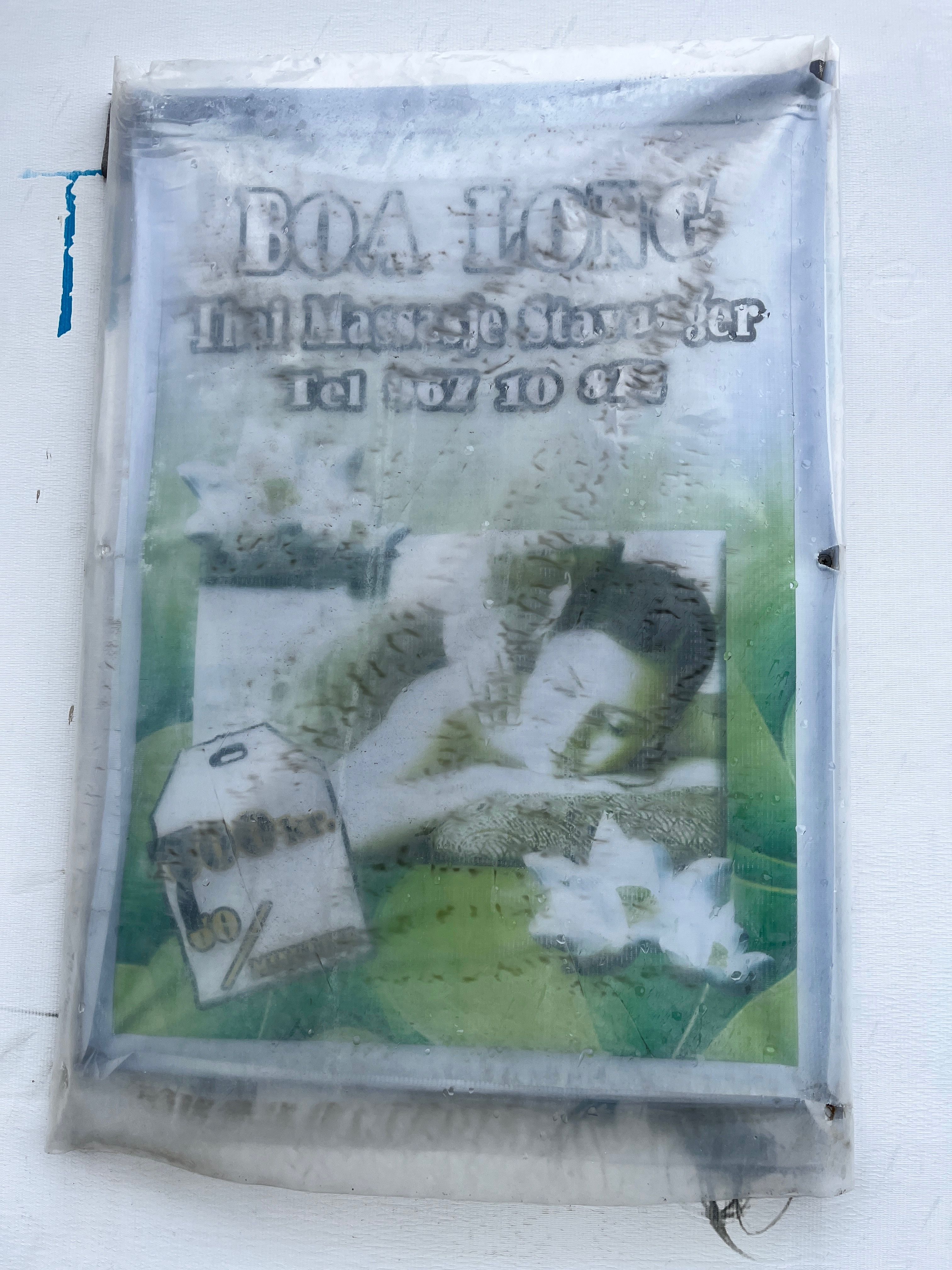
I walk on Pedersgata one afternoon and it is hatched with construction sites, a strange mirror-fronted Michelin-star restaurant, dilapidated houses, a local barber shop, boutiques that could be found in any city in Northern Europe selling yuppie homeware and crafts, and so on. From the newsprint publication, again, “A beautiful city does not mean a quiet, conflict-free condition. A beautiful city recognizes differences, acknowledges space, and embraces cultural diversity.”Gentrification is Collective Trauma, Introduction. A notion of beauty is warred over here, as are the notions of being, working, breathing bound up in the beauty of living with a sense of autonomy and dignity. Down the hill one steeply meets the streets of metal buildings going up, brick buildings being torn down, opaque Thai massage parlors, then a waterfront strip with offices, groceries, and tourist shops selling shelves of koftes, synthetic-fibre knit gloves made of oil, troll figurines, then the green-grey shift of the North Sea.

Image: Nadia Marcus.

Docked and cutting the water crimson that day was the bow of the Energy Sphynx, a hulking boat I later learn is an MPSV (multi-purpose offshore construction and support vessel). SofieSofie B. Ringstad, director and editor of Contemporary Art Stavanger. and I speak a few days before, at the opening ceremony of the Kapitel literary festival in the similarly hulking but 876-year-old hull of the Domkirke, about naming practices of the oil industry. Out in the North Sea there are fields named “Troll”, “Heidrun” (a nanny goat who consumes the foliage of the celestial Læraðr tree, producing mead to nourish the dead warriors of Valhala), “Gulfaks” (named after Gullfakse, a magical ship from Norwegian fairy tales, capable of traveling swiftly on land and water), etc. Piercing the earth’s deepest tissue and drawing out oil becomes heritage, inevitable as myth, apparently, to make sense of our place in the world.See: “Myth Interrupted” by Jean-Luc Nancy in The Inoperative Community (1986).

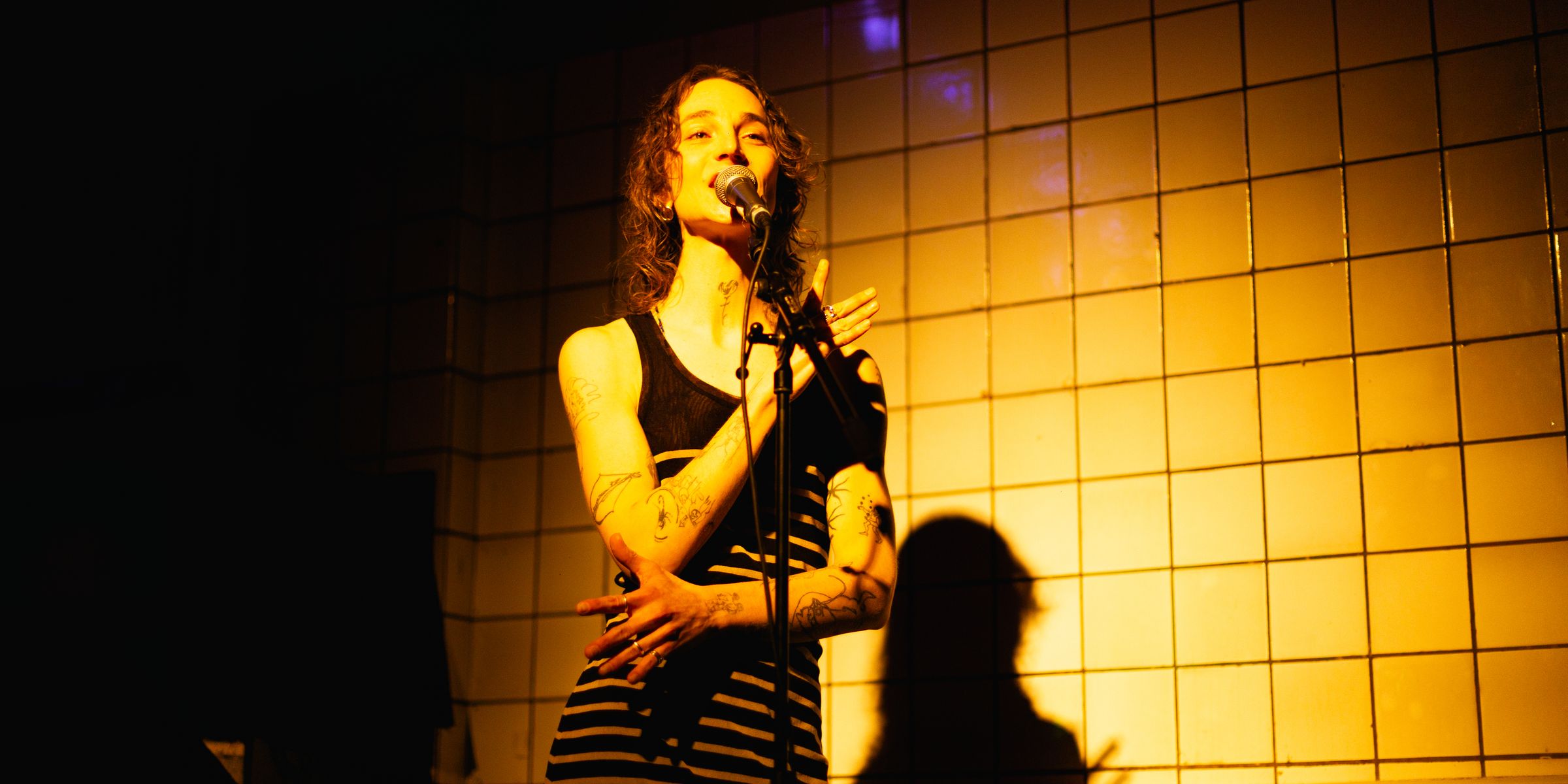
In that same ceremony, a hardanger fiddle player takes the stage, weaving frenetic melodic lines: witch music. Stine Janvin performs alongside the Danish poet Mette Moestrup, heaving out an epic, drone-measured rendering of Moestrup’s text Habitathymnen. The refrain opening each section: “besyng, min stemme, artsrigdom / her på dette smukke sted” (“Sing, my voice, the richness of species / here in this beautiful place”). A litany of flora and fauna populate each movement, and although I don’t understand a lick of what these mystical bitches are saying, I’m completely swept by the hymn and glad it’s happening in a church: “…mangeartet urteflora / veksler med krat af enebaer og havtorn her / blandes blomsters og mossers dufte her / svajer windhviskende vildgraesser her…” (“diverse herbal flora / alternates with thickets of juniper and sea buckthorn / here the scents of flowers and mosses mix here / wind-whispering wild grasses sway here…”). A choir of male vocalists alternate with Moestrup and Janvin, and near the end of the piece sing out, “beskyt dette habitat mod / penge penge penge geld / penge money penge penge / penge penge penge geld / money money money penge / beskyt det også mod dig selv” (“protect this habitat from / money money money money / money money money money / money money money money / money money money money / protect it from yourself too”).

German, American, British, Norwegian tongues all eyeing the habitat. An ambivalence: the Norwegian government’s oil fund, which today clocks in at around 21,519-billion NOK (2,056-billion EUR), allows for such considered cultural funding, allows for the Kapitel festival, allows for a tranny to be flown in from Berlin, housed and paid to research an art book collection. An ambivalence: in the wooden house I listen to interviews with Naomi Klein and Astra Taylor, whose book End Times Fascism: And the Fight for the Living World drops while I’m in Stavanger; I listen to an interview on Novara Media with Tessa Khan, an environmental lawyer who stresses that the continuation of the oil industry will indeed end human civilisation swiftly as predicted, even though the infrastructure to begin large-scale transitions to sustainable sources is in place;“The Next Big Shock Is Coming. Green Energy Is the Only Way Out”, Novara Media, https://novaramedia.com/2026/09/13/the-next-big-shock-is-coming-green-energy-is-the-only-way-out/ . when I am able to string a few free days off from service work, I fly to Copenhagen to have my heart and mind fed and get my backdoors pounded off, lovingly de-hinged, thrown into the Øresund strait, dredged out a few days later, refastened to my body and sent on a plane back to Berlin, a round trip that burns off about 1,000 to 1,600 liters of oil; I produce piles of medical waste shooting up estrogen every week with plastic-bodied syringes: I do not sacrifice convenience because the maw of climate disaster and fascistic repression has not yet drawn close enough to me, although it swallows lives and communities whole already, day by day, and the jaws become more and more legible across the Northern European horizon, hour by hour.
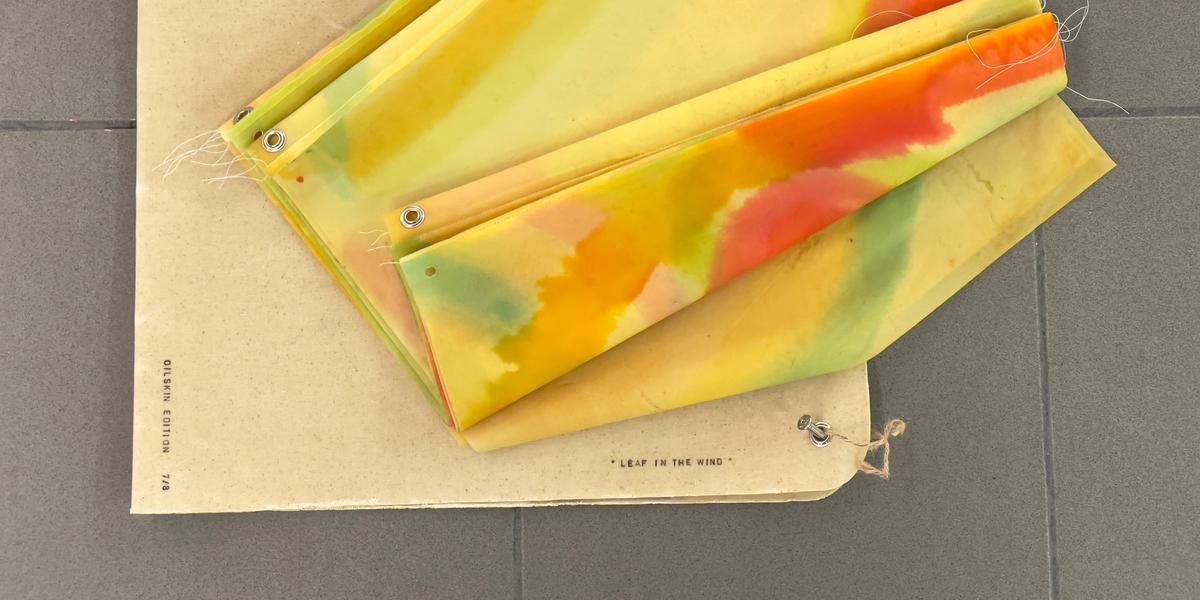
My favourite work from the Sølvberget artbook collection is called The Components of the Stream, which documented a collaborative project carried out by Kristen Rønnevik and Kamilla Skrinde in 2023. The artists organised a handful of workshops to rehabilitate an overgrown, stagnant stream on the island of Utsira, and the project, as well as the book itself, sits with a lush simplicity: the workshops were led by biologists, landscape architects, a drystone mason, and so on; the participants ranged in age across the spectrum; they learned how to reinforce the beds from erosion, identify insects, plant specific flora to assist in the irrigation of soil, remove saltstain from pine trees, wrap a poplar seedling with wool and stones to protect its infancy from the harsh sea winds. There are typos in the publication, but who gives a fuck, it’s the most pragmatic and dreamy thing I’ve seen in any kind of artbook context for years.

So starkly does The Components of the Stream stand outside of the aloof-cool (and, of course, ornately critical and intellectually refined) discourses of contemporary art, that many of the texts in the book question how and whether the project even is art. Sofie actually wrote a concluding essay after visiting Utsira and covering the project with CAS: “Could Components of the Stream have happened without art? Probably not. Art’s permission to experiment means that the project escapes result-oriented practices such as landscape architecture or targeted activism. Nor is there an artistic goal to be achieved.” All I want to do is stick my hands in some dirt, and am reminded of an Instagram story that the artist Jesse Darling posted in January 2024, shortly after being awarded the Turner prize: “...permanent ceasefire now, stay with this trouble – and the troubles that are coming – and finally, ART IS OVER (IF YOU WANT IT)... Of the artist skillset, there are other tools we may need in the times ahead – to communicate with the dead, to enchant objects into speech, to see through the high walls all round into places that don’t exist, to dream the garden in the ruin. If you know how to do those things, keep your eyes on the horizon and remember what those skills are for.”

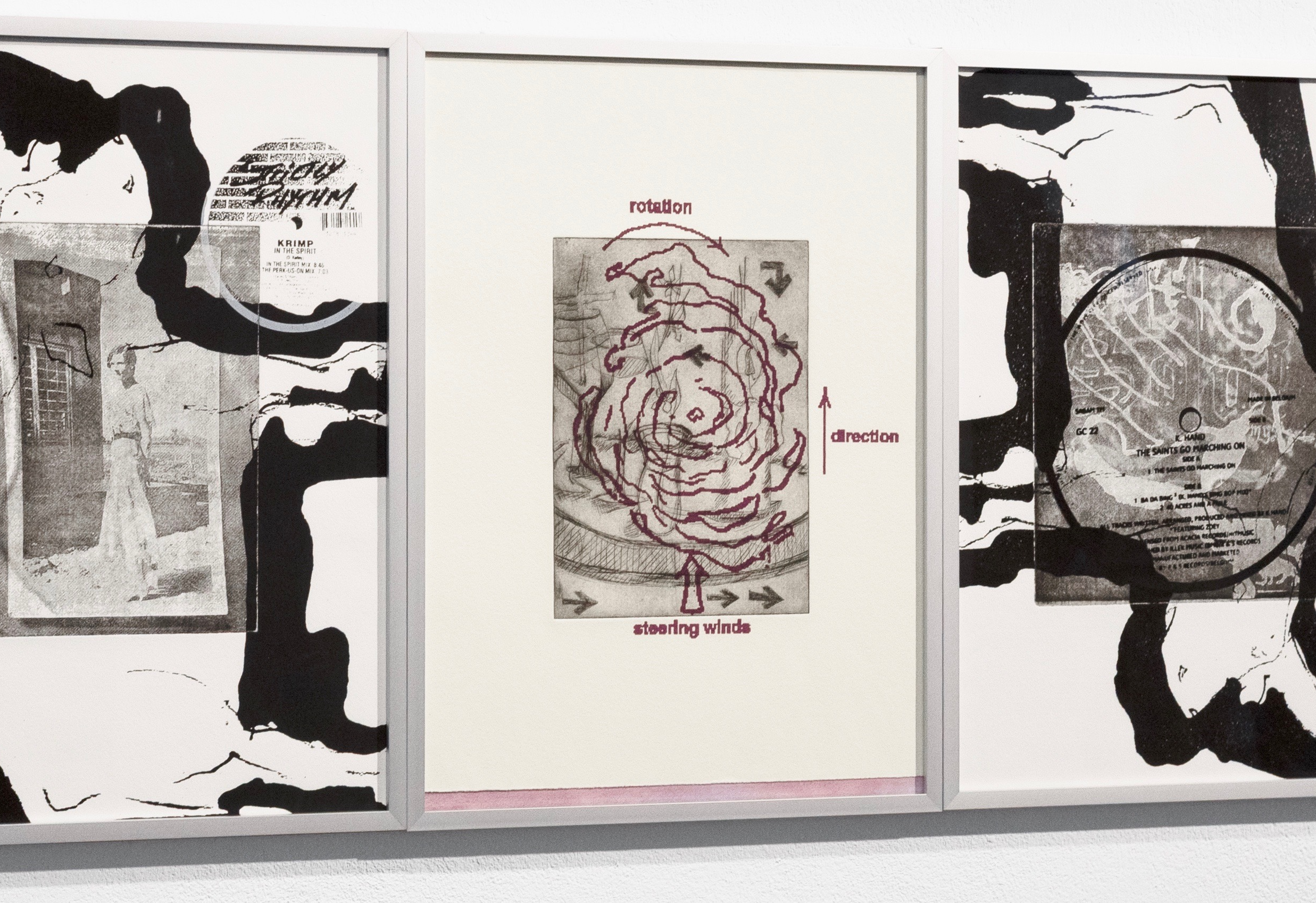
Nell Bradshaw (In the Spirit), Boveda, The saints go marching (installation view), 2026. Etching and silkscreen on cotton rag paper. Photo: Sam de Buysere.

Shortly before the multi-tab survivalist pussy redux epiphany, Sofie wrote in a briefing email about the Norwegian Petroleum Museum, “It’s a must, and will give you more insight into the mindset of both the region and Norway”. So on another one of my days in Stavanger that exist between a raindrop’s dream of a cloud and the skeletal, genderless blur greeting me in mirrors and glass panes, I go. I am reminded it is easy and lazy to arrive to the oil capital of Norway and critique the drilling industry: the museum humanises this enterprise, snapshotting moments of daily life on the rig, describing the cultural and economic shockwave sent across this small maritime city suddenly flooded with American families when the massive expanse of oil fields were discovered in the 70s, as well as the geopolitical grappling that immediately began with foreign investors. (In the inaugural years, a common sentiment went something like, We need to drill it all or else America will come and drill it, echoed in the past years by Silicon Valley ghouls and Trump’s policymakers, We need to develop our AI-technology without regulation or else China will win the race.) There are arrays of drillbits like mythological weapons from Dungeons and Dragons; vials of night-coloured, solar-charged liquid singing of money; mourning plaques commemorating the 123 workers killed when a rig capsized in 1980. The rig, in line with myth’s force of inevitability and heritage-keeping, was called the Alexander L. Kielland.

The final two areas of the tour are worth mentioning. First, a noticeably sparser room with off-key pastel walls: the part where the oil institution needs to mention sustainability. And nothing is really said. Wall text nods with statements like “Everything we do, from travelling to streaming, takes energy – lots of energy”, or “It’s a matter of equitable burden-sharing, development and our willingness to take responsibility. How do we strike the right balance?” The space feels like an abandoned studio-set of a 70’s talkshow. From there, one enters a lofty and dark hall, encompassed by a Hans-Zimmeresque sweeping soundtrack with space-age blips and crescendos. Projection mapped renderings play across the room, highlighting the newest developments in subsea drilling technology and refinement processes, which are billed as being safer and more efficient than ever before. Then back to the entry hall, the unclothed North Sea meters from the door matching the color of a metal plate thanking the museum’s sponsors: Equinor, ConocoPhillips, Arker BP, Vår Energi, Sval Energi, Total Energies, DNO, Repsal, Harbour Energy, Oceaneering, Subsea7. All the water says is “void”.

“Pussy is not just negative space / there is atmosphere and potential for growth / it sleeps, it dreams even / comes closer” is what gagged me as my good sis Yves B. Golden recited her poem “Bubblegum” in a garden on Kottbusser Damm, during a reading I organised in 2021. Pussy is praxis for the dolls, survival is one of its arts.

Image: Nadia Marcus.

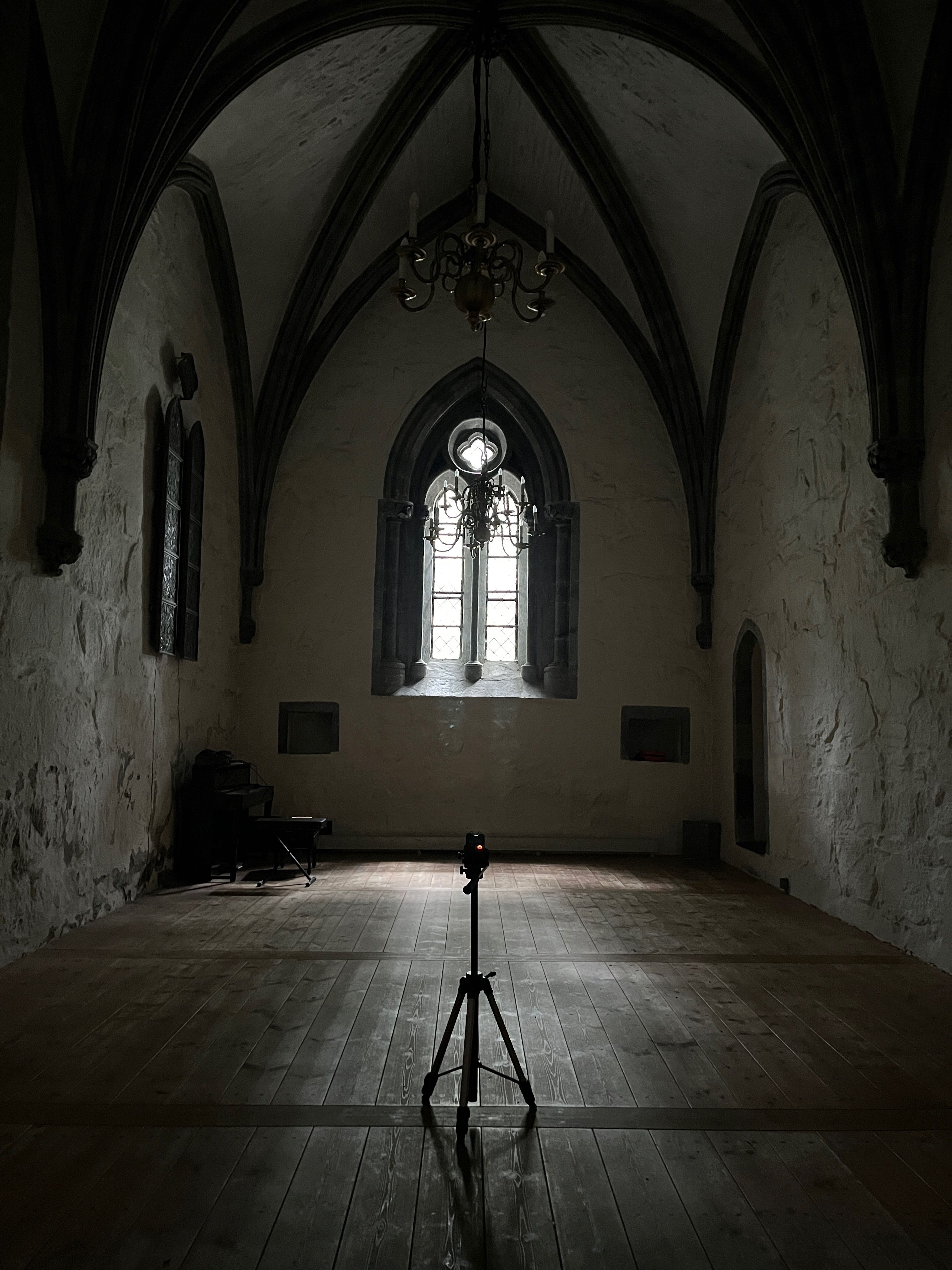
My second-to-last day in Stavanger, I gain access to the Bispekapellet, a 13th-century stone chapel behind the Domkirke, to record some poems. There are renovations going on, so no power, no lights, just the soft steel halflight of afternoon coming in through the lancet window, the luminous darkness of the dead, and a blinking red signal on my TASCAM that says, “I’m listening”. One text I recite there is called “Stock”, which was written in 2019, dedicated to Yves (who is the originary “you” here), and was written 2 months before I started HRT:

As liquid

burns off like an asset

room gets richer

You ask where’s the cosmic

trade at I say that’s

a love without hope you

say what’s hope in lieu

of faith I say

hope flickers

and enflames a present

absence and I like

thinking in terms of

pyrotechnics you say faith

doesn’t need to

empty the present

to invite futures I

top up the pot

then say what

future foreshortened

by fire and flood you

say the world is

changing and we’re

changing with it

that future then ask me

do you think

the universe

will provide you

with what you need

and I can answer

My capacity to answer waxes sometimes over the years, wanes. During the weeks in Stavanger (punctured by a few-day stint flown back to Berlin to hold down my service job so I can apply for the passport, proper gender marker, mobility, apocalypse farmstead neo-vagina etc.), it oscillated like the shifting planes of cloud, sun and torrential rain, all conducted by ceaseless wind. Wind blew through the creaking halls at Ledaal, cooling my marrow and making the foliage sing; wind hammered the daylight thin and silken; wind tossed my thoughts into paranoia about being too late, never attaining the sashimi-level softness I denied myself lifelong; wind sketched rounded, healthy bodies of phenomenal women born with pussies across sheets of rain; wind carved out a deluxe-sized grave of the waking world; wind carried salt off the sea so beautifully; wind constantly charged into my field recorder’s microphone inputs, maxing out the signal beyond a headroom it could handle.

Rotation (overcast) (detail). Etching and silkscreen on cotton rag paper. Photo: Sam de Buysere.

In Yoruba mythology, wind is the domain of a spirit called Oya. She is a woman, but dons facial hair and runs into battle headfirst; she is the movement of transition, raw flux, thunder; her dance encompasses revolutions of social and political upheaval as well as whirling tornados. When one’s fingers itch to move the world, it is she strumming their nerves. In Stavanger she says again and again, You cannot capture my speech in your TASCAM DR-40X field recorder made of bits of plastic and metal; you know as well as I that I’m about to turn your shit upside down – your material and spiritual body, your self-worth, your fear of the future, your fear of threading hope into an image of your own future, your geopolitical systems, your cramped and belittled notions of joy, your planet’s climate, the limits you’ve imposed on your dreams. I am the atmosphere; I am the potential for growth.

The last night in Stavanger, as part of Kapitel, I speak on a panel following a screening of Paris is Burning. When Sofie tells me this assignment on a phone call, over the summer as I walk down Weserstr. with a big white bandage over my throat and my vocal cords still pinched and gravelly from a tracheal shave surgery, we both have to cackle a bit. But what an immense gift it was to watch that film in a cinema – a riot of kinetic poetry, incredibly rich 80s hues, ghosts, ghosts. I’m peeled with tears, in that beautiful and cunt way where your face isn’t crunching but rather the saltwater simply draws track after track, dripping off the jawline, in the sequence near the end of the film alternating between Octavia St. Laurent and Venus Xtravaganza speaking about their futures. The quietness then, the complete softness stripped of pageantry – Venus lays on a bedspread with big daisies, next to some teddy bears: “I want a car. I want to be with the man I love. I want a nice home, away from New York. I want my sex change.” Octavia, a smile in her voice: “I want to live a normal, happy life. Whether it’s being married and adopting children, whether it’s being famous and rich.” Venus, so delicately because the words hold the immense weight of a girl’s dreams: “I want to be a complete woman…I want this, this is what I want. And I’m gonna go for it.” She’s murdered at the age of 23, while the documentary is still being filmed, found bound and strangled under a hotel mattress on 46th street.

The girls in that movie, some of whom grew up to become women, lived survivalist pussy through and against an enforced mesh of murderous oppression far beyond my comprehension. I say in the panel I don’t feel qualified to speak as an expert about this film, firstly because ballroom is its own world; second, to be “trans” denoted a very different social and cultural construction some decades ago; and finally, because I’m a white trans woman existing in a completely different intersectional position of class, with immense support and access to medical resources, living in a changed cultural climate. All the same, they are my forebears, my ancestors, my sisters; I carry their spirits; I honour their luminous lives, their survival, their unapologetic halo of pussy, in all the ways I possibly can.

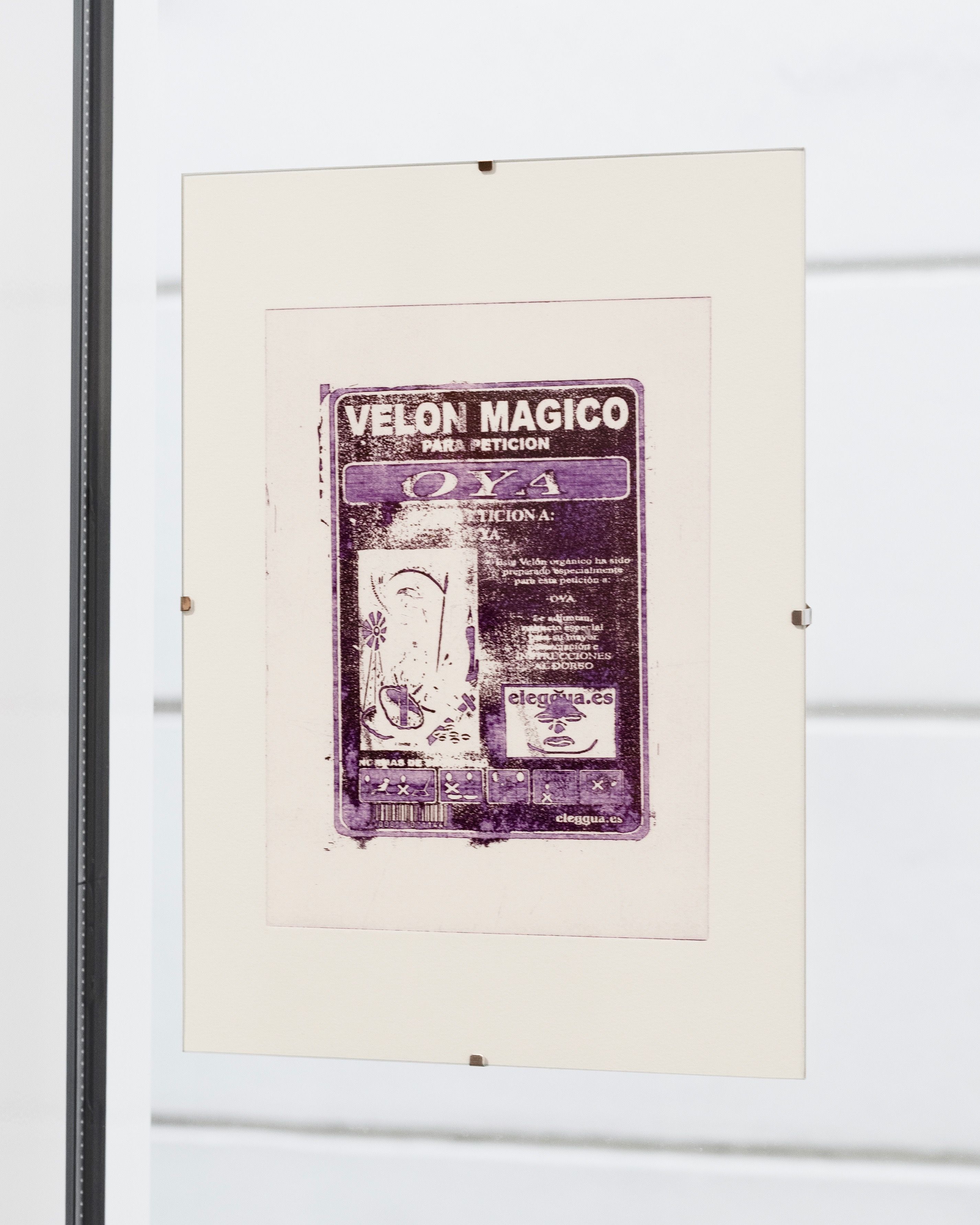
VELON MAGICO, 2026. Etching on cotton rag paper. Photo: Sam de Buysere

Afterwards Sofie and I leave the cinema, which is in the basement of the Sølvberget Library. In the small plaza outside its entrance, I’m shocked to hear that chirping drone I hadn’t heard again for two weeks. I record, and she tells me they’re starlings on their way to Rome. So my final night in Stavanger, I’m standing once again outside the Domkirke. Arms stretched up the trunk of a tree, cupping the microphones from breeze off the harbor, not a woman for those minutes, nor an artist or writer or partner or name printed on a passport, just a prayer folding up and out of a body. A quote from John Dewey cited in The Components of the Stream keeps ringing in me: “To be fully alive, the future is not threatening, but a promise: it surrounds the present like a halo.”

More info

The 2026 Itchy Fingers – A Writing Residency on Art Books is a collaboration between CAS – Contemporary Art Stavanger and Kiellandsenteret at Stavanger Library and Culture Centre.

Based on Alexander Kielland’s work as an author and social critic, the Kiellandsenteret at Stavanger Library and Culture Centre cultivates literature, reading and writing, and is a meeting place for debate and exchange of opinions.

About the author

Nadia Marcus (*1993, New York City) is a poet, designer, DJ and co-editor of TABLOID Press, a publishing house and media imprint founded with Zack Darsee. Her poetry, art criticism and lyric journalism have recently appeared in 45–120, Ezio Gribaudo: Weight of the Concrete, Arts of the Working Class, and The Ransom Note.

Marcus has given poetry readings and performances in venues such as KW Institute for Contemporary Art (Berlin, DE), Volksbühne am Rosa-Luxemburg-Platz (Berlin, DE), Haus am Waldsee (Berlin, DE), and Ny Carlsberg Glyptotek (Copenhagen, DK). In the last years she has also exhibited visual works at SYSTEMA (Marseille, FR), Kunstverein München (Munich, DE), and Mint (Stockholm, SE). She broadcasts sets regularly at the Berlin-based radio station Refuge Worldwide, and is a resident DJ of the event series subglow.

All articles by Nadia Marcus